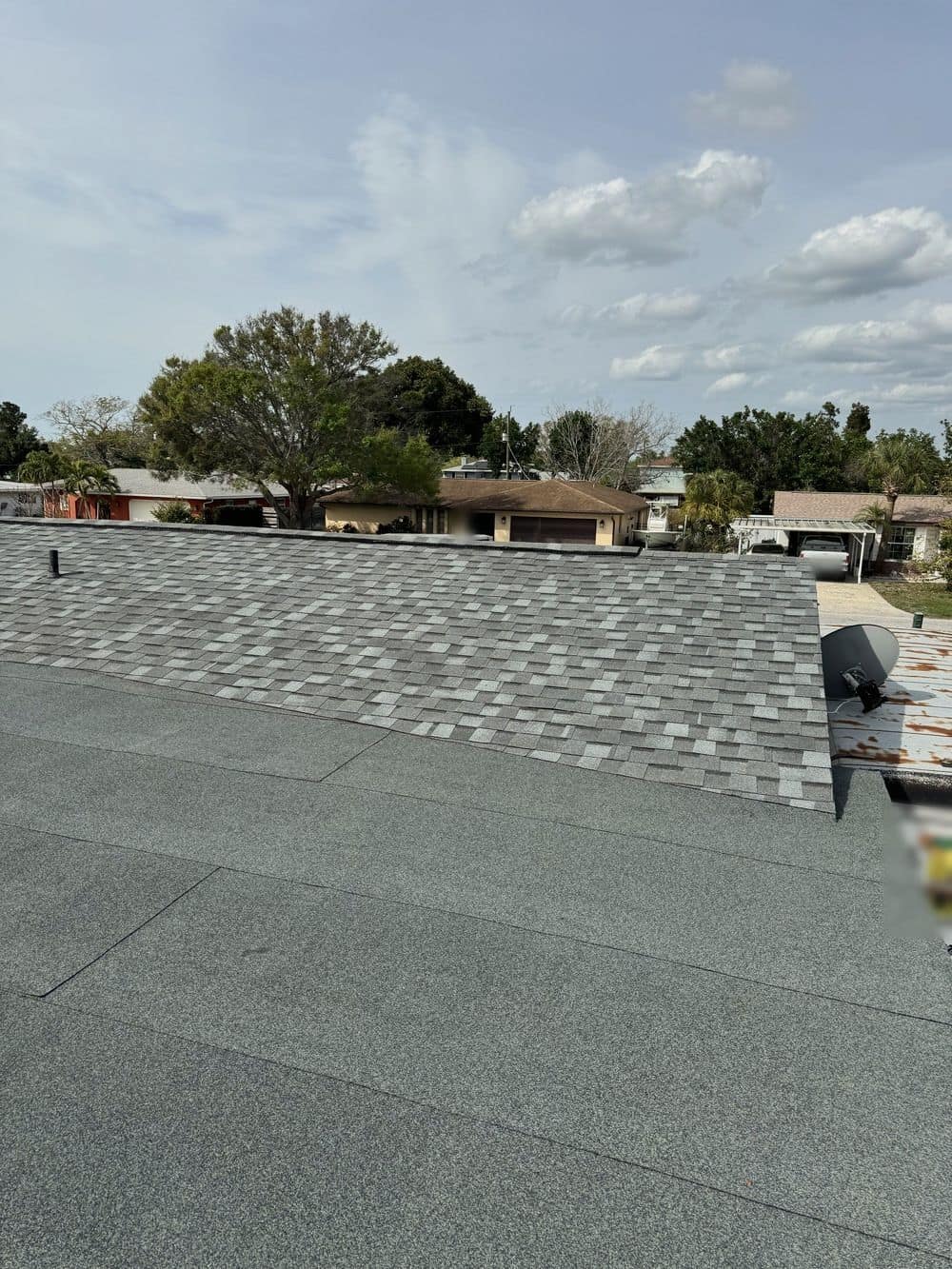
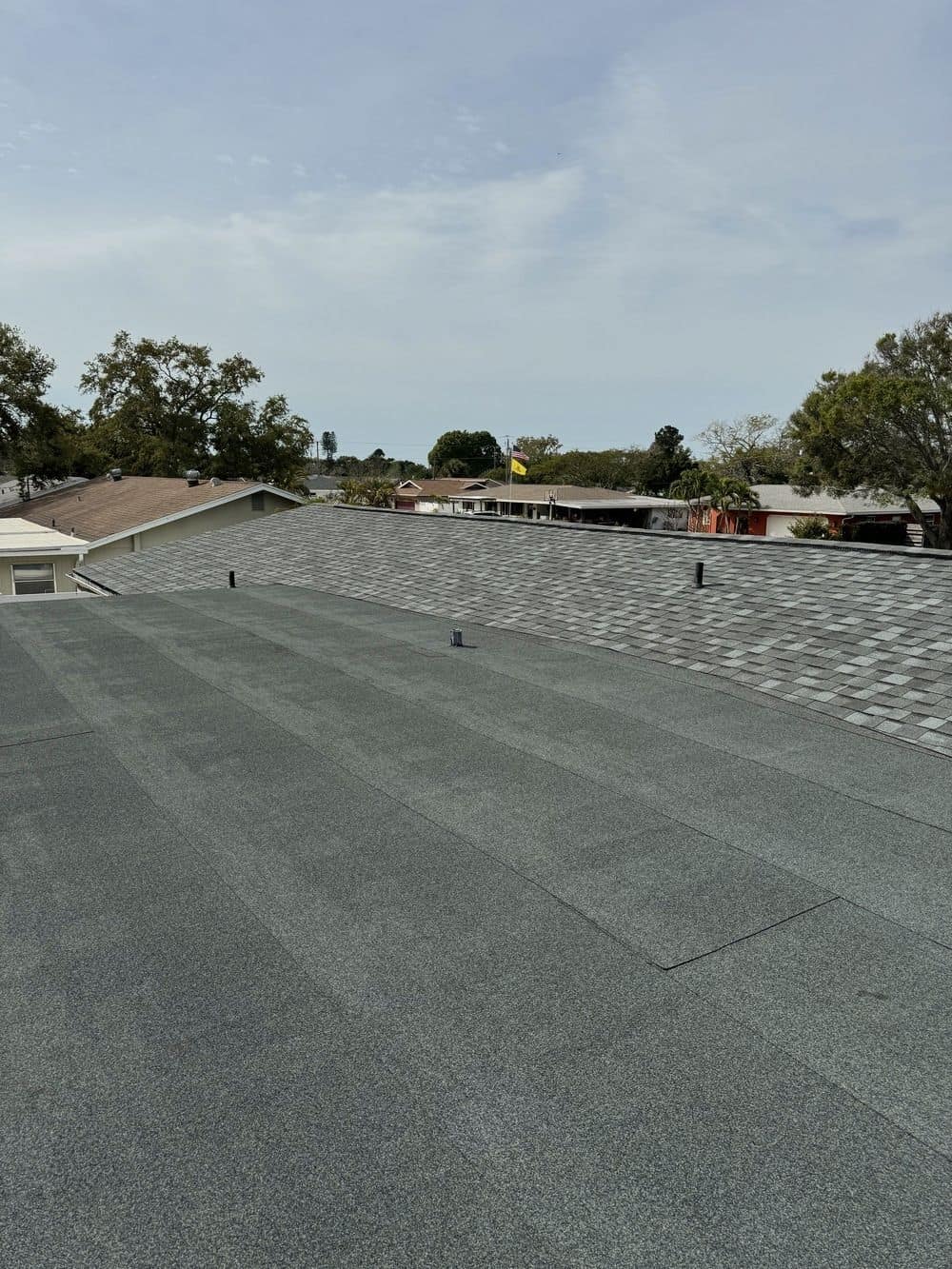
Commercial roofing in Florida starts with the low-slope systems the code names: TPO, EPDM, modified bitumen, PVC and built-up roofs, designed to drain within 48 hours of rain and tested for wind uplift. Broward and Miami-Dade sit in the High-Velocity Hurricane Zone, which adds a permit for every repair and its own product approval rules.
Start with three questions: what is on the roof now, how fast it drains, and which county it sits in. Florida's code bars a recover over two existing roofs or a water-soaked one, sizes drains on the 100-year hourly rain, and requires product approval for every roofing product. Broward and Miami-Dade add their own HVHZ permits and inspections.
Low-slope roof systems on Florida commercial buildings
On a flat commercial roof, flat is a figure of speech. The 2023 Florida Building Code gives new low-slope roofs a minimum design slope of one-quarter inch per foot, 2 percent, and coal-tar built-up roofs one-eighth inch (§1507.10 to §1507.15).
Each membrane points to an ASTM standard that defines the sheet, not the roof. The TPO, EPDM and PVC standards all leave fire, seaming and wind uplift outside their scope. So "meets ASTM D6878" proves the sheet is TPO, not that the roof will stay on in a hurricane.
NRCA says most new roofs are designed to serve about 20 years; climate, design, materials, installation and upkeep decide the rest. No neutral Florida source we found ranks these systems by service life. Manufacturer warranty terms follow thickness and attachment, and one 80-mil TPO data sheet lists the ASTM minimum at 0.039 inch, about 39 mil. Compare bids on mil thickness, not the letters TPO.
Wind
Wind uplift, edge metal and Florida's roof tests
Florida designs a commercial roof for wind under Chapter 16 and §1609. Membrane and metal panel roofs are tested to FM 4474, UL 580 or UL 1897, with a 2:1 safety margin on results unless the standard sets its own (FBC-B §1504).
Edges get their own tests. Metal edge systems on low-slope roofs must be tested to ANSI/SPRI ES-1 methods RE-1 to RE-3, or RAS 111, and a gutter that holds down the membrane edge must be tested to SPRI GT-1.
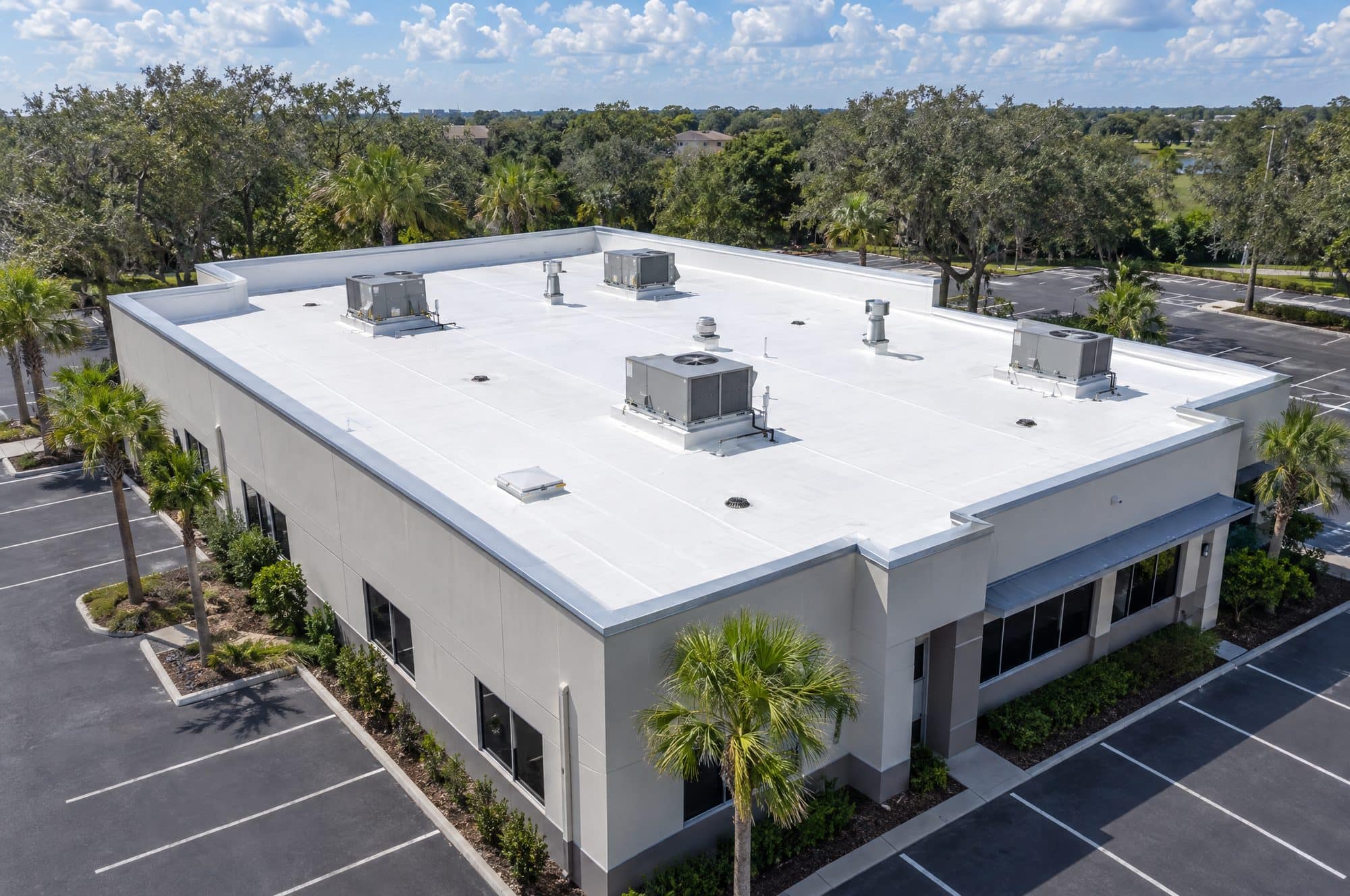
Illustration
Illustration of a membrane roof with parapet coping. Not a South Fork Roofing job.
No single Florida wind speed applies. The design speed comes from the code's maps for the site and the building's risk category, and Sumter County's building FAQ lists 135 mph as its criterion. The wind-borne debris region starts at 130 mph within a mile of the coast, or 140 mph anywhere.
Miami-Dade and Broward
HVHZ rules for commercial roofs in Miami-Dade and Broward
Florida's code draws its High-Velocity Hurricane Zone around two counties, Broward and Miami-Dade. Palm Beach and Martin fall outside it and rely on statewide product approval. Inside, Sections 1512 to 1525 govern roofing, and the product approval wins wherever it conflicts with a manufacturer's literature.
A permit for all roofing work, repair and maintenance included (§1512.3).
The uniform HVHZ roofing permit form, signed off by a licensed contractor, with a line for the NOA number (§1512.3.1, §1525).
An Owners Notification for Roofing Considerations attached to the permit (§1512.3.4).
For membranes, an inspection before the attachment is covered, then a final (§1512.4).
No loose-laid ballasted or nonballasted systems (§1515.1.5).
On a reroof, repairs may not add ponding, and before work starts the contractor must tell the owner if ponding is possible and recommend a structural review (§1521.3, §1521.13).
Miami-Dade's Product Control Section reviews roofing products. Its Notice of Acceptance expires on a set date, must be at the job site if the building official asks, and terminates if used as an advertising endorsement. Broward's Board of Rules and Appeals hears appeals and issues formal code interpretations.
Item
In the HVHZ
Elsewhere in Florida
Product approval
Valid, current approval for every component (§1512.2.1)
Statewide approval with a searchable FL number (Fla. Stat. 553.842)
Small repair
Permit required (§1512.3)
Building official may waive the permit for ordinary minor repairs (§105.2.2)
Inspections
During application before concealment, then a final (§1512.4)
Florida's test for a well-drained roof is 48 hours. The code's positive drainage means slope that clears the roof within 48 hours of rain, deck deflection counted, and NRCA uses the same yardstick. A reroof may keep a slope under one-quarter inch per foot only if it drains that well (§1511.1).
That standard reaches the paperwork. FRSA's legal counsel wrote in 2017 that a typical commercial manufacturer's warranty requires positive drainage or excludes membrane failure caused by its absence.
Where roof drains are required and parapets could trap water, the code adds overflow drains or scuppers, and overflow scuppers sit 2 to 4 inches above the finished roof (§1503.4). Overflow drains must discharge where people will see them, so water spilling from one signals a blocked primary drain (FBC-Plumbing §1108).
Primary drains are sized on the 100-year hourly rainfall rate (FBC-Plumbing §1106.1), and NOAA Atlas 14 shows that rate climbing toward the southeast coast:
Three words get blurred in bids. A recover goes over the prepared old covering. A replacement removes it, repairs the substrate and installs a new one. A coating is liquid-applied and must meet a standard in Table 1509.2.
The code requires a tear-off to the deck, not a recover, when (FBC-B §1511.3):
The old roof is water-soaked, or too far deteriorated to work as a base for new roofing.
The covering is wood shake, slate, clay, cement or asbestos-cement tile.
Two or more roof coverings are already in place.
Blisters exist and have not been cut and secured.
The old covering would be the attachment, and §1504.1 securement cannot be met.
Exceptions: standing-seam metal that transfers its loads to the structure, and a new coating over existing spray foam.
ASTM D6694 covers silicone used as the membrane over spray foam, and ASTM D6083 covers acrylics but gives no application guidance. One silicone maker markets its product for ponding areas; we found no maker's statement on acrylics under ponding.
Find the wet insulation first
Wet insulation can force a tear-off even on a single-layer roof. Infrared surveys run at night, when wet areas hold heat longer, and need core cuts to confirm (ASTM C1153). We found no code or trade rule that sets a wet percentage as the line between coating and replacing.
01
Count the roofs
Two or more existing applications means a tear-off.
02
Map the moisture
Survey, then confirm with cores.
03
Watch it drain
Look 48 hours after rain. A coating must be rated for any ponding left.
04
Check the 25 percent rule
Count what is redone in 12 months, and note whether the roof dates to the 2007 code or later.
05
Treat coatings as roofing
A coating sold to stop leaks or extend roof life is roofing contractor work (Fla. Stat. 489.105).
06
Get approval numbers
Ask for the FL number or NOA of every product before you sign.
Metal
Metal roofing on commercial buildings
Metal's minimum slope depends on the seam. Lapped seam panels need 3:12, or 1/2:12 with lap sealant, and standing seam may go to one-quarter inch per foot (§1507.4.2). In the HVHZ, architectural panels need 2:12, and standing seam that passes ASTM E2140 may go to 1:12. Panel systems are wind-tested to UL 580, ASTM E1592 or TAS 125. More on the metal roofs page.
Paperwork
Permits, inspections and the notice of commencement
A commercial reroof needs a permit and inspections, but no plan review (FBC-B §107). Outside the HVHZ, the building official may let ordinary minor repairs go ahead without a permit (§105.2.2). Inspections cover sheathing or dry-in, then the roofing itself: dry-in, insulation, roof coverings and flashing (§110.3).
The permit card warns that an owner who fails to record a notice of commencement may pay twice. Above the contract amount set in Fla. Stat. 713.135, the recorded notice is due before the first inspection, though on commercial property the permit office may not demand the contract itself as a condition of the application. A permit goes invalid if work has not begun 6 months after issue, or halts for 6 months (§105.4.1).
Rooftop units during a re-roof
A local government may not force existing rooftop equipment up to current code, except when reroofing replaces or moves a unit that does not comply (FBC-B §102.8). Units fastened to code on rated stands or curbs are deemed to meet the 2007 code's wind rules (Fla. Stat. 553.844(4)). Settle unit moves before you sign.
Condo boards
Condo boards: the structural integrity reserve study
Florida's condominium law puts the roof at the top of the list. Under Fla. Stat. 718.112(2)(g), a residential condominium association needs a structural integrity reserve study at least every 10 years for each building three habitable stories or higher. Based on a visual inspection, it states each item's estimated remaining useful life and replacement cost or deferred maintenance expense.
Deadlines, as the statute reads: associations existing on or before July 1, 2022 needed a first study by December 31, 2025. One pairing the study with a milestone inspection may not complete it after December 31, 2026. A licensed contractor bidding to perform a study must disclose its interests in writing.
Miami-Dade
Miami-Dade's 30-year building rule and milestone inspections
Miami-Dade has run building recertification since 1975, last amended June 1, 2022, and buildings come due at 30 years and every 10 years after. A 2022 state law added milestone inspections for condominium and cooperative buildings three stories and taller. The county's Recertification page has the details.
Multi-unit buildings are common here: 40.2 percent of Miami-Dade's housing units and 35.9 percent of Broward's are in buildings of 10 or more units (ACS 2020 to 2024). A roofer adds the roof's own record: system, layers, product approvals, drainage and moisture.
Bids
How commercial roof bids work for managers and boards
Bids compare only when every contractor prices the same roof. Build the request on NRCA's proposal checklist:
Roof covering, manufacturer, color and materials
Scope, including whether the old roof is torn off
Flashing and ventilation work
Who fixes any damage to landscaping or interiors
How it is installed, when it starts and ends, and how payments work
Warranty length and what it covers
Then add the Florida items:
The FL approval number, or the Miami-Dade NOA number and expiry date, for each product
The uplift test the assembly passed and the edge test (ANSI/SPRI ES-1 or RAS 111)
How the roof drains within 48 hours, and where overflow drains or scuppers sit
Core-confirmed moisture results whenever a recover or coating is proposed
Rooftop units to be moved or replaced, and who handles them
Who records and posts the notice of commencement
In Broward and Miami-Dade, the Owners Notification for Roofing Considerations
NRCA notes many contractors offer one or two years of workmanship coverage, with no industry standard, so read each bid's terms side by side.
A commercial roof inspection checklist for Florida
NRCA's baseline is two inspections a year, fall and spring. The Atlantic hurricane season spans June 1 through November 30, with a statistical peak on September 10, so spring lands before the season and fall after its peak.
Water still standing 48 hours after rain
Drains, scuppers and gutters packed with leaves
Overflow drains running, a sign of a blocked primary
Loose seams and worn flashings at walls, curbs and penetrations
Edge metal or coping that has lifted
Blisters in the membrane or cap sheet
Granules collecting in gutters below a cap sheet
Rooftop units moved or replaced since the last visit
Wet insulation, found by infrared and confirmed with cores
Clear drains protect the membrane and the manufacturer warranty at once, since many warranties hinge on positive drainage.
Price
What changes the price of a commercial roof
We do not publish commercial prices. These drivers explain why two bids can sit far apart:
Sheet thickness (45, 60 or 80 mil) or modified bitumen plies
How many roofs come off, and how much wet insulation goes
Roof area, height and access for equipment
Attachment, edge metal and the tested assembly for the site's wind design
Drainage fixes: added slope, drains, scuppers and overflow
Rooftop units that must be moved, replaced or re-curbed
HVHZ permits and inspections in Broward and Miami-Dade
Phasing around tenants, business hours or residents
What is the average cost of a commercial roof in Florida?
No honest average exists, so we do not print one. Price moves with the system and sheet thickness, the number of old roofs coming off, wet insulation, size and access, and the site's wind design. Drainage fixes, rooftop units and HVHZ rules add more. Compare bids only when each prices the same scope and the same products, and ask every bidder to list these drivers line by line.
Check the law first, then the paperwork. Roofing, waterproofing and leak-stopping coatings fall inside Florida's roofing contractor scope (Fla. Stat. 489.105). Ask each bidder for the approval or NOA number of every product, the uplift test the assembly passed and a written proposal that follows NRCA's checklist. Be wary of a sales pitch built on an NOA: misuse in advertising terminates it.
Does the 25% roof rule apply to commercial buildings in Florida?
Yes. The code's limit covers any existing building or structure. Repair, replacement or recovering may not exceed 25 percent of a roof or roof section in any 12 months unless the entire section is redone (FBC-B §1511.1.1; HVHZ §1521.4). If the roof was built, repaired or replaced under the 2007 code or later, only the part being worked on must meet today's code (Fla. Stat. 553.844(5)).
Usually not under its own license. Fla. Stat. 489.113(3) requires a general, building or residential contractor to subcontract roofing unless it holds a state certificate or registration in roofing. The one exception covers wood shingles or shakes and asphalt or fiberglass shingles on a new building of its own construction, never a TPO, EPDM or modified bitumen roof. On a commercial job, ask the GC to name its roofing subcontractor.
Is a Miami-Dade NOA the same as Florida product approval?
No. They come from different offices. Statewide approval comes from the Florida Building Commission with an FL number you can search on floridabuilding.org, and local governments may not demand more testing of a product used within its approval (Fla. Stat. 553.842(4)). A Notice of Acceptance comes from Miami-Dade's Product Control Section and carries an expiration date. In the HVHZ, every roofing component needs a valid, current approval.
Is TPO or EPDM better for a Florida commercial roof?
Neither wins on paper. TPO is a thermoplastic sheet that ASTM D6878 requires to be reinforced, and EPDM is a thermoset rubber that ASTM D4637 allows with or without reinforcement. Both sit in the same single-ply code section, and neither standard covers uplift, seams or fire once installed. We found no neutral Florida study ranking their service life, so choose on the product's approval, thickness, attachment and drainage.
How long does a TPO or modified bitumen roof last in Florida?
No source we trust pins one Florida number per system. NRCA's guidance is about 20 years for most new roofs, driven by climate, design, materials, installation and maintenance. Published charts that list Florida figures disagree with their own national figures and show no method. Manufacturer warranty terms follow sheet thickness and attachment, so read the current document for the exact product in the bid, not an old brochure.
Why is water still standing on my flat roof two days after rain?
Because the roof is not draining the way the code expects. Florida defines positive drainage as a roof that clears within 48 hours of rain, deck deflection included. Likely causes are clogged drains or scuppers, a sagging deck, or slope under the quarter inch per foot new roofs need. Many manufacturer warranties require positive drainage, and a running overflow drain points to a blocked primary.
Does a condo structural integrity reserve study have to include the roof?
Yes. The roof is the first item Fla. Stat. 718.112(2)(g) names, ahead of structure, fireproofing, plumbing, electrical, waterproofing and painting, and windows and exterior doors. The study applies to residential condominium buildings three habitable stories or higher and repeats at least every 10 years. For the roof, it records remaining useful life and replacement cost or deferred maintenance expense from a visual inspection.
Do I need a permit to repair a commercial roof in Florida?
In Broward and Miami-Dade, yes: HVHZ rules require a permit for all roofing work, repairs and maintenance included (FBC-B §1512.3). Elsewhere, the building official can allow ordinary minor repairs without one (§105.2.2). We found no statewide rule on permits for roof coatings, so ask the local building department first. A full reroof skips plan review but still needs a permit.
Does insurance cover a commercial roof after a hurricane?
Only your policy, read by your insurer or agent, can answer that; we do not interpret coverage. Florida law sets the clock. The statute allows 1 year from the date of loss to notify the insurer of a new or reopened property claim, and 18 months for a supplemental one (Fla. Stat. 627.70132). Under property policies issued on or after January 1, 2023, residential or commercial, post-loss benefits may not be assigned (627.7152(13)).
2.FBC-Building 2023 Chapter 2 definitions. Read Oct 5, 2026. FBC text read from UpCodes (unofficial transcription): check floridabuilding.org or the ICC viewer before quoting (spec 8.7).
12.FBC-B 2023 Ch. 15. Read Oct 5, 2026. FBC text read from UpCodes (unofficial transcription): check floridabuilding.org or the ICC viewer before quoting (spec 8.7). Source URL inherited from C-14 (the research cites it "as C-14").
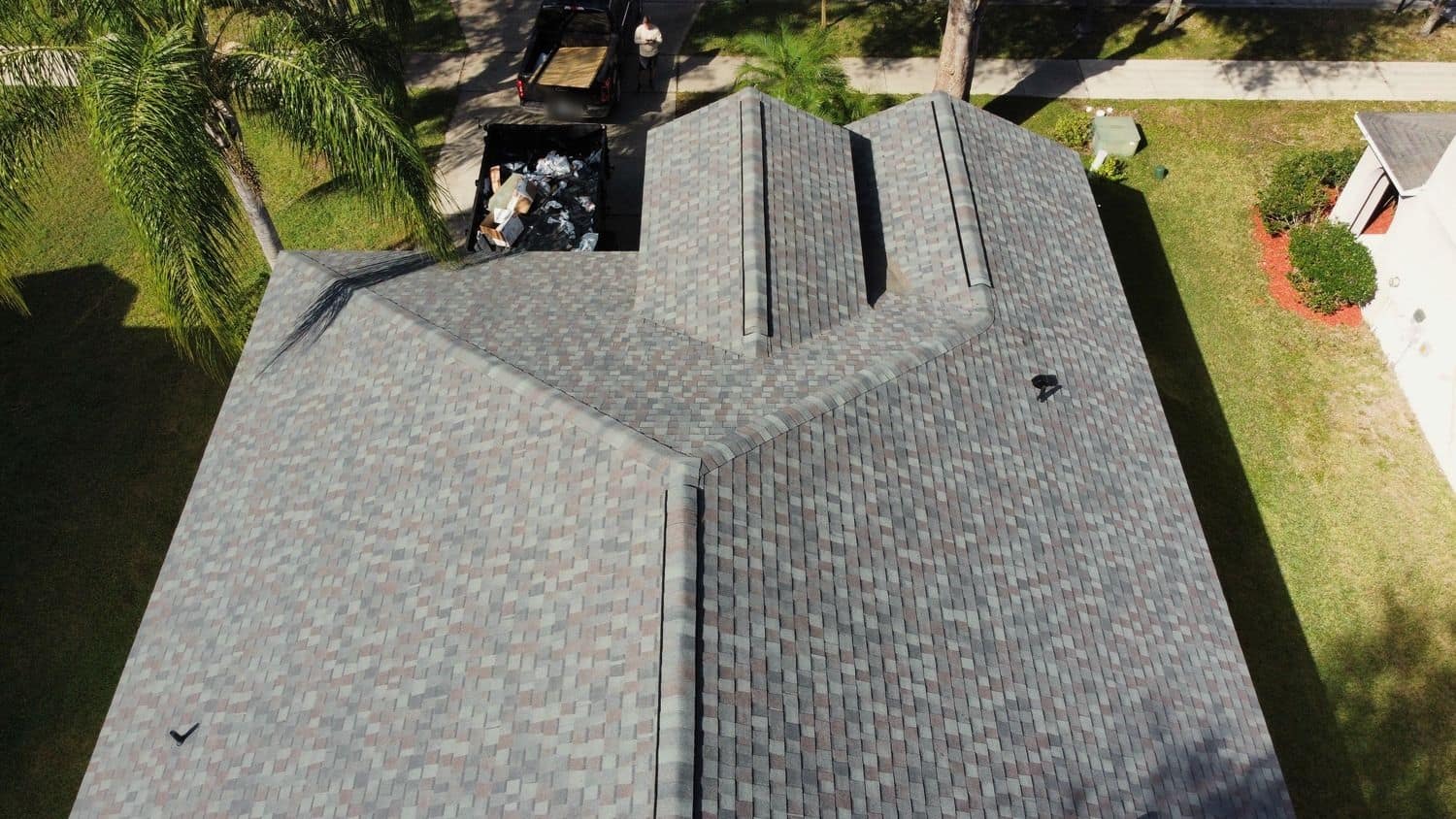
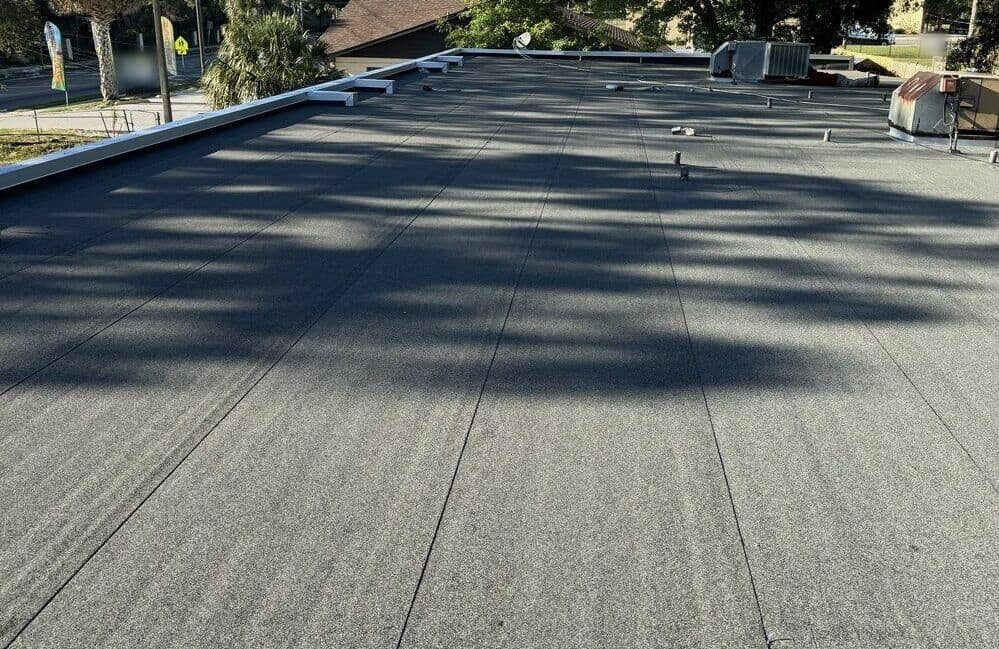
 Illustration