A shingle roof in Florida wears out sooner than national charts suggest. One Florida life-expectancy chart gives architectural shingles 15 to 20 years and 3-tab shingles 10 to 12, against 30 and 20 on the same group's national chart. Weather, product quality, the install and upkeep decide where yours lands.
Architectural shingles are laminated, with more than one layer of tabs; 3-tab shingles are single-layer strips. Either way, Florida's code wants ASTM D3462 shingles on a slope of 2:12 or steeper, rated for your home's design wind speed. For a Florida roof, look for Class H under ASTM D7158 or Class F under D3161, an FL product approval number, algae-resistant granules and a sealed deck underneath.
Shingles resist wind with their nails and with a seal that bonds each course to the one below. Florida weathers both. University of Florida researchers found that after the first four years, asphalt shingles tended to partly unseal, mostly at the exposed corners. They pointed to weathering and repeated temperature swings.
Sun and granules
Granules are a shingle's sunscreen. One shingle maker says they shield the asphalt from UV, and shingles that lose them age faster, turn brittle and can crack. Granules piling up in your gutters are on its list of signs a roof is past its prime.
Storm season
After Hurricane Michael in 2018, FEMA reported widespread poor wind performance of asphalt shingles. It cited a Florida study that traced failures to unsealed shingles, and said misplaced nails likely contribute. Hurricane Ian's 2022 damage survey found hips and ridges failing most often, on new roofs as well as old, as the International Code Council summarized FEMA's findings.
Lifespan
How long shingles last in Florida: the sources disagree
We found no study that measured shingle life in Florida with a published method. The charts and rules of thumb that do exist disagree, so here is the whole spread.
Treat the Florida chart as the cautious end and the maker's figure as the hopeful one. NAHB says life depends on local weather, proper building and design, material quality and maintenance. You can't change the weather; the other three are choices. None of these figures is a promise about a particular roof.
Profiles
Architectural vs 3-tab shingles
ARMA, the asphalt roofing manufacturers' trade group, describes strip shingles as about three times as long as they are wide, and the 3-tab is the most common one. Laminated shingles stack more than one layer of tabs. ARMA notes they are also called three-dimensional or architectural shingles.
Both answer to the same code: ASTM D3462, a 2:12 minimum slope, a solid deck and the wind class for your design speed. On the Florida chart, architectural shingles get 15 to 20 years against 10 to 12 for 3-tab. Try both profiles on sample homes in our Design Studio.
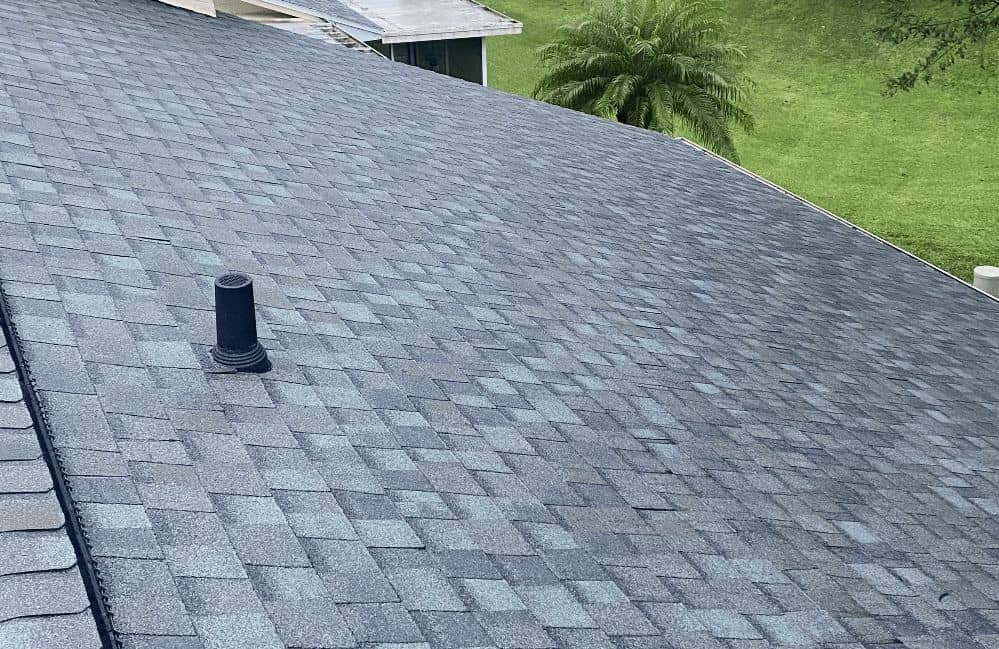
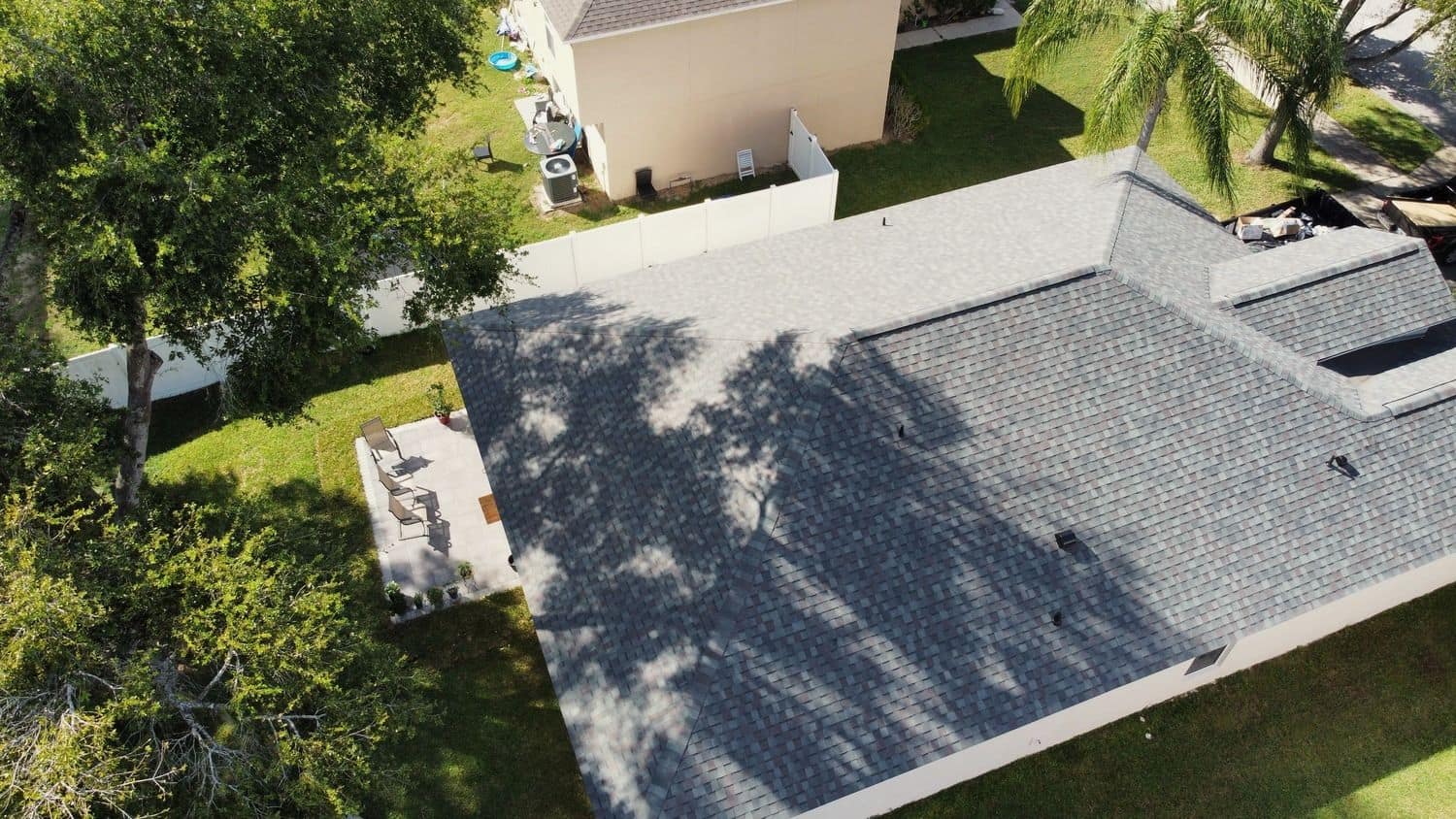
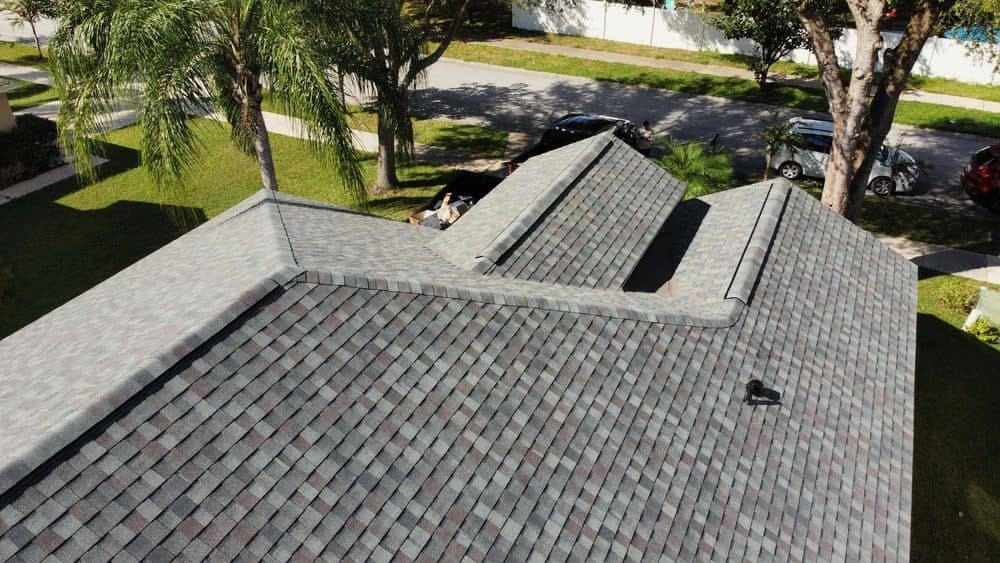
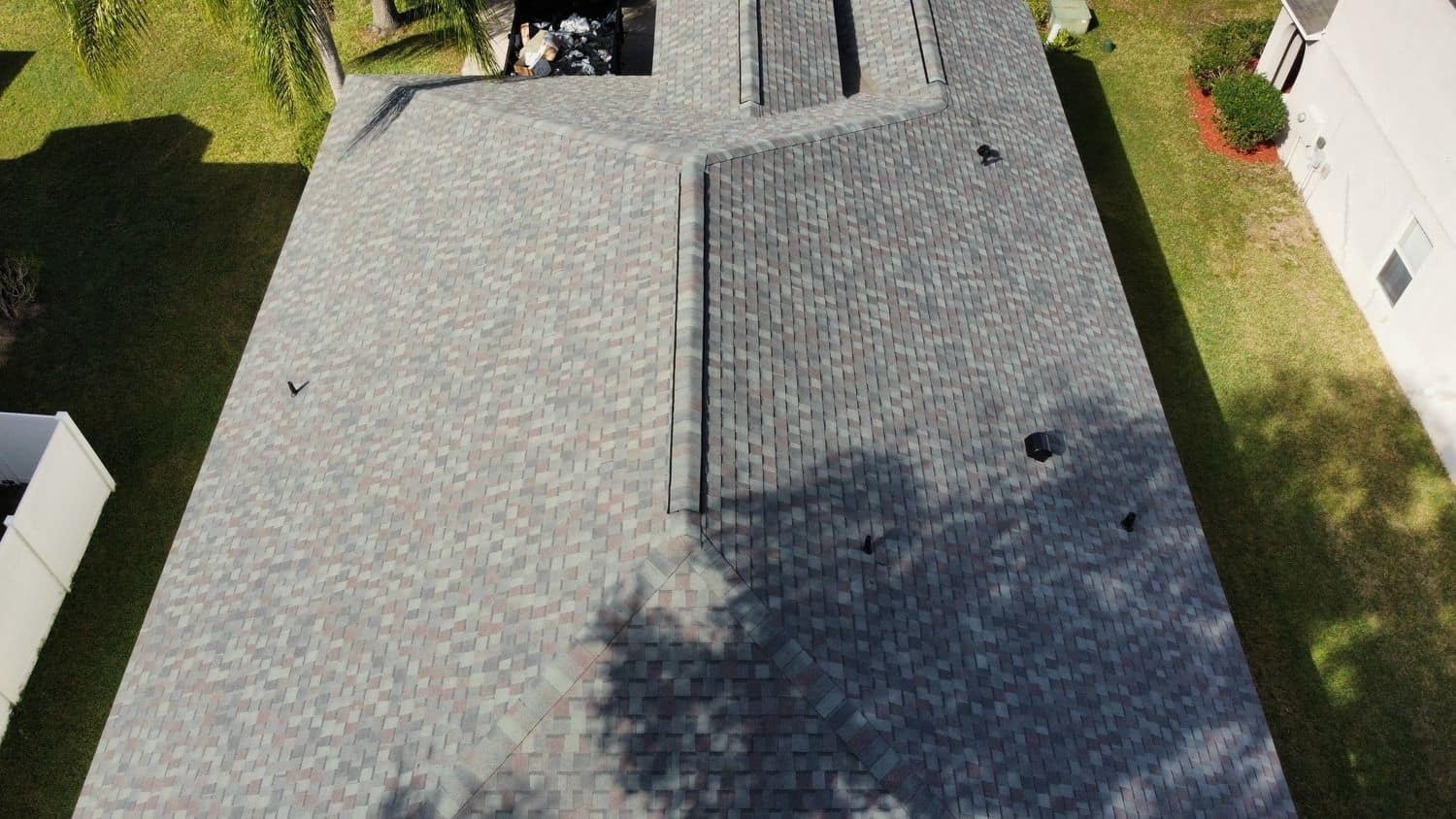
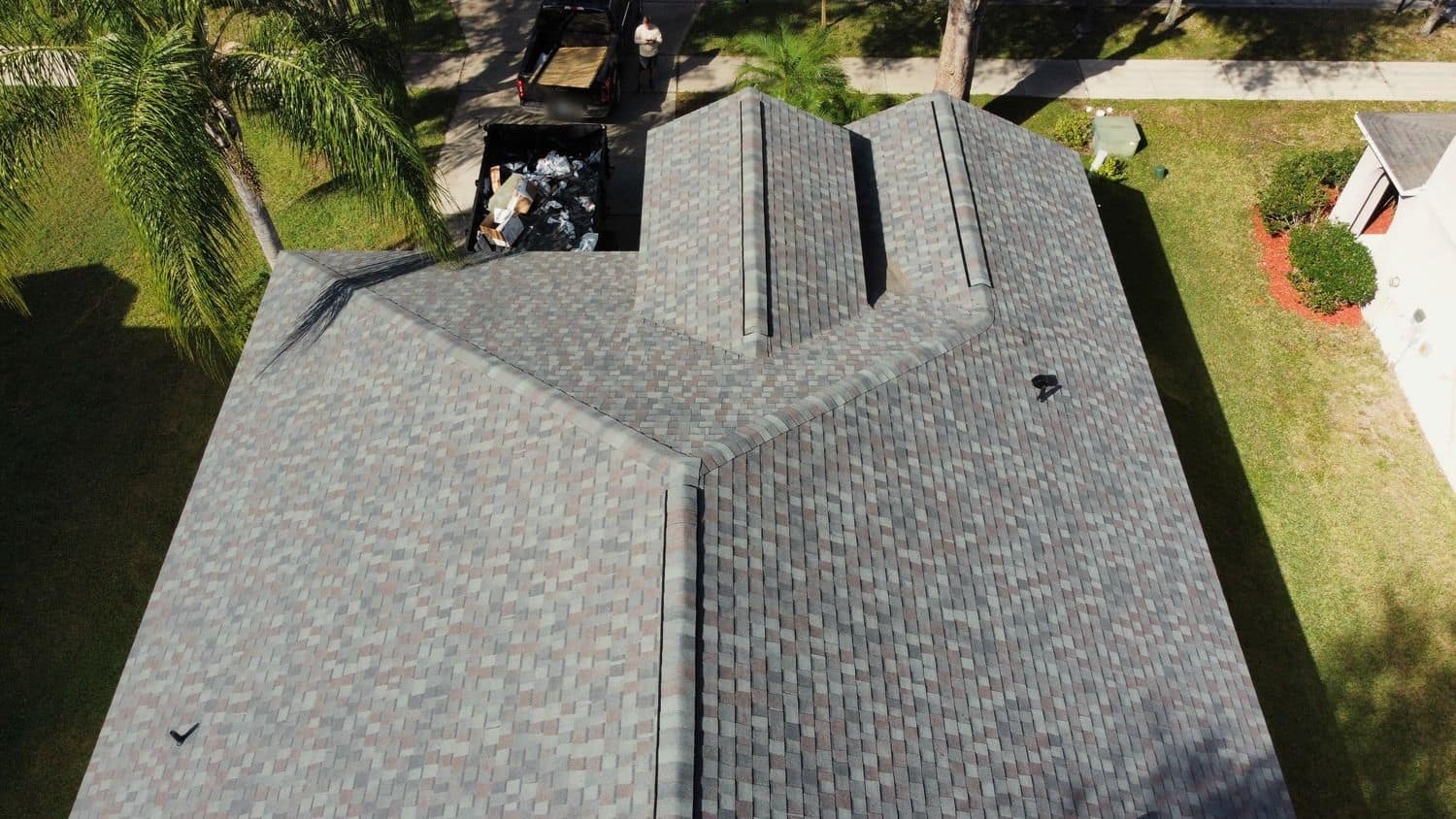
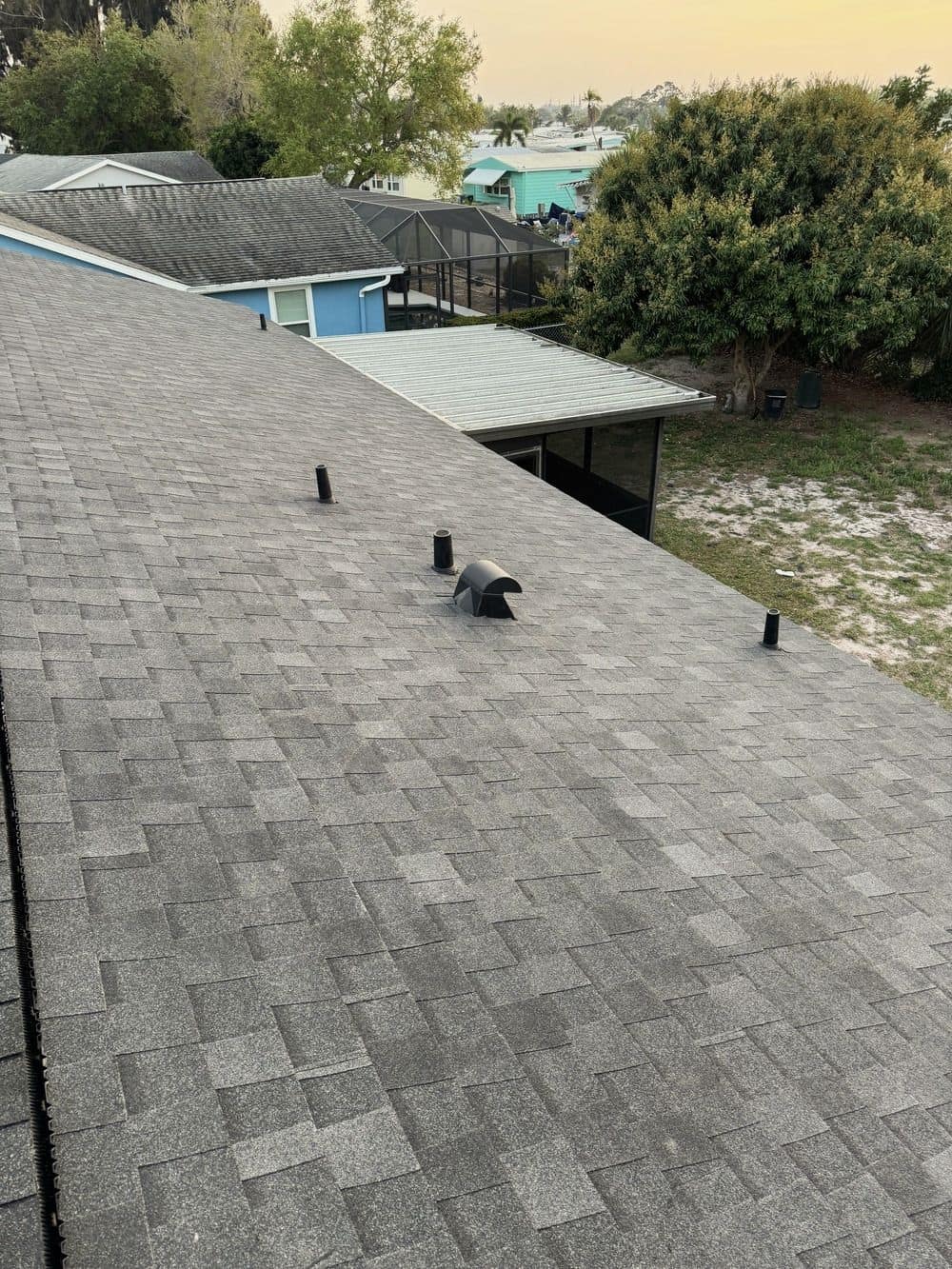
Architectural shingles, seen from the ridge
Wind
Shingle wind ratings in Florida: what the letters mean
Florida's residential code ties the shingle to your home's ultimate design wind speed, called Vult. Table R905.2.6.1 sets the classes it accepts, and every wrapper must show its class.
ASTM D3161 is a fan test: Class A runs at 60 mph, D at 90 and F at 110. ASTM D7158 calculates uplift and states its classes as design speeds: D up to 116 mph, G up to 155 and H up to 194.
So a Class F shingle can go on a 194 mph house after a 110 mph test. NRCA's technical director notes that D3161 says its results do not directly correlate to wind speeds in service, and he calls that pairing disingenuous. FEMA recommends checking for the D7158 label.
Design speed is set by address, not county. For that number, the state's wind mitigation form sends you to the ASCE Hazard Tool at ascehazardtool.org (ASCE 7-22, Risk Category 2). Its four buckets: the High-Velocity Hurricane Zone (HVHZ); Region 1, at 140 mph and up; Region 2, from 130 to 139; and Region 3, below 130.
The nailing question
The code minimum is four nails per strip shingle (R905.2.6), and each nail must penetrate the deck by 3/4 inch or pass through it (R905.2.5). Higher counts for high-wind work are often quoted, but no shingle maker's document we read states one. FEMA's lesson from Hurricane Michael: the count matters, and so does where each nail lands.
Pipe boot on a shingle slope
Florida code
Florida product approval and the FL number
Florida law puts roofing on the list of products that need state product approval (Fla. Stat. 553.842(5)). The same section forbids advertising or selling anything as hurricane or windstorm protection unless it holds that approval, and violations fall under the Deceptive and Unfair Trade Practices Act.
Each approval has an FL number. Before you sign, get the FL number for each roofing product on the job, shingles and underlayment included, and look each one up in the state's product approval database. The wind mitigation form insurers rely on asks for the covering's approval number or permit date too (OIR-B1-1802, question 4).
Under the shingles
Roof underlayment requirements in Florida
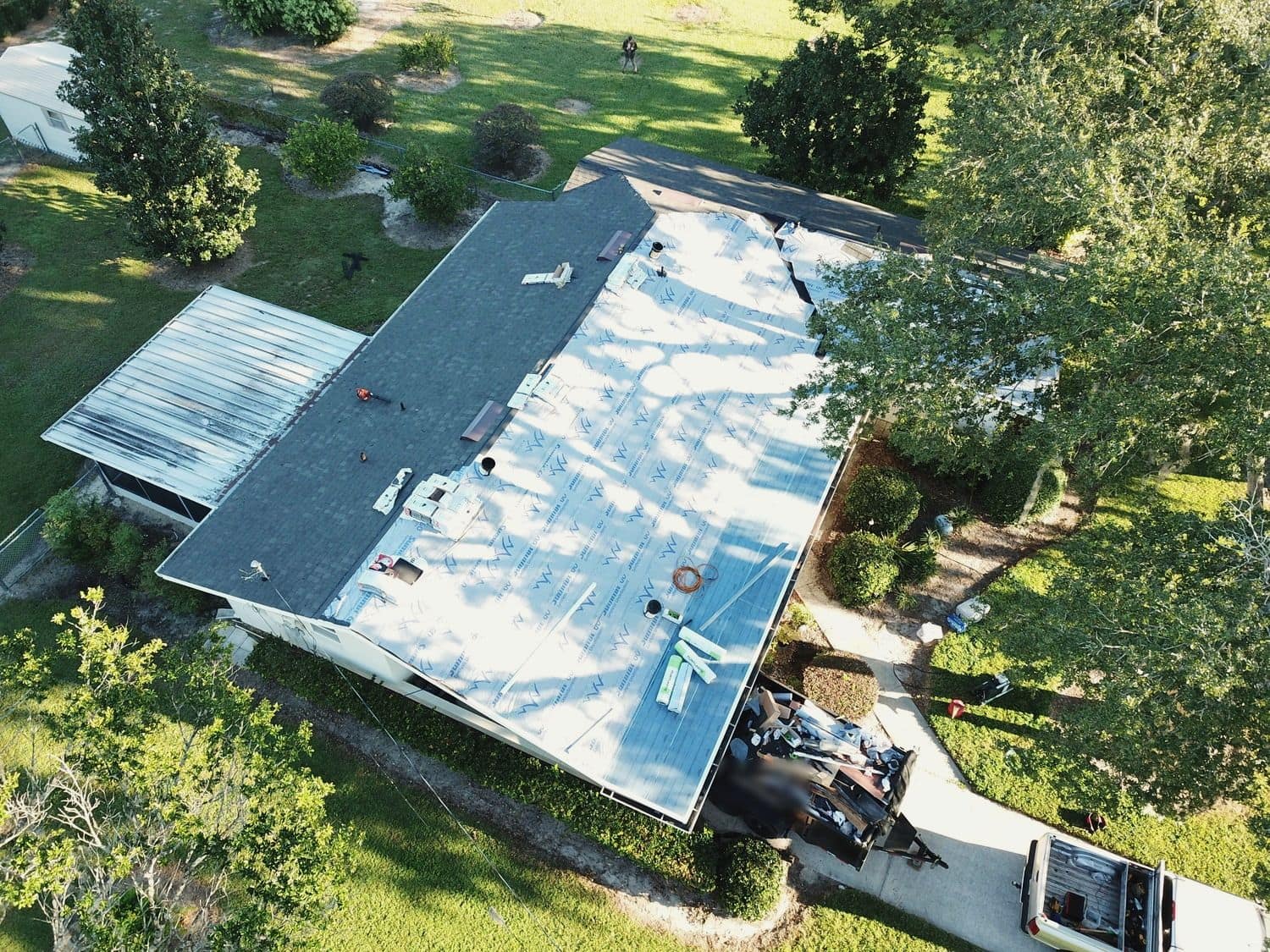
The layer under the shingles decides what happens when a storm peels some away. For shingle roofs, the code (R905.1.1.1) allows three ways to cover the deck:
Self-adhering ASTM D1970 membrane over the entire deck.
A strip of D1970 membrane or AAMA 711 Level 3 tape, at least 3-3/4 inches wide, over every deck joint, with underlayment over the whole roof.
Two lapped layers of D226 Type II, D4869 Type III or IV, or D8257 underlayment, cap-nailed 12 inches apart in the field and 6 inches at laps. Caps must be metal where Vult is 170 mph or more.
Re-roofing an older house adds a secondary water barrier by one of those methods and upgraded deck attachment (R908.7). Structures permitted under the Florida Building Code, in force since March 1, 2002, are exempt.
The wind mitigation form draws the same line: standard underlayment or hot-mopped felt does not qualify as secondary water resistance (question 8). FEMA's Hurricane Michael advisory says a second line of defense under the shingles, a sealed deck, can significantly reduce water coming in when the covering is lost or damaged. IBHS puts the reduction from sealed deck seams at up to 95 percent.
Tear-off day
Humidity
Black streaks and algae on shingles
Dark streaks on a Florida roof are usually algae, most often Gloeocapsa magma. ARMA says the staining is most widespread in the Gulf States and other warm, humid regions. One shingle maker has seen no evidence that it affects performance and calls it mostly cosmetic. Algae-resistant shingles use metal-treated granules, such as copper-lined ones, though that maker says they do not stop green algae or moss.
What kills algae on a roof, safely
Skip the pressure washer and the brush. ARMA warns that high-pressure systems are likely to damage asphalt roofing, and the maker adds that they strip granules and shorten roof life.
The maker's recipe is a 1:1 bleach-and-water mix, left 10 to 20 minutes, then flushed; ARMA says 15 to 20 minutes. Either can lighten streaks for a while.
Streaks may return. Both sources suggest a professional, because a wet roof is slippery.
Heat
Heat, color and cool roofs
The Florida Solar Energy Center measured this in side-by-side Fort Myers test houses in 2000. Under dark shingles, the attic ran 40°F above outdoor air at the peak hour. Three white reflective roofs, white metal among them, cut cooling energy 18 to 26 percent. The terra cotta tile house saved just 3 to 9 percent.
We found no measured saving for a light or reflective shingle, so ask for test data behind any cool-roof label. Ventilation still counts. The code's floor is 1/150 of the vented attic space as net free vent area, or 1/300 when 40 to 50 percent of it sits in upper vents near the ridge (R806.2).
Florida's insurance rules key on roof age, and shingles reach Citizens' line sooner than tile or metal. How the rules apply to your own policy is for your insurer or agent to answer.
Under 15 years old: roof age alone can't be the reason an insurer refuses to write or renew a homeowner's policy (Fla. Stat. 627.7011(5)(b)).
15 years or older: before it can require a new roof, the insurer must allow an inspection by an authorized inspector, paid for by you. A finding of at least 5 years of useful life left takes age off the table as the sole reason to refuse or non-renew (627.7011(5)(c)). The rule reaches policies written or renewed from July 1, 2022 on, and not mobile home policies.
Citizens Property Insurance: soft roofs such as shingle need documents showing at least five years of remaining life once they pass 25 years. Hard roofs such as tile or metal get 50 years (FAQ updated March 17, 2026).
Roof age runs from the last 100 percent replacement (627.7011(5)(d)), so a patch does not reset it.
Wind mitigation credits
Insurers must offer credits for construction that reduces wind loss (Fla. Stat. 627.0629). The state's consumer notice names the roof covering, how the deck is attached, the roof-to-wall connection, roof shape and secondary water resistance. It has no credit for a roof material, and the credits apply only to the hurricane-wind premium (OIR-B1-1655).
A completed wind mitigation form (OIR-B1-1802, Rev. 04/26) stays valid up to five years if nothing material changes. The state's wind mitigation resources page links the forms.
Cost
What a shingle roof costs to own
A shingle roof's cost is a stack of choices and code items on day one, then upkeep and insurance after.
On day one
Size, pitch, and the valleys, hips and openings that need flashing.
Architectural or 3-tab, in the wind class your design speed requires.
Tear-off of every old layer wherever the code requires it (R908.3).
Deck re-nailing on pre-2002 homes: ring-shank nails added where staples or 6d nails held the deck (Table R908.7.1.2).
The secondary water barrier method, drip edge and attic ventilation.
High-Velocity Hurricane Zone rules in Broward and Miami-Dade.
Over the years
A replacement every 10 to 30 years, depending on the product, the install and which source you read.
Insurance age lines, and the 25 percent repair rule (R908.1.1) with its exception for roofs built under the 2007 code or a later edition.
Gentle algae cleaning, resealing loose edges, and wind credits for a well-attached, sealed deck where your insurer prices them.
How much does a shingle roof cost in Florida? Our quote tool gives a ballpark from published Florida market ranges, sized to your home, pitch and shingle choice, and marked as a market range rather than our price.
When shingles are the right call, and when they aren't
Shingles make sense when:
The pitch is 2:12 or steeper. Below that, shingles are not allowed (R905.2.2).
Your framing was built for a light roof. A Department of Energy guide calls tile about three times heavier than asphalt, so a switch to tile starts with a framing check. The tile industry says many homes need little or no added support.
You plan around a 15-to-20-year cycle for architectural shingles, the Florida chart's figure.
You want the longest life in the sources. The Florida chart gives tile 80-plus years, and Citizens' hard-roof line is 50. See tile roofs and metal roofs.
Attic heat is the main complaint. The FSEC test's big savings came from white roofs.
Whatever you choose, our roof replacement page covers the permit, the sheathing and roofing inspections, and the code items a Florida re-roof brings.
Shingle roofs: comparison
Item
3-tab shingle
Architectural shingle
How it is built (ARMA)
One layer; a strip about three times as long as it is wide
Laminated: more than one layer of tabs for extra thickness
Florida chart life (InterNACHI)
10–12 yrs
15–20 yrs
National chart life (InterNACHI)
20 yrs
30 yrs
Code standard and slope
ASTM D3462; 2:12 or steeper
ASTM D3462; 2:12 or steeper
Wind class
Set by Table R905.2.6.1 for the design speed; printed on the wrapper
Set by Table R905.2.6.1 for the design speed; printed on the wrapper
Look
Flat, even tabs
Three-dimensional, in ARMA's words
Roof cost estimator
See a ballpark for a shingle roof
Answer a few questions about your home and see a published Florida market range for architectural or 3-tab shingles. It is a market range, not a South Fork Roofing price.
Plan on about 15 to 20 years for architectural shingles and 10 to 12 for 3-tab, going by InterNACHI's Florida chart, the most cautious source we found. Its national chart says 30 and 20. NRCA puts most new roofs at about 20 years, and one shingle maker cites two to three decades for well-installed, high-quality shingles. None of these sources publishes a Florida test method. Sun, heat and storms explain the gap. The product, the install and the upkeep decide where one roof falls.
They are still asphalt, so they share asphalt's Florida weak spots. University of Florida researchers found seals start loosening at the corners after about four years. UV wears off granules and leaves shingles brittle, humid air grows algae streaks, and FEMA saw poor shingle wind performance after Hurricane Michael. The Florida chart gives them 15 to 20 years against 80-plus for tile. Citizens treats them as a soft roof with a 25-year line instead of 50. Next to 3-tab, though, they come out ahead on that same chart.
What is the best type of roof shingle for Florida?
No brand wins outright, but a checklist narrows the field. Start with ASTM D3462 and a wind class the code accepts at your design speed. D7158 Class H and D3161 Class F are accepted at every speed in the table, up to 194 mph. Look up the FL number in the state's product approval search, and in Broward or Miami-Dade ask for the NOA number as well. Algae-resistant granules help with streaks. Then ask about nailing, the secondary water barrier and the drip edge.
Shingles labeled ASTM D7158 Class H or ASTM D3161 Class F. Florida's code table has no 160 mph row. It jumps from 155 to 168, and from 168 up only those two classes qualify. D7158 Class G tops out at 155 mph, short of 160. Remember that Class F comes from a 110 mph fan test, and NRCA's technical director cautions that it does not map directly to real wind. FEMA suggests the D7158 label. Get your exact design speed from the ASCE Hazard Tool.
There is no Class 3 wind rating. Wind classes are letters: A, D and F under ASTM D3161, and D, G and H under ASTM D7158. Class 3 is an impact rating under UL 2218, a different test. One current architectural shingle lists it next to D7158 Class H and D3161 Class F. Florida's wind table reads only the letter. The state's notice on wind mitigation discounts doesn't list impact class among its roof items, so ask your insurer or agent what it prices.
At least four per strip shingle or two per individual shingle, unless the manufacturer requires more (R905.2.6, 2023 Florida Building Code, Residential). Use galvanized steel, stainless steel, aluminum or copper roofing nails with a 12-gauge or heavier shank and a 3/8-inch head. Drive them at least 3/4 inch into the deck or through it (R905.2.5). We found no maker's own document setting a higher high-wind count, so ask for the installation instructions of the exact product. FEMA notes that placement matters too.
A third layer can't go on under Florida's re-roof rules. R908.3 of the 2023 Florida Building Code, Residential, says every existing layer must come off before anything new goes on if the roof already carries two or more applications of any covering. A tear-off is also mandatory if the old covering is water-soaked, too deteriorated to work as a base, or blistered with the blisters left unsecured. Whether a building department accepts even one overlay is a separate question. The 8th edition's re-cover sections read Reserved, so ask your building department first.
Yes, within a limit. The code lets you repair, replace or recover up to 25 percent of the roof, or of one roof section, within any 12-month period (R908.1.1). Beyond that, the whole roof or section must be redone to current code. If the roof was built to the 2007 code or later, in force from March 1, 2009, only the repaired part must meet current code (Fla. Stat. 553.844(5)). A patch does not reset roof age for insurance. For loose but sound shingles, UF researchers suggest hand-sealing the edges.
Mostly sun and age. One shingle maker says granules block UV. As they wear away, shingles age faster, turn brittle, dry out and crack, and granules collect in the gutters. It lists cupped or curled shingles as a sign of an aging roof and warns they may lose their seal. Citizens' 4-point form records cupping or curling, excessive granule loss and exposed asphalt as roof damage. NRCA says fall and spring inspections often find heavy granules in gutters.
The research we read can't put a number on it for shingles. The Florida Solar Energy Center's 2000 test houses compared dark shingles with other roofs. White reflective ones cut cooling energy 18 to 26 percent; a terra cotta tile roof saved only 3 to 9. No light or reflective shingle appears in the results we read. What the test does show is how hard a dark roof heats the attic, 40°F over outdoor air at peak. Ask to see tested data behind any cool label, and check the attic vents against the code.
64.InterNACHI Florida Life Expectancy Chart, InterNACHI (home inspectors' association). Read Oct 5, 2026. Florida and coastal guideline chart with no published method; shown only as one end of a range.