Roof repair in Florida usually means fixing one of a few weak points: flashing at walls and pipes, valleys, vents, edges or the ridge. After Hurricane Ian, hips and ridges were the damage FEMA's team saw most, on newer and older roofs alike. Repair the spot when the roof around it is sound; plan a re-roof when it is not.
Most roof damage can be repaired when it is limited and the rest of the roof still has life. Florida's code draws one line: no more than 25 percent of a roof or roof section may be repaired in 12 months unless the whole section is redone. Roofs built to the 2007 code or later are exempt. Past that line, or on a worn-out roof, re-roofing is the honest answer.
Florida's hurricane damage reports keep naming the same parts of a roof. FEMA's teams call damaged roof coverings a primary source of water entry after hurricanes, and lost ridge vents and soffits let in more.
Hips and ridges
The International Code Council's summary of FEMA's report on Hurricane Ian (2022) puts hips and ridges at the top of the damage list, on new roofs and old. Newer roof coverings generally performed better.
Ridge vents
A lost ridge vent leaves an open slot along the top of the deck. In one house FEMA studied after Hurricane Michael (2018), ceilings fell though the roof lost only its ridge shingles and ridge vent. FEMA recommends vents tested for wind-driven rain under Florida's TAS 100(A), with nails that pass fully through the sheathing.
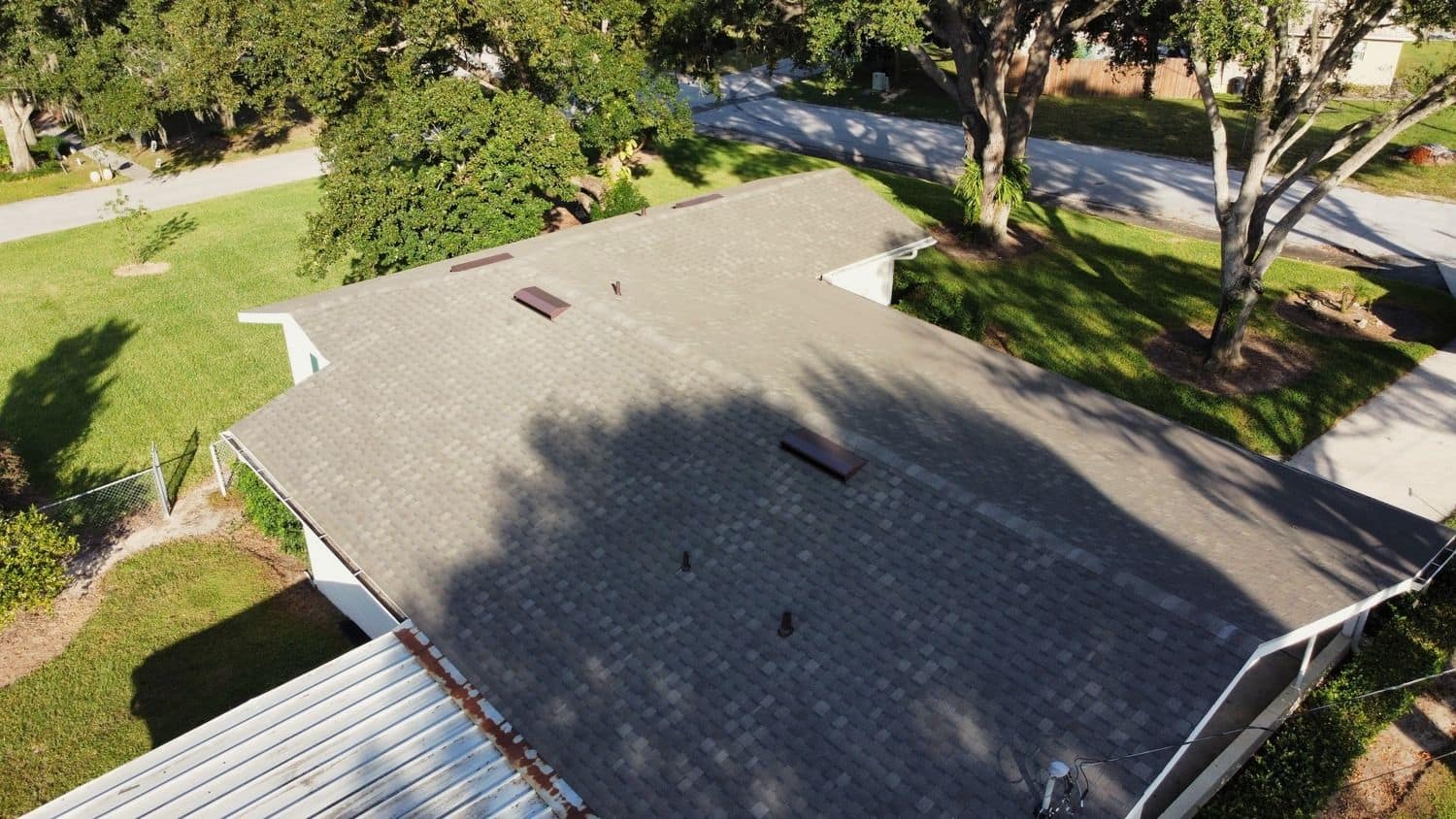
Ridge vents along the peak
Shingle edges and corners
University of Florida researchers found that after about four years, asphalt shingles tend to come partly unsealed, most of all at exposed corners. FEMA adds that nail placement matters, not only the nail count.
Soffits
FEMA says soffits have historically performed poorly in hurricanes, often letting in significant water. The 2007 Florida Building Code began requiring them to resist the same wind loads as walls.
Tile
Concrete and clay tile seldom breaks from wind alone. The Tile Roofing Industry Alliance says high-wind breakage typically comes from airborne debris.
Leaks
Leak sources and the signs, inside and out
Most leaks begin where the roof is interrupted. Florida's code requires flashing at wall-and-roof joints, at changes in slope or direction, and around openings such as plumbing vents. Look there first.
Item
What the Florida code sets
Ask before the repair
Wall and chimney joints
Step or continuous L-flashing at sidewalls, per the shingle maker (R905.2.8.3)
Is the old flashing replaced or just caulked?
Valleys
Open metal valleys at least 16 inches wide, or a 36-inch self-adhered lining under closed valleys (R905.2.8.2)
Will the valley lining be replaced?
Pipe boots and vents
Flashing around every roof opening (R903.2.1)
Is the boot new, or the old one reset?
Eaves and rakes
Drip edge nailed every 12 inches, or every 4 inches where the design wind speed (Vasd) is 110 mph or more (R905.2.8.5)
Citizens, Florida's state insurer, lists the roof damage its 4-point inspectors record. It makes a good homeowner's checklist.
Cracked, cupped or curling shingles
Bald spots, with granules collecting in the gutters
Missing, loose or cracked tabs or tiles
Exposed felt or bare asphalt
Signs from the attic and ceilings
Stains on the underside of the decking
Soft spots in the deck
Wet or matted insulation
Stains or drips on ceilings
Dark streaks are usually algae, which ARMA says is most widespread in warm, humid places such as the Gulf States. A shingle maker reports no evidence that algae affects how shingles perform.
The decision
Repair or replace: where the line falls
Florida's code defines a roof repair as renewing part of an existing roof to maintain it. A replacement removes the old covering, repairs damaged substrate and installs a new one (FBCR Chapter 2).
Item
Points to a repair
Points to a re-roof
Damaged area
A small area, well under a quarter of the roof
Over 25 percent of an older roof or section in 12 months
Code era
2007 code or later: only the repaired part must meet today's code
Pre-2007: crossing 25 percent brings the whole section to code
Surrounding roof
Shingles sealed and holding granules; firm decking
Curling, granule loss, exposed felt or soft decking across the roof
Water and layers
Dry decking and insulation; one layer
A water-soaked roof or two existing layers, which the code says must come off first (R908.3)
The Tile Roofing Industry Alliance says tile roofs are repairable in most cases. When a profile is no longer made, a harvest-and-repair moves sound tiles from a hidden slope to the street side and puts new tile on the hidden slope. TRI also says new or salvaged tile should not go over compromised underlayment, since the underlayment keeps water out when a tile cracks. See tile roofs.
TRI also rejects the claim that a tile nose lifting 2 inches proves a roof fails code.
Metal
On exposed-fastener metal roofs, a panel maker says the screws back out as the metal expands and contracts, and leaks follow. Standing-seam panels ride on clips and move more freely. See metal roofs.
Flat and low-slope
Florida's code calls a roof positively drained when it drains within 48 hours of rain, and the roofing industry uses the same 48-hour test for ponding. No residential ponding standard turned up in our research, so the same yardstick serves porches and Florida rooms. Suspected wet insulation has to be confirmed with core cuts, and a coating sold to stop leaks counts as roofing work under Fla. Stat. 489.105. See flat roofs.
Florida law
Can a handyman do roof repairs in Florida?
Only the smallest jobs. Fla. Stat. 489.103(9) exempts "casual, minor, or inconsequential" work under a contract-price limit the statute sets. The exemption ends if a job is split to stay under it or the person advertises as a contractor.
Roofing otherwise belongs to roofing contractors, whose scope under 489.105 covers required deck attachments and sheathing or fascia repairs during a roof repair. A general contractor must subcontract roofing unless it also holds a state roofing license (489.113(3)).
Often, yes. FBC-B 105.1 requires a permit to repair a building, and 105.2.2 lets ordinary minor repairs skip it only with the building official's approval. So your city or county building official decides whether your repair is minor.
Permit offices differ across the 20 counties we serve; find yours through service areas. Bigger jobs fall under re-roof rules: no plan review (FBC-B 107), but a sheathing inspection and a roofing inspection (110.3).
After the storm
After a storm: safe first steps for a damaged roof
Hurricane season runs June 1 to November 30 and peaks around September 10 (NOAA). The first hours after a storm decide how much water gets in and how good your records are.
01
Stay off the roof
Wet roofs are slippery, and roofing makers leave roof work to professionals. Tile makers say only professionals should walk tile. Look from the ground and the attic.
02
Slow the water inside
Move belongings, catch drips and keep clear of wet light fixtures and sagging ceilings.
03
Photograph first
Take wide and close photos of the roof, attic, ceilings and anything wet before cleanup. Keep every receipt.
04
Temporary cover by a pro
If water is getting in, have a roofing professional put on a tarp or other temporary cover until the repair.
05
Report on time
Florida bars a new property claim unless the insurer gets notice within 1 year of the date of loss, or 18 months for a supplemental claim (627.70132). For a hurricane, that date is landfall or the date NOAA verifies the storm. Coverage questions go to your insurer or agent.
06
Vet who you hire
Check the contractor on the DBPR license search. Walk away from deductible waivers or gifts offered for an inspection or a claim; 489.147 bars both.
Insurer forms and roof-age rules are on the roof inspections page.
Florida code
The 25% rule when part of a roof is repaired
Florida's 25 percent rule decides when a repair becomes a bigger job. On an older roof, repairing more than a quarter of the roof or of one roof section within 12 months means the whole roof or section must meet the current code (FBCR R908.1.1).
Roofs built, repaired or replaced under the 2007 Florida Building Code or later are carved out: only the repaired part must meet today's code, however large. Under Fla. Stat. 553.844(5), local governments cannot amend that exception.
Is my roof a 2007-code roof?
Check the roof's last permit date. The 2007 code took effect March 1, 2009 (Florida Building Commission), and your building department holds the record.
What counts as a roof section
Sections are divided by expansion joints, parapet walls, flashing other than valleys, elevation changes other than hips and ridges, a change of roof type or the legal description. A hip, ridge or valley alone does not start a new section.
How the area is measured
The tile industry's post-storm brief accepts field measurement or common aerial measurement programs.
Upkeep
Maintenance that prevents roof repairs
NRCA's homeowner advice is simple: look the roof over each fall and spring, and keep gutters clear of leaves and debris.
After about year four, have shingle edges checked for lift and hand-sealed to the maker's specs (UF).
Never pressure-wash shingles. ARMA says high-pressure washing is likely to damage them.
Algae is mostly cosmetic. A diluted bleach rinse lightens it for a while, but a wet roof is slippery, so ARMA points to professionals.
Keep gutters and downspouts clear so water leaves the roof edge.
After a named storm, scan the ridge, vents and edges from the ground.
Price
What changes the cost of a roof repair
No one can price a repair honestly before seeing the roof. These are what move the number:
Roof type, and matching or harvesting discontinued tile
Height, pitch and access
How far water spread into decking, insulation and drywall
Answer a few questions about the damage and your roof. The tool shows a published Florida repair range, clearly labeled as not our price, and then you can ask for a real estimate.
Ranges come from published Florida cost guides. They are not South Fork Roofing's prices.
Photos
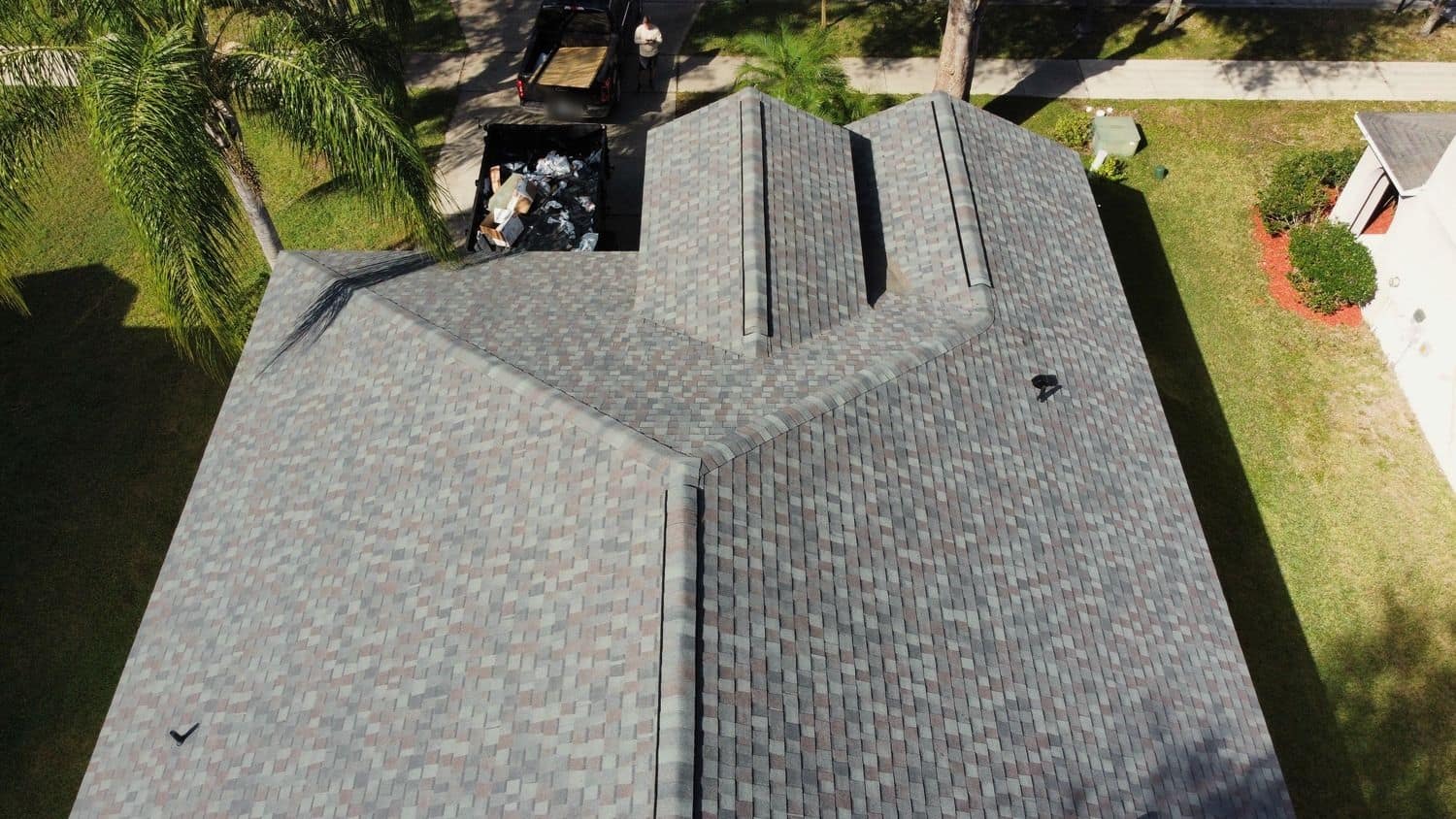
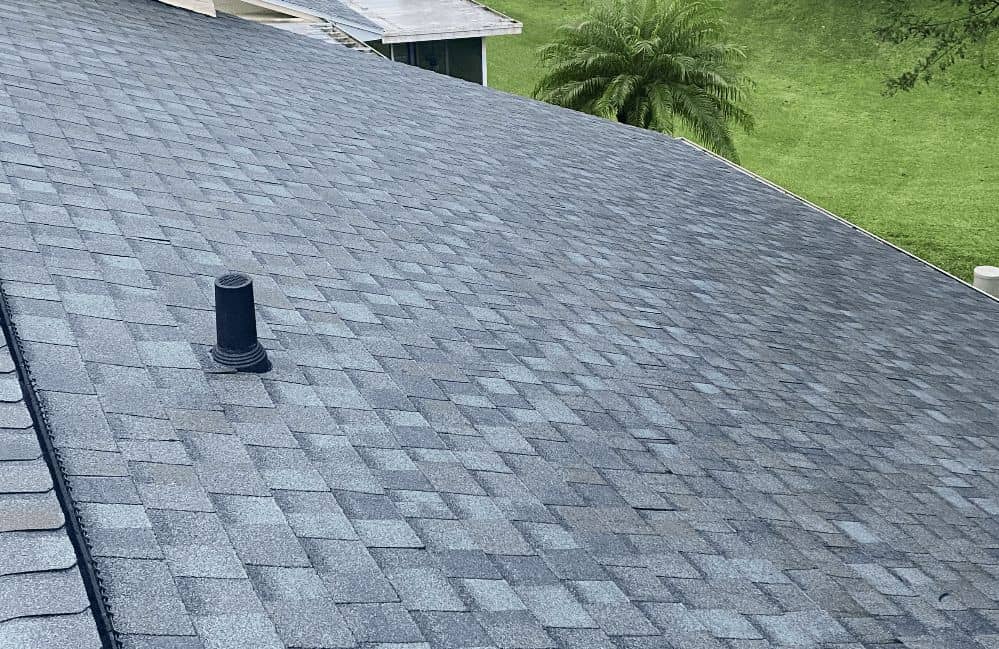
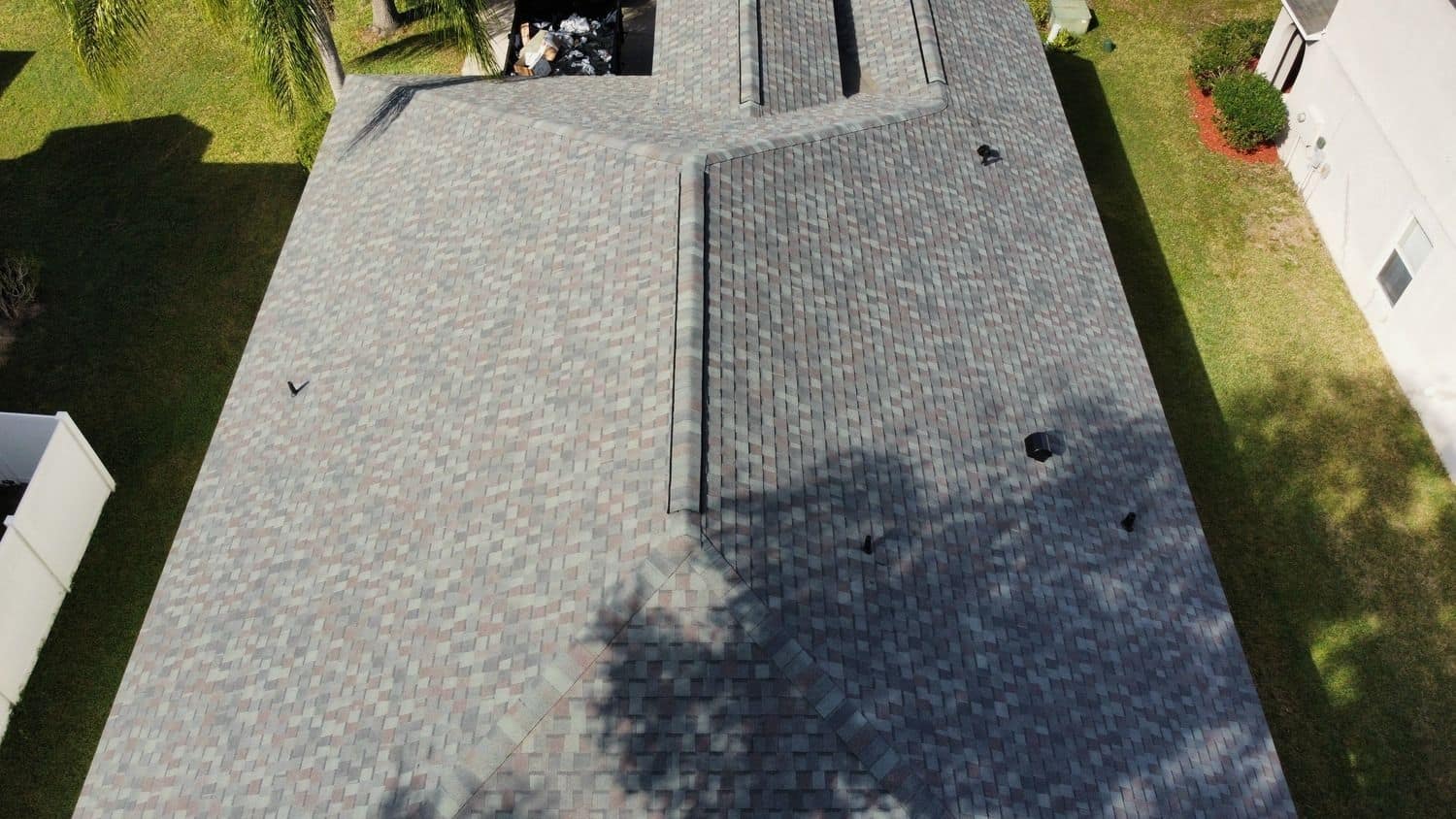
From our jobs
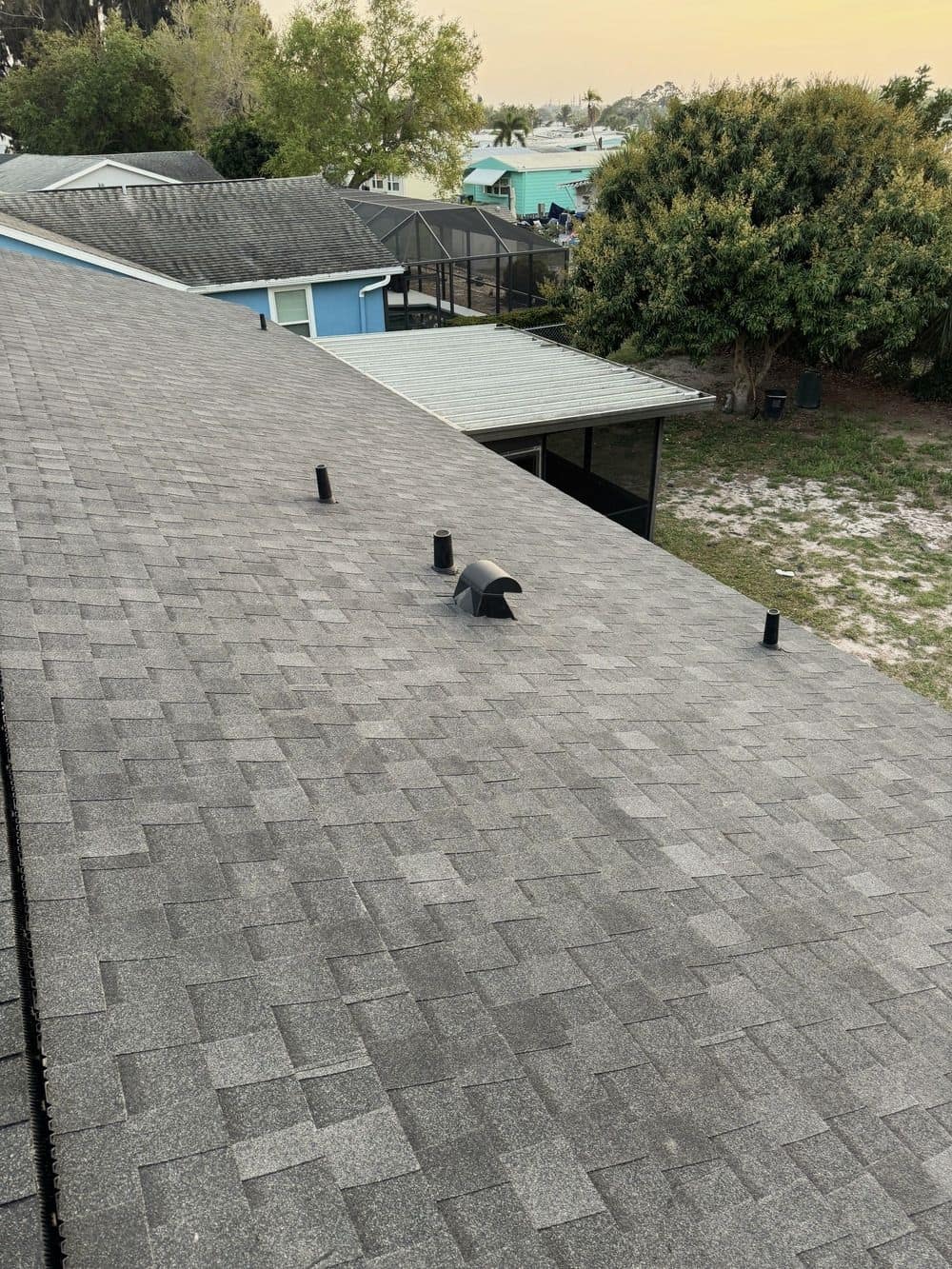
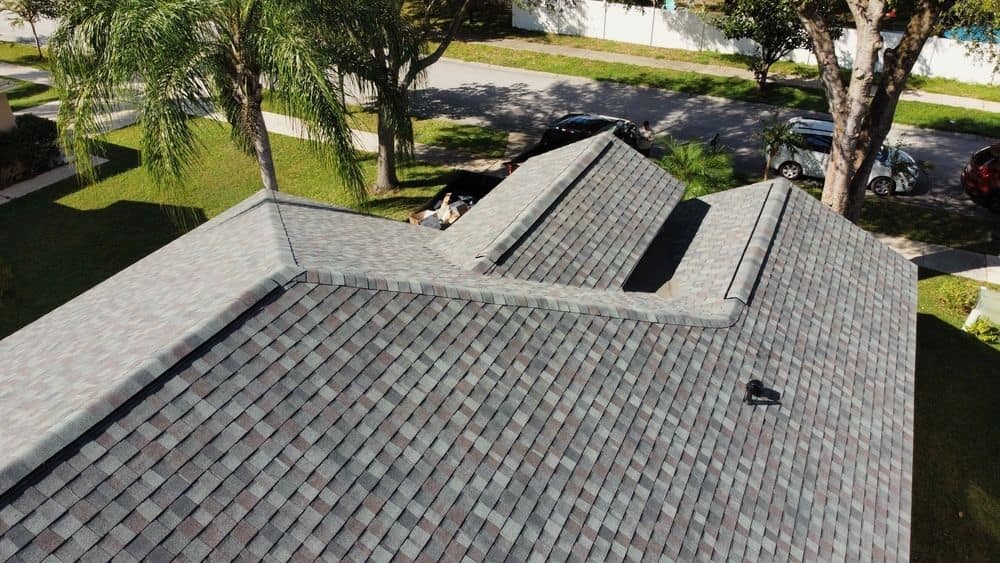
Valleys and vents
Pipe boots and a box vent
Shingle roof from above
Questions
Roof repair: questions Floridians ask
How do I find where my roof is leaking?
Start inside and work up. Note where the ceiling stain is, then, if the attic is safe to enter, look for wet decking or insulation above and uphill of it, since water can run along framing before it drips. Match that spot to the nearby openings and joints: a plumbing vent, a wall joint, a valley, a ridge vent or a soffit. Florida's code requires flashing at each of them, and FEMA traced storm leaks to vents, soffits and damaged coverings.
Why does my roof leak only in hard or sideways rain?
Wind-driven rain reaches places a light rain never does: ridge vents, soffits, flashing laps and wall joints. FEMA's hurricane studies traced water entry to those spots. Florida rain also comes hard. NOAA's Atlas 14 puts the 5-minute burst of a 10-year storm at 9.61 inches an hour in Tampa and 11.3 in West Palm Beach. If stains appear only after storms, have the flashings, vents and soffits checked before the shingles.
Does homeowners insurance cover roof damage from a storm?
It depends on your policy, the cause of the damage and your deductible, so the answer has to come from your insurer or agent. Florida law bars a contractor from interpreting policy provisions or advising on coverage unless licensed as a public adjuster (Fla. Stat. 489.147(2)(d)). A roofer can describe the physical damage and the repair it needs. Read your policy and its declarations page, then ask your agent.
How long do I have to report storm damage to my roof in Florida?
One year from the date of loss for a new or reopened claim, and 18 months for a supplemental claim, under Fla. Stat. 627.70132. For hurricanes and other windstorms, the date of loss is landfall or the date NOAA verified the storm. Those are outer limits; your policy may ask for prompt notice much sooner. Photograph the damage early and take deadline questions to your insurer or agent.
Can a roofer waive my deductible or offer a gift after a storm?
No. Fla. Stat. 489.147 bars a contractor from offering a rebate, gift, gift card, cash, coupon, deductible waiver or anything else of value for inspecting your roof or for a roof insurance claim. Ads urging a roof-damage claim must also warn, in print, that you pay the deductible and that rebating it or filing a false claim is a third-degree felony. Treat any such offer as a reason to end the conversation.
Does a roof repair reset my roof's age for insurance?
No. Under Florida's 15-year roof rule, a roof's age runs from the last date 100 percent of it was built or replaced, so a patch does not make it younger (Fla. Stat. 627.7011(5)(d)). Partial replacements add up: once they reach 100 percent, the age runs from the first one. An insurer may not refuse or non-renew a policy solely for roof age when the roof is under 15 years old. For an older roof it must allow an inspection, at your expense, and cannot refuse for age alone if the inspection shows 5 or more years of life left.
Fascia, yes, as part of a roof job: Florida's roofing contractor scope includes repairing or replacing wood sheathing or fascia as needed during a roof repair or replacement (Fla. Stat. 489.105). Soffit, fascia and gutters also sit in the state's specialty structure contractor scope. FEMA reports soffits have performed poorly in hurricanes, so ask how the panels will be fastened at the wall and at the fascia.
There is no single number. A shingle maker notes that the National Severe Storms Laboratory classes winds over 50 to 60 mph as damaging, and bent or curled shingles may lose their seal. Florida's code ties a shingle's wind class to the home's design wind speed: ASTM D3161 Class F is a 110 mph fan test, and ASTM D7158 Class H covers design speeds up to 194 mph. NRCA warns that those lab results do not map directly to wind on a real roof.
Can a few broken roof tiles be replaced without a new roof?
Usually, yes. The Tile Roofing Industry Alliance says tile roofs are repairable in most cases. Florida's code allows salvaged tile on a repair only if it matches in material and profile, and cracked tile may never go back (FBCR R908.5). Matching is the hard part: many profiles are discontinued, so expect a repair not to match exactly. Check the underlayment too, because TRI says new tile should not cover compromised underlayment.
Does the 25% rule mean my whole roof has to be replaced?
Not by itself. The rule applies only when more than 25 percent of a roof or roof section is repaired, replaced or recovered within 12 months; then the whole roof or section must meet the current code. Roofs built, repaired or replaced to the 2007 Florida Building Code or later are exempt, and only the repaired portion must comply (Fla. Stat. 553.844(5)). Nothing in the rule obliges an insurer to pay for a new roof.
Fix a leak as soon as you find it, and save planned work for the drier months. The National Weather Service office for Tampa Bay dates the rainy season from about May 25 to October 10 for most of west-central Florida, and May 15 to October 15 in Southwest Florida. Hurricane season runs June 1 to November 30. Late fall through spring has fewer storm interruptions and gets a repair done before the next season.
What is the average cost to repair a roof in Florida?
There is no useful average: a Florida roof repair can mean one pipe boot or a whole valley, a few shingles or a slope of broken tile. The price moves with roof type, height and pitch, how far water spread, whether flashing must be replaced, and whether a permit is required. A written, itemized estimate made after someone sees the roof is the only number worth comparing.