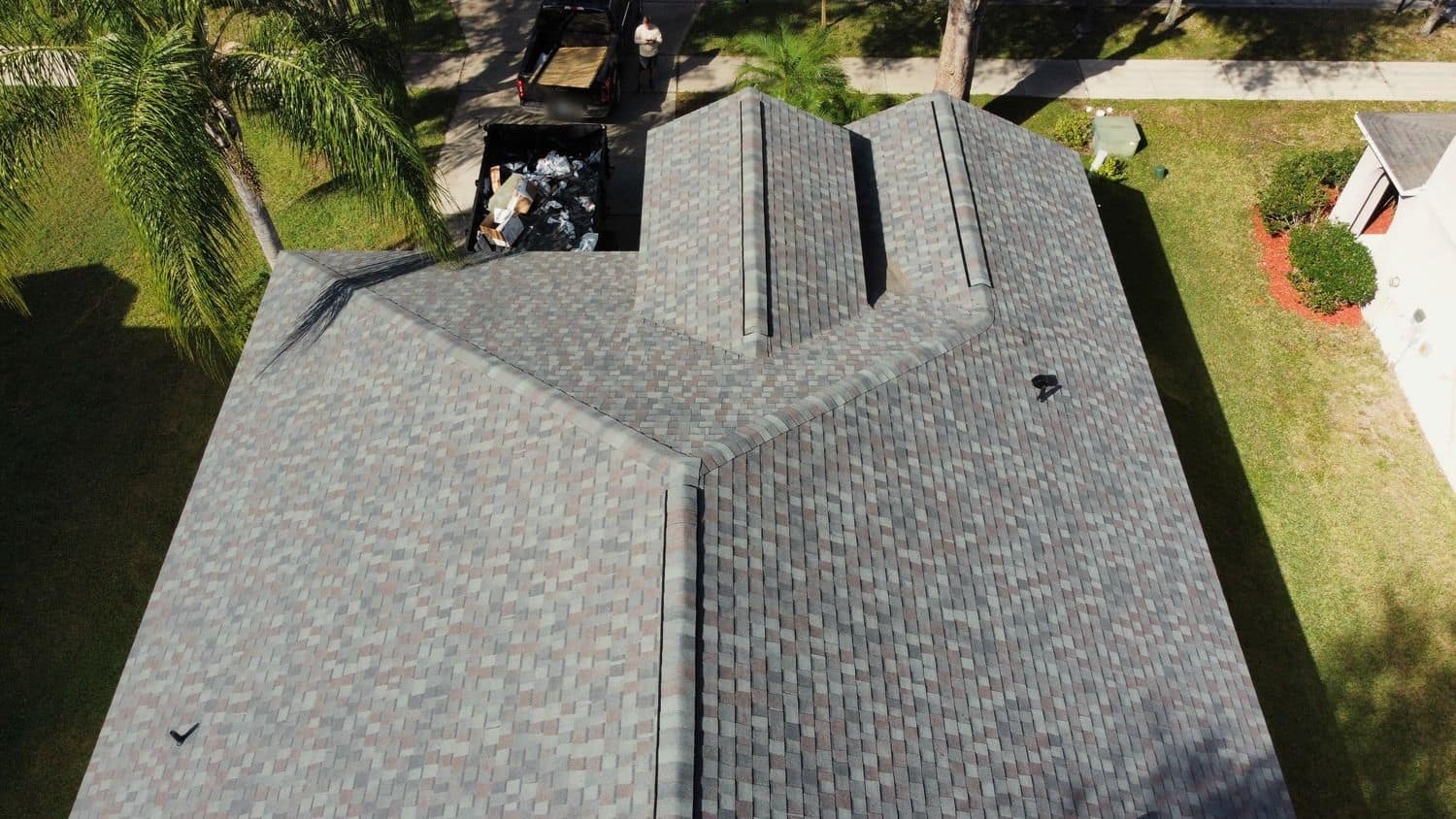
Commercial roofs · The Crossings
Commercial roofing in The Crossings, FL
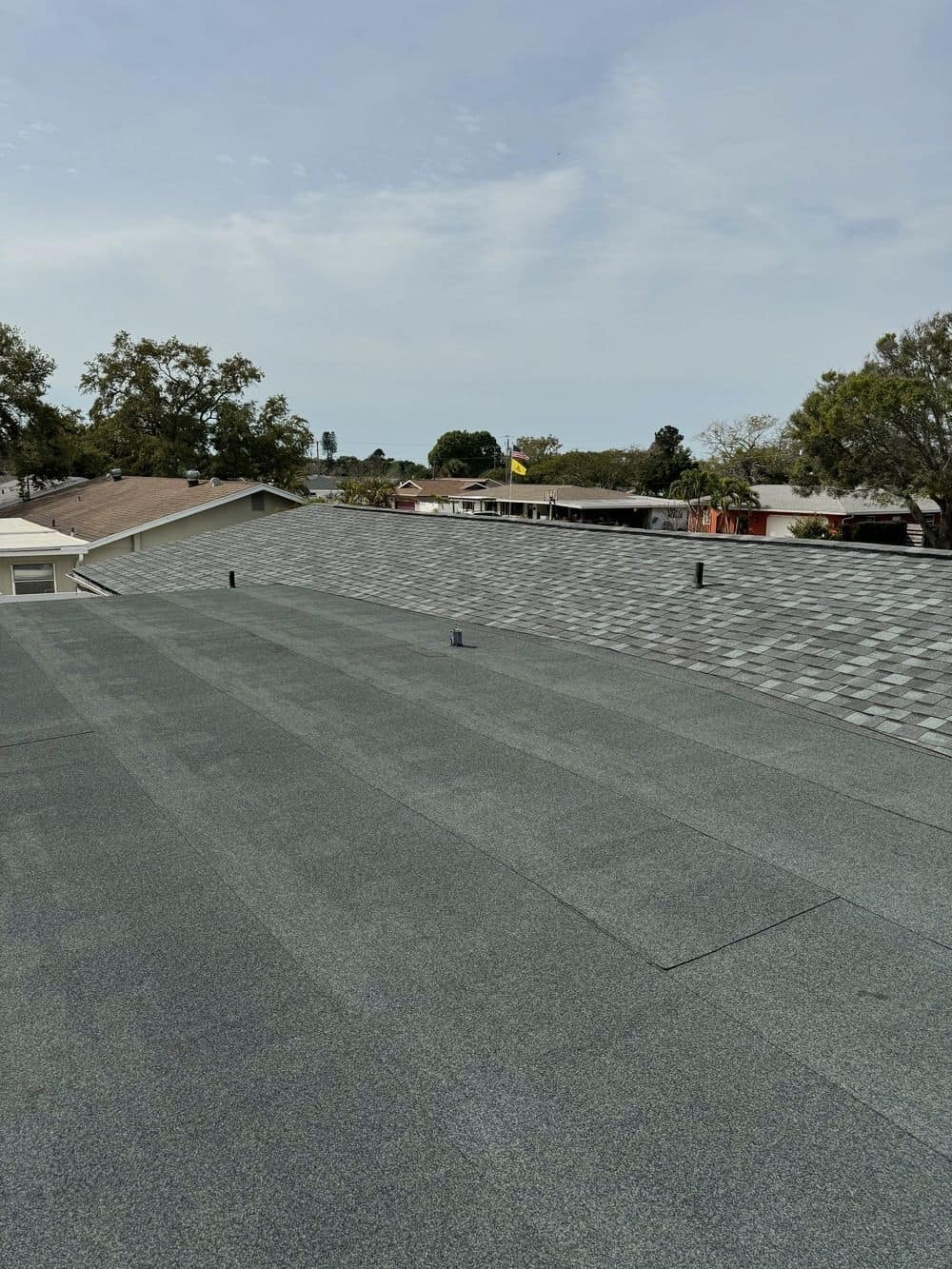
In The Crossings, 18.5 percent of homes are in buildings with 10 or more units, so many roofs here are flat or low-slope association roofs. Miami-Dade County permits them, and the High-Velocity Hurricane Zone rules apply. Check product approvals and permit scope before you compare any bid.
Updated October 2026
The Crossings figures this page uses
- Share of homes in buildings with 10+ units
- 18.5%
- People (2020 Census)
- 23,276
- Housing units (ACS 5-year)
- 8,492
Building stock
Who owns and permits the larger roofs here
Because The Crossings sits in unincorporated Miami-Dade, the roof permit comes from the county's Regulatory and Economic Resources department. Check that office for the filing steps in force today. Housing here is 51.6 percent single-family detached, so larger buildings are a minority of the stock, and a roof on one of them is a different job from a house re-roof.
Owners are 72.6 percent of occupied homes here, against 52.2 percent countywide. That suggests many multi-unit buildings are condo or townhouse associations. A board then signs the contract, and the board should read the permit card and the Notice of Commencement warning before work starts.
HVHZ code
Flat roofs in the High-Velocity Hurricane Zone have to meet their own set of rules
Miami-Dade is one of only two counties in the High-Velocity Hurricane Zone, so every roofing job here, even a repair, needs a permit. A licensed contractor has to sign the application. Included in the package are the owner's notification form, the fire directory pages, the product approval and the detail drawings.
Roofing products here go through the county's Product Control Section, which approves or denies roofing systems and certifies the test labs. Ask for the Notice of Commencement-era paperwork and the Miami-Dade product approval number for every system on the bid. The approval has an expiration date, and a copy must be at the job site.
Low-slope rules in the zone are strict. Loose-laid ballasted systems are not permitted. New construction needs at least a one-fourth-in-12 deck slope. Inspectors check membrane systems before the attachment is covered, and again at final.
Bid comparison
Drainage, ponding and comparing bids
Miami International Airport normals show 67.41 inches of rain a year and 89.6 days with 0.10 inch or more. A flat roof here must shed water, not hold it. A roof with positive drainage clears its water within 48 hours after rain. Secondary overflow drains or scuppers are what the code requires wherever parapets might hold back water.
- Product approval number and expiration date for each membrane and edge system
- The choice between tearing off the old roof and recovering it, along with the reason for that choice
- Written note on ponding, with a structural review if the contractor sees a risk
- Who holds the roofing contractor registration, and who does any subcontracted roofing
In the zone, a contractor must tell the owner about possible ponding before work starts and recommend a structural review. A bid that is silent on this is missing a required step.
Questions
Commercial roofing in The Crossings: questions
Does a flat roof repair in The Crossings need a permit?
Yes. In the High-Velocity Hurricane Zone, which covers Miami-Dade County, permits are required for all work on any roofing component, including repair and maintenance. The application is completed and signed by a licensed contractor. In The Crossings, which is unincorporated, Miami-Dade County Regulatory and Economic Resources issues it. Check that office for the filing steps in force today.
Source: Miami-Dade County Regulatory and Economic Resources (RER) - Building & Permits, read Oct 5, 2026
What does the 25 percent roof rule mean for my building?
If more than 25 percent of a roof or roof section is repaired, replaced or recovered in any 12-month period, the whole roof or section must be brought up to current code. Only a roof built, repaired or replaced under the 2007 Florida Building Code or a later edition can qualify for an exception. A Miami-Dade building with an older roof should plan repairs as one scope.
Source: U.S. Census Bureau, American Community Survey 2024 5-year estimates (2020-2024), table B25035, via Census Reporter API, read Oct 5, 2026
Can a new membrane go over my old low-slope roof?
Not always. A full tear-off is required if the old roof is water soaked or too deteriorated to be a base. It is also required if it already has two or more roof coverings, or if it has blisters that are not cut and secured. In the High-Velocity Hurricane Zone, new work cannot go over deck sheathing that is wet or not fastened to code. Keep in mind that the 2020 Census counted 23,276 people here, so the many low-slope roofs serving them are often aging, and each one needs an honest check of what lies beneath before any new membrane goes on.
Source: Florida Building Commission, 'Setting New Standards for Safety: The Florida Building Code' (2004 publication; wind-speed figures in it are outdated and not used), read Oct 5, 2026
What should a Miami-Dade product approval show on a roofing bid?
It should show the Miami-Dade Notice of Acceptance number and its expiration date. A Notice of Acceptance is not valid after that date, and a full copy must be available at the job site for the building official. Roofing systems are reviewed by the county's Product Control Section, which also certifies the labs that test them. In a place with 8,492 housing units, that paperwork matters, since each bid should be checked against the same approval standard.
Source: Miami-Dade County RER, Board and Code Administration Division, Product Approval, read Oct 5, 2026
Sources for this page(29)
- 1.U.S. Census Bureau, American Community Survey 2024 5-year estimates (2020-2024), table B25024, via Census Reporter API. Read Oct 5, 2026.
- 2.Permit office: Miami-Dade County Regulatory and Economic Resources (RER) - Building & Permits. Miami-Dade County Regulatory and Economic Resources (RER) - Building & Permits. Read Oct 10, 2026.
- 3.U.S. Census Bureau, American Community Survey 2024 5-year estimates (2020-2024), table B25035, via Census Reporter API. Read Oct 5, 2026.
- 4.U.S. Census Bureau, American Community Survey 2024 5-year estimates (2020-2024), table B25003, via Census Reporter API. Read Oct 5, 2026.
- 5.Florida Building Commission, 'Setting New Standards for Safety: The Florida Building Code' (2004 publication; wind-speed figures in it are outdated and not used). Read Oct 5, 2026.
- 6.Miami-Dade County RER, Board and Code Administration Division, Product Approval. Read Oct 5, 2026.
- 7.NOAA NCEI U.S. Climate Normals 1991-2020 (access data service). Read Oct 5, 2026.
- 8.Share of homes in buildings with 10+ units: 18.5%. U.S. Census Bureau, American Community Survey 2024 5-year estimates (2020-2024), table B25024, via Census Reporter API. Read Oct 5, 2026.
- 9.People (2020 Census): 23,276. U.S. Census Bureau, 2020 Census counts (POP100, HU100) via TIGERweb tigerWMS_Census2020 layer 28 (Census Designated Places). Read Oct 5, 2026.
- 10.Housing units (ACS 5-year): 8,492. U.S. Census Bureau, American Community Survey 2024 5-year estimates (2020-2024), table B25001, via Census Reporter API. Read Oct 5, 2026.
- 11.Florida Statutes, section 718.112 (2026). Read Oct 5, 2026.
- 12.FBC-Building 2023 Chapter 2 definitions. Read Oct 5, 2026.
- 13.2023 Florida Building Code, Building, 8th ed., Chapter 15 (UpCodes viewer, unofficial transcription). Read Oct 5, 2026.
- 14.miamidade.gov. Read Oct 5, 2026.
- 15.Florida Statutes, section 553.842 (2026). Read Oct 5, 2026.
- 16.2023 Florida Building Code, Plumbing, 8th ed., Chapter 11 (UpCodes viewer, unofficial transcription). Read Oct 5, 2026.
- 17.Florida Statutes, section 489.113 (2026). Read Oct 5, 2026.
- 18.Miami-Dade County Regulatory and Economic Resources (RER) - Building & Permits, Miami. Read Oct 5, 2026.
- 19.Florida Statutes, section 713.135 (2026), Florida Legislature. Read Oct 5, 2026.
- 20.U.S. Census Bureau, American Community Survey 2024 5-year estimates (2020-2024), table B25035, B25034, B25024, via Census Reporter API, U.S. Census Bureau (via Census Reporter). Read Oct 5, 2026.
- 21.Florida Statutes, section 627.7011 (2026), Florida Legislature. Read Oct 4, 2026.
- 22.2023 Florida Building Code, Building, 8th ed., Chapter 1 (UpCodes viewer, unofficial transcription), UpCodes (Florida Building Code transcription). Read Oct 5, 2026.
- 23.FRSA, "New 2023 FBC Eighth Edition is Now in Effect", 2024-02-13, floridaroof.com. Read Oct 5, 2026.
- 24.Miami-Dade County RER notice, Miami. Read Oct 5, 2026.
- 25.NOAA NCEI U.S. Climate Normals 1991-2020 (access data service), NOAA National Centers for Environmental Information. Read Oct 5, 2026.
- 26.NOAA National Hurricane Center, Tropical Cyclone Climatology, NOAA National Hurricane Center. Read Oct 5, 2026.
- 27.NOAA Atlas 14 Volume 9 version 2, partial-duration intensity estimates at The Crossings 2020 Census internal point (25.6706, -80.4008), NOAA Hydrometeorological Design Studies Center. Read Oct 5, 2026.
- 28.NOAA Atlas 14 Volume 9 version 2, partial-duration 24-hour depth estimates at The Crossings 2020 Census internal point (25.6706, -80.4008), NOAA Hydrometeorological Design Studies Center. Read Oct 5, 2026.
- 29.NOAA National Hurricane Center, Tropical Cyclone Report: Hurricane Dorian (AL052019), NOAA National Hurricane Center. Read Oct 5, 2026.
South Fork Roofing
Commercial roofing in The Crossings
Answer a few questions about the job, or call.