New construction · South Bay
New construction roofing in South Bay, FL
Only 4.6 percent of South Bay homes were built in 2010 or later, so new roofs here are rare, and builders and owners may not have a recent project to compare against. Any new permit filed from December 31, 2026 falls under the Ninth Edition of the Florida Building Code.
Updated October 2026
 Our work
South Bay figures this page uses
- People (2020 Census)
- 4,860
- Share of homes built 2010 or later
- 4.6%
- Median year homes were built
- 1974
Code edition
Which code edition applies to your South Bay permit
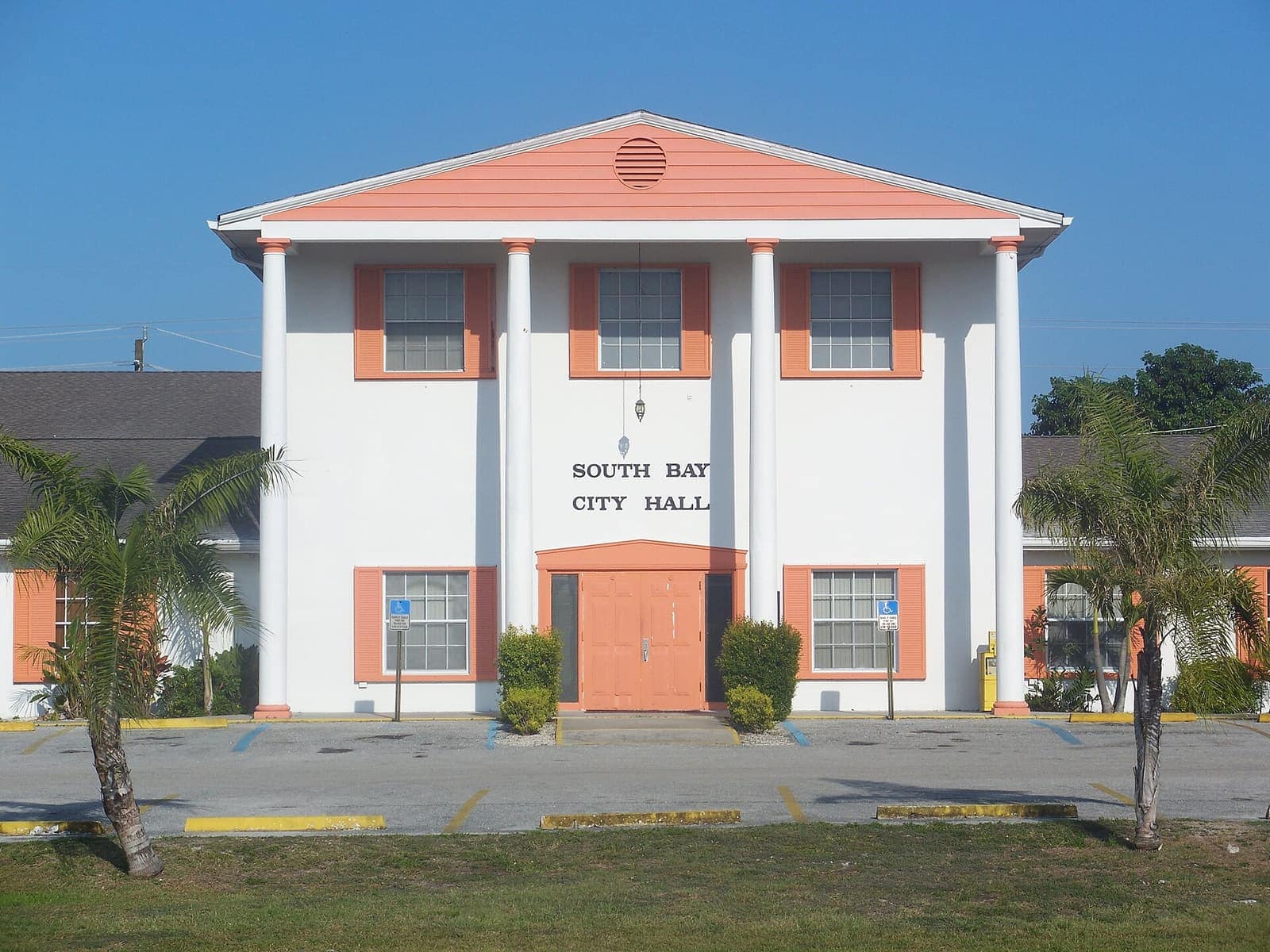
South Bay is a small city of 4,860 people, and the City of South Bay Planning and Building office handles roof permits. Confirm with that office which code edition your application falls under. Applications submitted before December 31, 2026 are reviewed under the 2023 Eighth Edition. Any application filed on or after that date falls under the Ninth Edition.
Broward and Miami-Dade carry the stricter High Velocity Hurricane Zone rules. Palm Beach County does not, so a South Bay roof is permitted under the standard Florida Building Code. Roofing products still need statewide product approval, and the approval number goes on your permit paperwork.
Roof build-up
Nails, dry-in and drip edge for a South Bay build
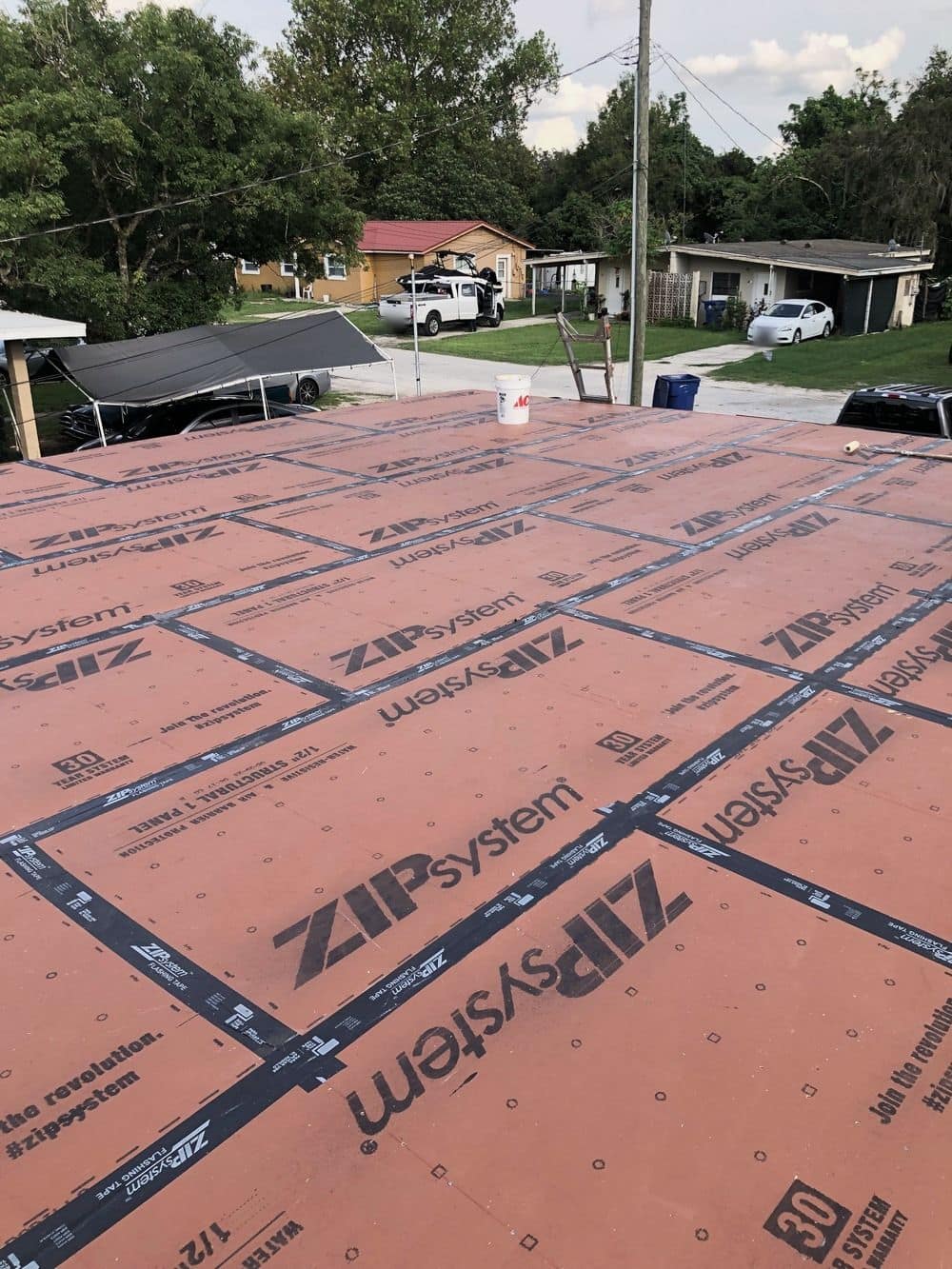
Roof sheathing on a new house calls for ring shank nails measuring 2 1/2 inches by 0.131 inch. The deck then needs one of three dry-in methods before shingles or metal go on. The first is a full-deck layer of peel-and-stick bitumen sheet. The second tapes every deck joint with a strip at least 3 3/4 inches wide, then adds underlayment over the full roof. The third is a double layer of felt-type underlayment, nailed 12 inches apart across the field.
Drip edge for shingles sits above the underlayment along eaves and gables. Nails go no more than 12 inches apart. Where design wind speed reaches 110 mph or higher, or the roof sits more than 33 feet up, the requirement drops to 4 inches.
Inspections
Timing the roof around South Bay inspections
Roofing is the fifth of six inspections in the code's sequence, after foundation, framing, sheathing and exterior wall coverings, and before the final. A dry-in inspection can stand in for the sheathing check or be done separately, and the roofing inspection covers dry-in, flashing and roof coverings. Schedule the roof only after framing and sheathing pass. A permit also lapses if work does not start within 6 months of issue, so match the application date to your build schedule.
Who installs matters too. On a new building of its own construction, a builder may self-perform asphalt shingles. Tile, metal and membrane must go to a roofing contractor holding the state certificate or registration. The Notice of Commencement must be recorded and posted on site ahead of the first inspection, and the permit card warns that skipping it may mean paying twice.
Questions
New construction roofing in South Bay: questions
Do new South Bay homes get a builder warranty on the roof?
A 2025 Florida law, Statute 553.837, makes a builder answer for 1 year after title transfer or first occupancy, whichever comes first, for defects in material or workmanship that violate the Florida Building Code. Normal wear, settling, owner-caused damage and natural disasters fall outside it. Only 4.6 percent of South Bay homes date from 2010 or later, so read your sales contract for the exact terms.
Source: U.S. Census Bureau, American Community Survey 2024 5-year estimates (2020-2024), table B25034, via Census Reporter API, read Oct 5, 2026
Can I use a private inspector for a new roof in South Bay?
Yes. Under Florida Statute 553.791, an owner, or the owner's contractor with written authorization, may choose a private provider for plans review or code inspections at any time. Only a licensed code administrator, engineer or architect can serve as the provider. South Bay's Planning and Building office issues the permit, so ask it how private-provider reports are filed.
Source: City of South Bay - Planning and Building, read Oct 5, 2026
Does a new South Bay home need gutters?
Often yes. Gutters with downspouts are required where eaves project less than 6 inches, with exceptions for gable end rakes and roofs above another roof. Each downspout needs to discharge no less than 1 foot away from the sidewall. South Bay's older stock, with a median build year of 1974, may have no gutters at all, so check your new plans with the Planning and Building office.
Source: U.S. Census Bureau, American Community Survey 2024 5-year estimates (2020-2024), table B25035, via Census Reporter API, read Oct 5, 2026
Does the 25 percent roof rule apply to a brand-new South Bay roof?
No. The 25 percent rule applies to an existing roof, which cannot have more than 25 percent of its area repaired, replaced or recovered in any 12-month period unless the whole roof or roof section is replaced or recovered. A brand-new roof follows current code in full. The rule matters later, because its exception covers only a roof built, repaired or replaced in compliance with the 2007 Florida Building Code or any later edition. That code took effect March 1, 2009. The median South Bay home was built in 1974, a fact about the homes themselves and not about any one roof.
Source: U.S. Census Bureau, American Community Survey 2024 5-year estimates (2020-2024), table B25035, via Census Reporter API, read Oct 5, 2026
Sources for this page(36)
- 1.People (2020 Census): 4,860. U.S. Census Bureau, 2020 Census counts (POP100, HU100) via TIGERweb tigerWMS_Census2020 layer 26 (Incorporated Places). Read Oct 5, 2026.
- 2.Permit office: City of South Bay - Planning and Building. City of South Bay - Planning and Building. Read Oct 10, 2026.
- 3.Florida Building Commission, 'Setting New Standards for Safety: The Florida Building Code' (2004 publication; wind-speed figures in it are outdated and not used). Read Oct 5, 2026.
- 4.U.S. Census Bureau, American Community Survey 2024 5-year estimates (2020-2024), table B25035, via Census Reporter API. Read Oct 5, 2026.
- 5.U.S. Census Bureau, American Community Survey 2024 5-year estimates (2020-2024), table B25034, via Census Reporter API. Read Oct 5, 2026.
- 6.U.S. Census Bureau, American Community Survey 2024 5-year estimates (2020-2024), table B25024, via Census Reporter API. Read Oct 5, 2026.
- 7.Hurricane Matthew (2016). NOAA National Hurricane Center, Tropical Cyclone Report: Hurricane Matthew (AL142016). Read Oct 5, 2026.
- 8.Share of homes built 2010 or later: 4.6%. U.S. Census Bureau, American Community Survey 2024 5-year estimates (2020-2024), table B25034, via Census Reporter API. Read Oct 5, 2026.
- 9.U.S. Census Bureau, American Community Survey 2024 5-year estimates (2020-2024), table B25035, B25034, B25024, via Census Reporter API. Read Oct 5, 2026.
- 10.U.S. Census Bureau, Building Permits Survey county annual files (co2025a.txt, co2020a.txt). Read Oct 5, 2026.
- 11.Median year homes were built: 1974. U.S. Census Bureau, American Community Survey 2024 5-year estimates (2020-2024), table B25035, via Census Reporter API. Read Oct 5, 2026.
- 12.FRSA, "New 2023 FBC Eighth Edition is Now in Effect", 2024-02-13. Read Oct 5, 2026.
- 13.Miami-Dade County RER notice. Read Oct 5, 2026.
- 14.FBC-Building 2023 Chapter 2 definitions. Read Oct 5, 2026.
- 15.Florida Statutes, section 553.842 (2026). Read Oct 5, 2026.
- 16.2023 Florida Building Code, Residential, 8th ed., Chapter 8 (UpCodes viewer, unofficial transcription). Read Oct 5, 2026.
- 17.2023 Florida Building Code, Residential, 8th ed., Chapter 9 (UpCodes viewer, unofficial transcription). Read Oct 5, 2026.
- 18.2023 Florida Building Code, Building, 8th ed., Chapter 1 (UpCodes viewer, unofficial transcription). Read Oct 5, 2026.
- 19.Florida Statutes, section 489.113 (2026). Read Oct 5, 2026.
- 20.Florida Statutes, section 553.837 (2026). Read Oct 5, 2026.
- 21.Florida Statutes, section 553.791 (2026). Read Oct 5, 2026.
- 22.2023 Florida Building Code, Residential, 8th ed., Chapter 3 (UpCodes viewer, unofficial transcription). Read Oct 5, 2026.
- 23.2023 Florida Building Code, Building, 8th ed., Chapter 15 (UpCodes viewer, unofficial transcription). Read Oct 5, 2026.
- 24.U.S. Census Bureau, 2020 Census counts (POP100, HU100) via TIGERweb tigerWMS_Census2020 layer 26 (Incorporated Places), U.S. Census Bureau. Read Oct 5, 2026.
- 25.City of South Bay - Planning and Building, southbaycity.com. Read Oct 5, 2026.
- 26.NOAA National Hurricane Center, Tropical Cyclone Report: Hurricane Matthew (AL142016), NOAA National Hurricane Center. Read Oct 5, 2026.
- 27.Florida Statutes, section 713.135 (2026), Florida Legislature. Read Oct 5, 2026.
- 28.Florida Statutes, section 627.7011 (2026), Florida Legislature. Read Oct 4, 2026.
- 29.NOAA National Hurricane Center, Tropical Cyclone Report: Hurricane Dorian (AL052019), NOAA National Hurricane Center. Read Oct 5, 2026.
- 30.NOAA National Hurricane Center, Tropical Cyclone Climatology, NOAA National Hurricane Center. Read Oct 5, 2026.
- 31.NOAA National Hurricane Center, Tropical Cyclone Report: Hurricane Irma (AL112017), NOAA National Hurricane Center. Read Oct 5, 2026.
- 32.NOAA NCEI U.S. Climate Normals 1991-2020 (access data service), NOAA National Centers for Environmental Information. Read Oct 5, 2026.
- 33.NOAA NCEI U.S. Climate Normals 1991-2020 (access data service), NOAA National Centers for Environmental Information. Read Oct 5, 2026.
- 34.NOAA Atlas 14 Volume 9 version 2, partial-duration 24-hour depth estimates at the South Bay 2020 Census internal point (26.6884, -80.7355), NOAA Hydrometeorological Design Studies Center. Read Oct 5, 2026.
- 35.Wikipedia, 'South Bay, Florida' (revision 1377594144), Wikipedia. Read Oct 5, 2026.
- 36.NOAA Atlas 14 Volume 9 version 2, partial-duration intensity estimates at the South Bay 2020 Census internal point (26.6884, -80.7355), NOAA Hydrometeorological Design Studies Center. Read Oct 5, 2026.
South Fork Roofing
New construction roofing in South Bay
Answer a few questions about the job, or call.