Gutters · Princeton
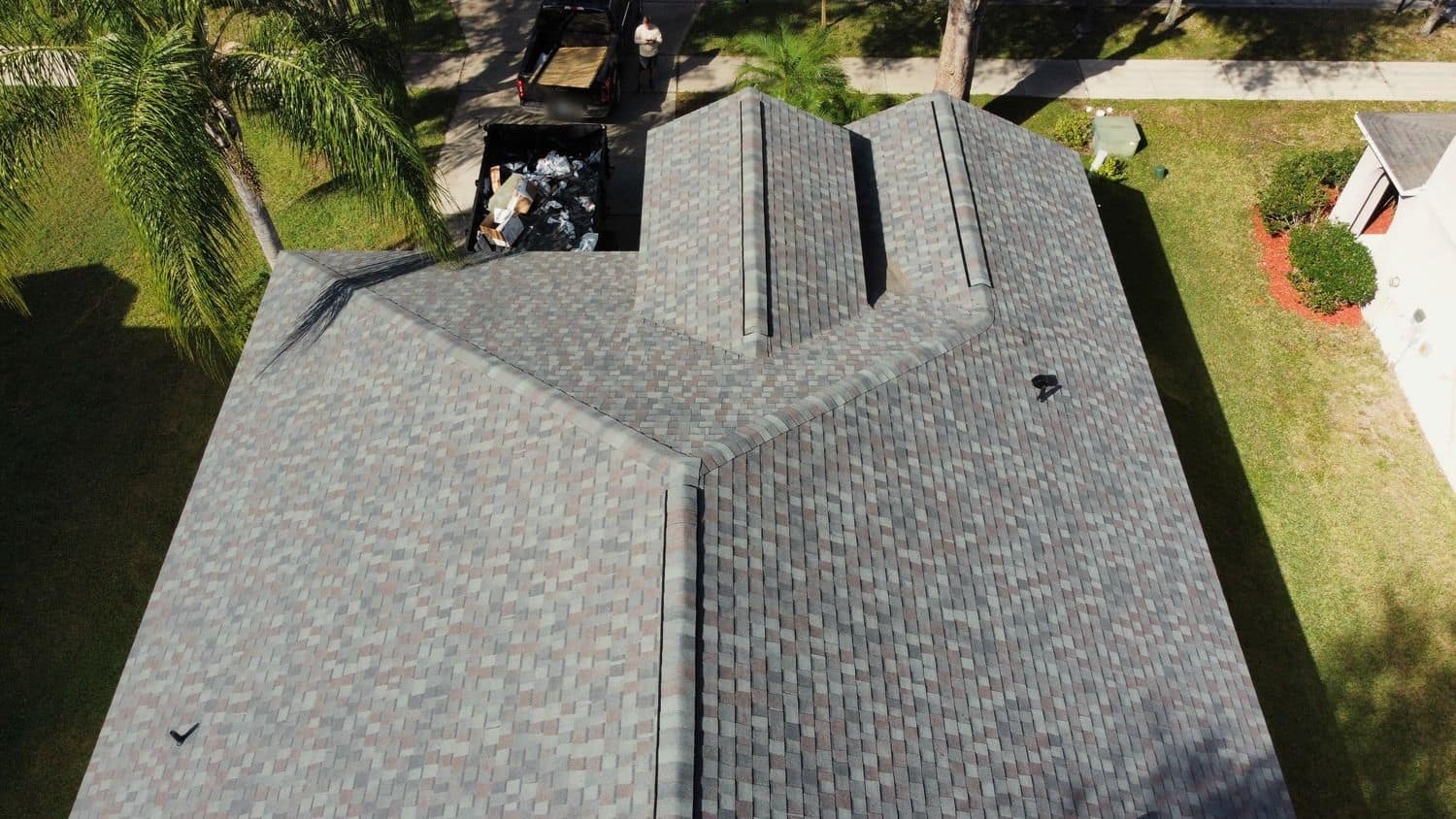
Seamless gutter installation, repair and guards in Princeton, FL
A 10-year storm in Princeton drops rain at 10.5 inches an hour for five minutes. That burst, not the yearly total, is what overwhelms a gutter that is too small. In a 100-year storm the rate reaches 15.3 inches an hour.
Updated November 2026
Princeton figures this page uses
- Single-family detached share of housing units
- 60%
- Median year homes were built
- 2008
- Housing units (ACS 5-year)
- 12,738
- Share of homes in buildings with 10+ units
- 13.2%
Rain and capacity
How Princeton's downpours size a gutter
What counts most is the figure for the brief, intense burst of rain. A 1-hour rain in a 10-year storm averages 3.39 inches an hour here, and a 24-hour total reaches 7.86 inches. A gutter that handles the hourly rate can still spill in the first five minutes, when the rate is more than three times higher.
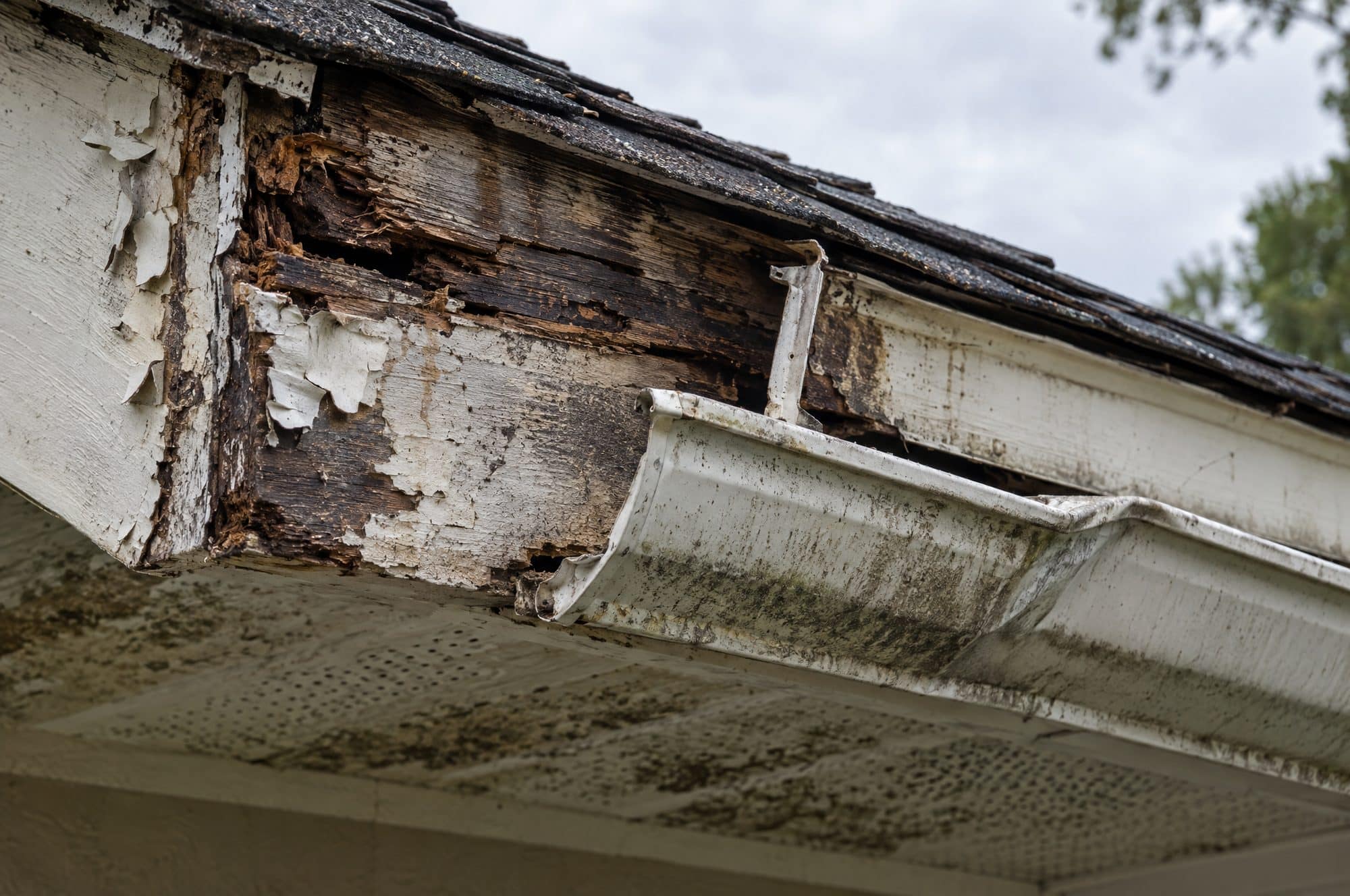 Illustration
: rotted fascia
The Florida plumbing code gives flow capacities. A 5 inch half-round gutter pitched at 1/8 inch per foot carries 74 gpm. Moving up to a 6 inch size gets you 110 gpm, roughly 49 percent more capacity. Leaders carry ratings as well: 92 gpm for a 2 1/2 by 3 inch size, and 192 gpm for a 3 by 4 1/4 inch size.
The wet season adds load. Miami International Airport sees 76.6 percent of its normal annual rain from May through October, with June the wettest month at 10.51 inches. Gutters need to be clear and tight before June, not after the first storm.
Code and drainage
Where should Princeton downspouts discharge?
Under Florida Building Code Residential R318.5, a building whose eaves project less than 6 inches needs gutters with downspouts. Gable end rakes are exempt, as are roofs that sit above another roof. Downspouts must empty at least 1 foot from the sidewall, by underground piping, tail extensions or splash blocks.
That rule applies to a lot of Princeton homes. The median home was built in 2008, against 1980 for Miami-Dade County, and 60 percent of units are single-family detached. Many of these houses are newer, with modern code in force at construction. Confirm any gutter change with the county building office.
The same code requires metal or approved plastic gutters with lapped, soldered or caulked joints, fastened with corrosion resistant hardware. In a coastal county, that fastening detail is what keeps a run attached.
Maintenance
Leaves, pollen and cleaning schedule
Florida pollen season runs January to June and peaks in March and April, with oaks among the main producers. Southern live oak sheds leaves year round and spreads 60 to 120 feet, so a single tree can drop debris on several roofs.
NRCA advises inspecting the roof in fall and spring and cleaning gutters packed with dead leaves. A Florida insurer, Tower Hill, suggests at least two cleanings a year and more under overhanging trees. Princeton is within the June to November hurricane season, so a cleaning in May is sensible.
Do not climb a roof or ladder when thunder is audible. NWS Miami says lightning can strike several miles from the parent storm.
Rain on your roof
Preset: 7.86 inches, the 10-year 24-hour rain (NOAA Atlas 14 at Princeton).
9,794 gallons run off that roof, all of it toward the gutters and downspouts.
Math: square feet × inches × 0.623 gallons.
Repair and guards
Gutter repair and guards in Princeton
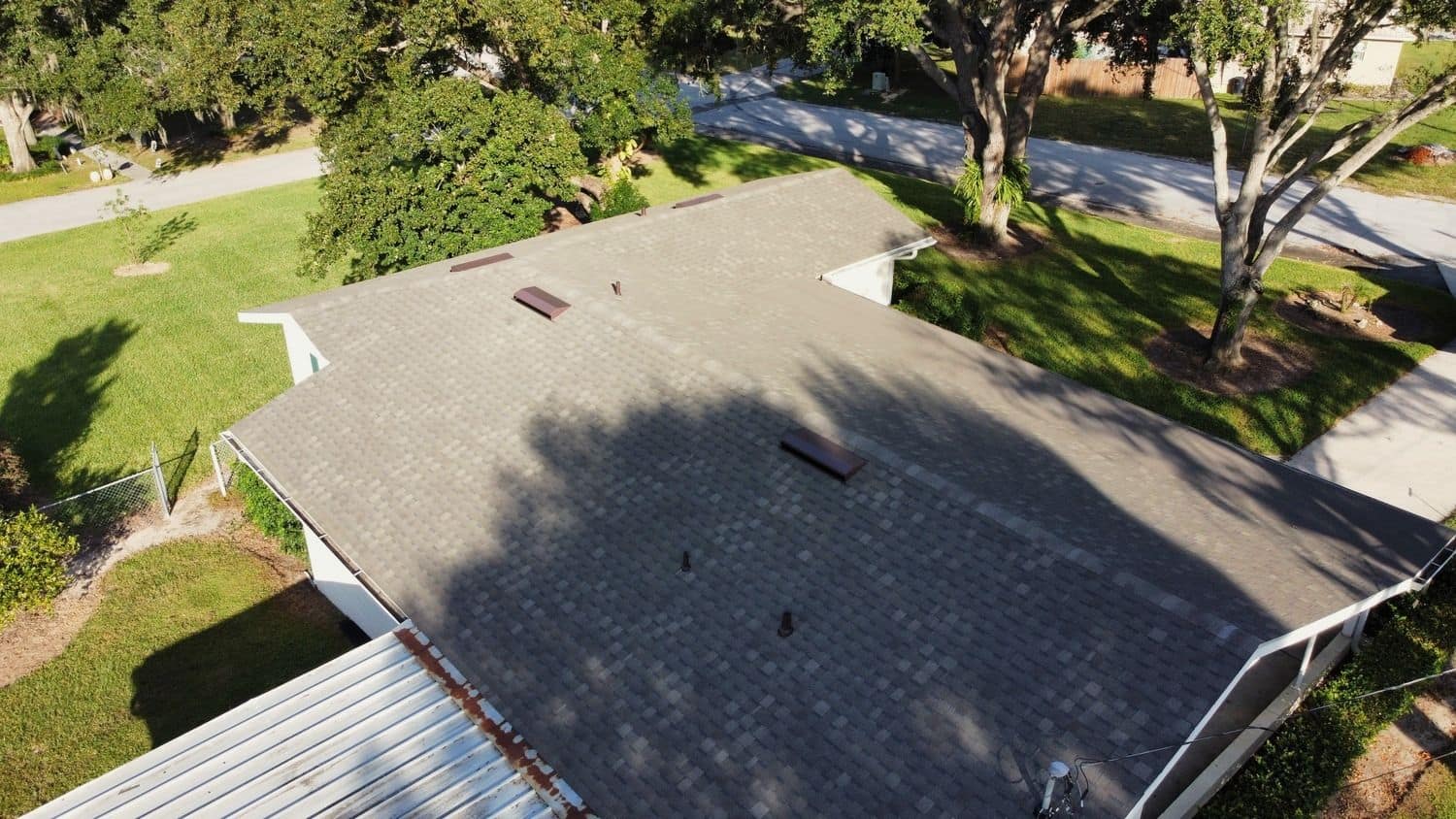
A broad live oak can reach across Princeton roofs and drop leaves into gutters even on newer houses. South Fork Roofing repairs sound gutter runs with solid backing, replaces gutters that are damaged or no longer properly supported, and fits fine-mesh guards where that canopy reaches the eaves.
Questions
Gutters in Princeton: questions
How much rain does a Princeton gutter have to handle?
In a 10-year storm, 5 minutes of rain falls at 10.5 inches an hour, and the 25-year rate is 12.4. The 1-hour rate in a 10-year storm is 3.39 inches an hour. Gutters are sized against the short burst, so a larger gutter or an extra downspout helps most.
Source: NOAA Atlas 14 Volume 9 version 2, partial-duration intensity estimates at the Princeton 2020 Census internal point (25.5403, -80.3985), read Oct 5, 2026
Do I need gutters on my Princeton house?
Florida Building Code Residential R318.5 requires gutters with downspouts where eaves project less than 6 inches, with exceptions for gable end rakes and roofs above another roof. About 60 percent of housing units here are single-family detached, so many owners are covered. Confirm details with Miami-Dade County Regulatory and Economic Resources.
Source: 2023 Florida Building Code, Residential, 8th ed., R318.5 (UpCodes viewer, unofficial transcription); FBC-Building 1503.7, read Oct 5, 2026
How far from the house must a downspout discharge?
At least 1 foot from the structure sidewall, by underground piping, tail extensions or splash blocks, under FBC-R R318.5. That section is a termite-protection rule. With 10.5 inches an hour possible in a 10-year burst, longer extensions keep water off the foundation.
Source: 2023 Florida Building Code, Residential, 8th ed., Chapter 8 (UpCodes viewer, unofficial transcription), read Oct 5, 2026
When should I clean gutters in Princeton?
Clean at least twice a year, spring and fall, and more under heavy trees. NRCA recommends fall and spring checks. With 76.6 percent of annual rain falling May through October at Miami International Airport, finish before June.
Source: National Roofing Contractors Association, read Oct 5, 2026
Sources for this page(35)
- 1.NOAA NCEI U.S. Climate Normals 1991-2020 (access data service). Read Oct 5, 2026.
- 2.U.S. Census Bureau, American Community Survey 2024 5-year estimates (2020-2024), table B25035, via Census Reporter API. Read Oct 5, 2026.
- 3.Single-family detached share of housing units: 60%. U.S. Census Bureau, American Community Survey 2024 5-year estimates (2020-2024), table B25024, via Census Reporter API. Read Oct 5, 2026.
- 4.Permit office: Miami-Dade County Regulatory and Economic Resources (RER) - Building & Permits. Miami-Dade County Regulatory and Economic Resources (RER) - Building & Permits. Read Oct 10, 2026.
- 5.Median year homes were built: 2008. U.S. Census Bureau, American Community Survey 2024 5-year estimates (2020-2024), table B25035, via Census Reporter API. Read Oct 5, 2026.
- 6.U.S. Census Bureau, American Community Survey 2024 5-year estimates (2020-2024), table B25034, via Census Reporter API. Read Oct 5, 2026.
- 7.U.S. Census Bureau, American Community Survey 2024 5-year estimates (2020-2024), table B25024, via Census Reporter API. Read Oct 5, 2026.
- 8.NOAA NCEI U.S. Climate Normals 1991-2020 (access data service). Read Oct 5, 2026.
- 9.NOAA National Hurricane Center, Tropical Cyclone Climatology. Read Oct 5, 2026.
- 10.NWS Miami, Weather Safety - Lightning. Read Oct 5, 2026.
- 11.Housing units (ACS 5-year): 12,738. U.S. Census Bureau, American Community Survey 2024 5-year estimates (2020-2024), table B25001, via Census Reporter API. Read Oct 5, 2026.
- 12.Share of homes in buildings with 10+ units: 13.2%. U.S. Census Bureau, American Community Survey 2024 5-year estimates (2020-2024), table B25024, via Census Reporter API. Read Oct 5, 2026.
- 13.Mobile homes, share of housing units: 2%. U.S. Census Bureau, American Community Survey 2024 5-year estimates (2020-2024), table B25024, via Census Reporter API. Read Oct 5, 2026.
- 14.2023 Florida Building Code, Plumbing, 8th ed., Chapter 11 (UpCodes viewer, unofficial transcription). Read Oct 5, 2026.
- 15.2023 Florida Building Code, Residential, 8th ed., R318.5 (UpCodes viewer, unofficial transcription); FBC-Building 1503.7. Read Oct 5, 2026.
- 16.2023 Florida Building Code, Residential, 8th ed., Chapter 8 (UpCodes viewer, unofficial transcription). Read Oct 5, 2026.
- 17.2023 Florida Building Code, Residential, 8th ed., Chapter 9 (UpCodes viewer, unofficial transcription). Read Oct 5, 2026.
- 18.blogs.ifas.ufl.edu. Read Oct 5, 2026.
- 19.ask.ifas.ufl.edu. Read Oct 5, 2026.
- 20.National Roofing Contractors Association. Read Oct 5, 2026.
- 21.thig.com. Read Oct 5, 2026.
- 22.consumerreports.org. Read Oct 5, 2026.
- 23.NOAA Atlas 14 Volume 9 version 2, partial-duration intensity estimates at the Princeton 2020 Census internal point (25.5403, -80.3985), NOAA Hydrometeorological Design Studies Center. Read Oct 5, 2026.
- 24.NOAA Atlas 14 Volume 9 version 2, partial-duration 24-hour depth estimates at the Princeton 2020 Census internal point (25.5403, -80.3985), NOAA Hydrometeorological Design Studies Center. Read Oct 5, 2026.
- 25.Miami-Dade County Regulatory and Economic Resources (RER) - Building & Permits, Miami. Read Oct 5, 2026.
- 26.U.S. Census Bureau, American Community Survey 2024 5-year estimates (2020-2024), table B25035, B25034, B25024, via Census Reporter API, U.S. Census Bureau (via Census Reporter). Read Oct 5, 2026.
- 27.Florida Statutes, section 627.7011 (2026), Florida Legislature. Read Oct 4, 2026.
- 28.Florida Building Commission, 'Setting New Standards for Safety: The Florida Building Code' (2004 publication; wind-speed figures in it are outdated and not used), Florida Building Commission. Read Oct 5, 2026.
- 29.miamidade.gov, miamidade.gov. Read Oct 5, 2026.
- 30.2023 Florida Building Code, Building, 8th ed., Chapter 1 (UpCodes viewer, unofficial transcription), UpCodes (Florida Building Code transcription). Read Oct 5, 2026.
- 31.Florida Statutes, section 713.135 (2026), Florida Legislature. Read Oct 5, 2026.
- 32.2023 Florida Building Code, Building, 8th ed., Chapter 15 (UpCodes viewer, unofficial transcription), UpCodes (Florida Building Code transcription). Read Oct 5, 2026.
- 33.FRSA, "New 2023 FBC Eighth Edition is Now in Effect", 2024-02-13, floridaroof.com. Read Oct 5, 2026.
- 34.NOAA National Hurricane Center, Tropical Cyclone Report: Hurricane Irma (AL112017), NOAA National Hurricane Center. Read Oct 5, 2026.
- 35.NOAA Atlas 14 at Princeton: 10.5 in/hr (5-minute, 10-year). NOAA Atlas 14 Precipitation Frequency Data Server. Read Oct 5, 2026.
South Fork Roofing
Gutters in Princeton
Answer a few questions about the job, or call.