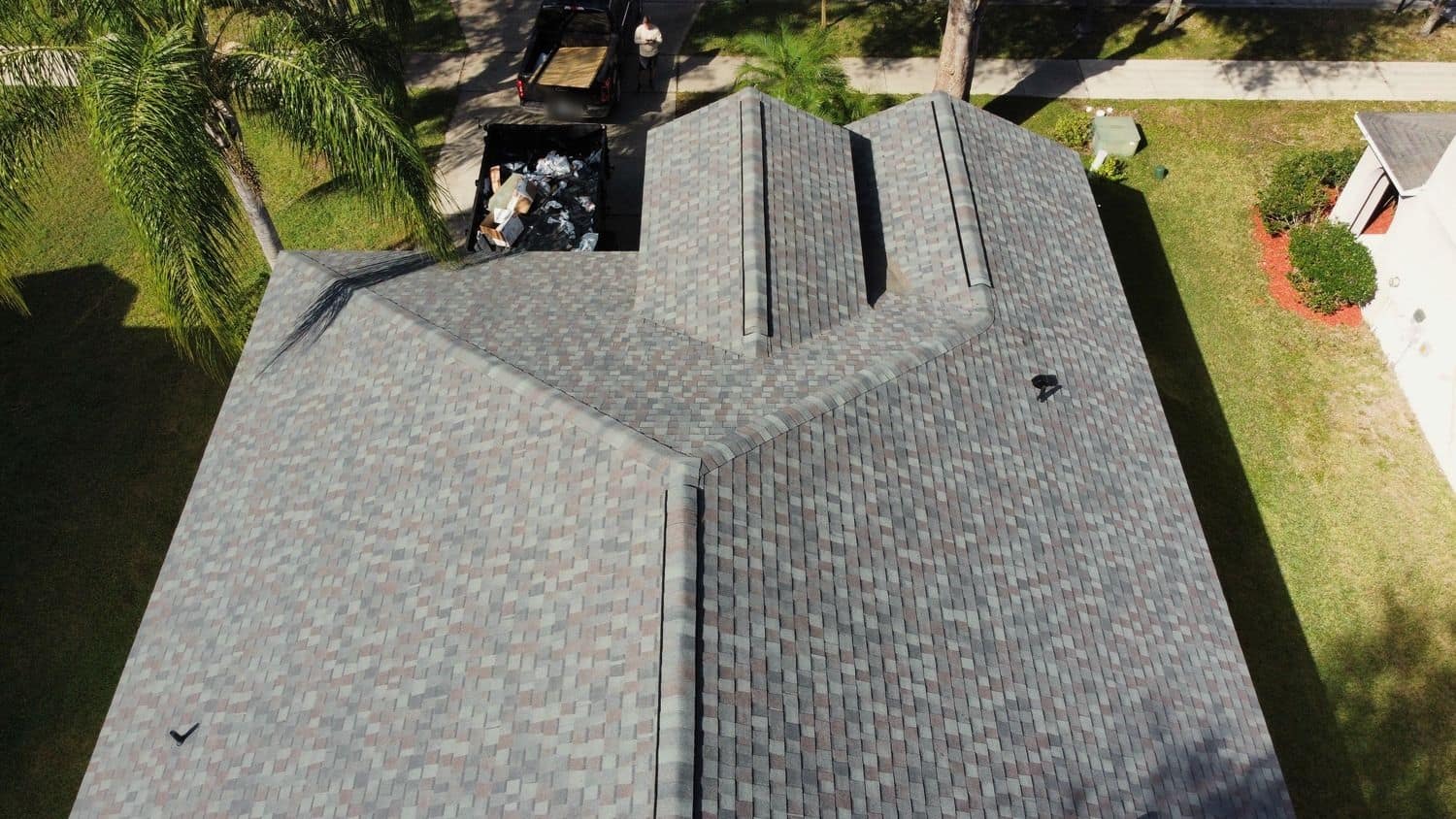
Miami-Dade County · Census-designated place
Roofing in South Miami Heights, Florida
The median home in South Miami Heights was built in 1978, about the same age as the Miami-Dade County figure of 1980. That is two years older than the county median. Your roof may be original, or a replacement from decades ago. The permit office is the county, and the rules are the strict ones.
Updated October 2026
Housing age
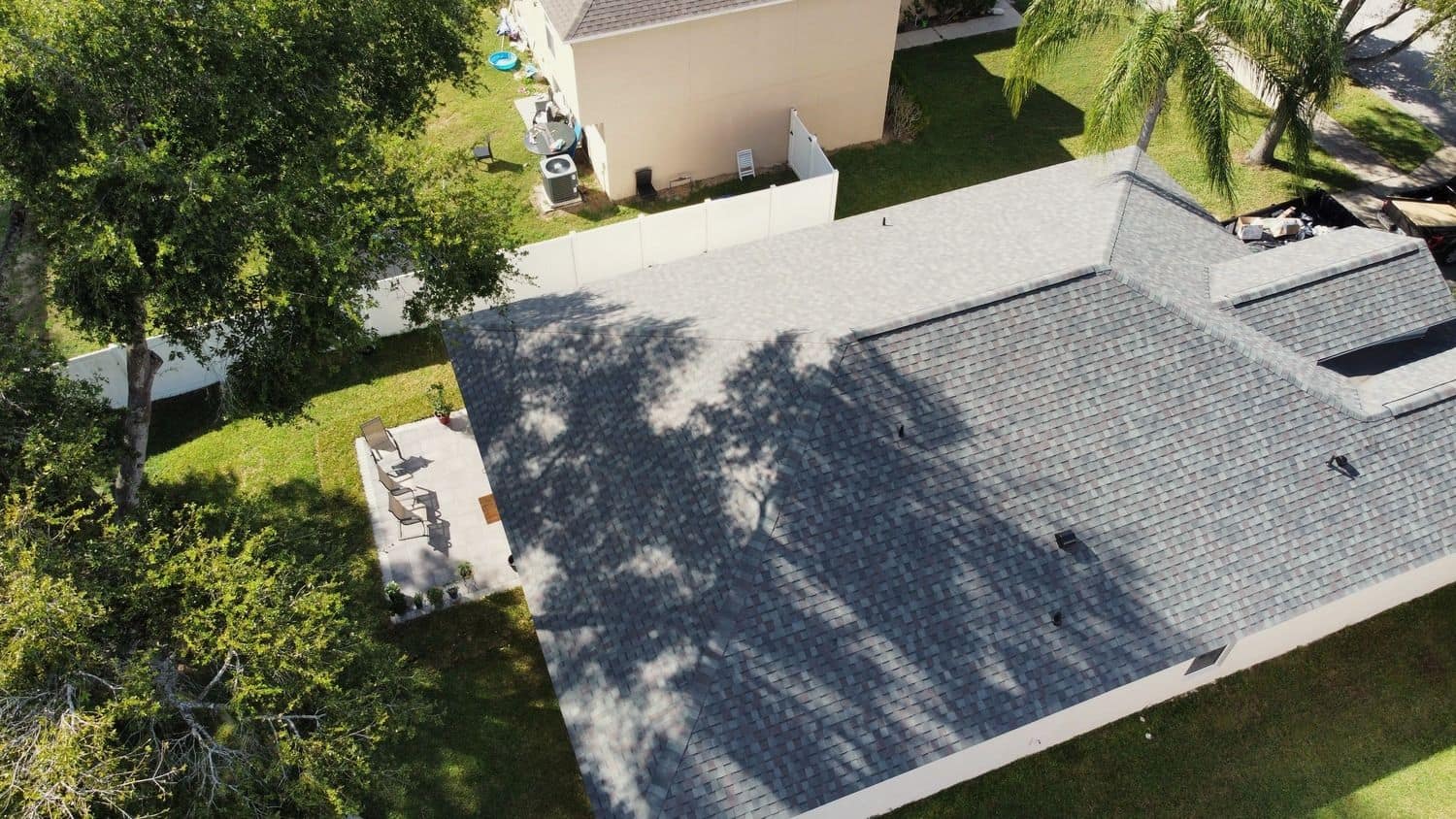
Roof age in a 1978 housing stock
About 53.6 percent of homes here were built before 1980, and only 5.5 percent in 2010 or later. That suggests many roofs in South Miami Heights have been replaced at least once, and some are likely well past 15 years old.
Age matters for insurance. For a roof 15 years or older, Florida law says your insurer must let you have an authorized inspector check it at your own expense. If that inspection shows 5 or more years of useful life left, the insurer may not refuse or non-renew you solely for age. To find out how this affects your particular policy, ask the company or the agent who handles it.
Ownership is high. About 62.1 percent of occupied homes are owner-occupied, compared with 52.2 percent countywide, and 17.6 percent of residents are 65 or older. The roof is usually the owner's decision and the owner's bill.
Housing mix
What housing types does the roof rule affect?
Single-family detached homes make up 65.2 percent of units here, against 38.8 percent for Miami-Dade County. Another 25.7 percent of homes sit in buildings with 10 or more units, where a roof is usually a shared decision for an association or manager.
Mobile homes are only 0.6 percent of housing units, so manufactured-home roofing is a small share of the work here. Those homes follow the federal HUD code, not the Florida Building Code's March 1, 2002 line.
- Housing mix: 65.2% single-family detached and 25.7% in buildings with 10+ units.
Permits and code
Who issues roof permits in South Miami Heights?
South Miami Heights is unincorporated, so Miami-Dade County Regulatory and Economic Resources (RER), Building & Permits, issues roof permits. Before any work begins, check the current filing requirements with that office.
Of the two Florida counties in the High Velocity Hurricane Zone, Miami-Dade enforces the strongest hurricane rules, which were adopted in response to Hurricane Andrew. Roofing products here need a Miami-Dade Notice of Acceptance, and the contractor must keep a copy of the whole NOA at the job site for the building official.
Mind the permit clocks. A permit becomes invalid if work does not start within 6 months of issuance or is suspended for 6 months. The 2023 code applies now, and the Ninth Edition takes effect December 31, 2026 for applications filed on or after that date.
Building permits
Miami-Dade County Regulatory and Economic Resources (RER) - Building & Permits
Official building pageOffice names and links only. Fees, forms and timing change; check the official page.
The 25% rule
What is the 25% roof rule for a home here?
Under the code, a roof or roof section can have up to 25 percent repaired, replaced or recovered within any 12-month span, and anything beyond that requires replacing or recovering the entire roof or section. A repair that crosses that line can turn into a full replacement.
There is an exception. If the existing roof was itself built, repaired or replaced to the 2007 Florida Building Code or later, only the repaired part must meet current code. With a 1978 median build year for homes, confirm your roof's history with the county rather than assuming.
- Housing mix: 65.2% single-family detached and 25.7% in buildings with 10+ units.
Local weather
Storms and rain your roof faces
Hurricane Irma in 2017 left about 1,000 Miami-Dade homes with major damage, and the Atlantic season runs June 1 to November 30, peaking around September 10. At Miami Intl Airport, 76.6 percent of normal annual rain falls May through October.
For heavy rain, NOAA Atlas 14 puts a 1-hour, 10-year storm at 3.37 inches an hour here. Valleys, flashing and drainage need to handle that.
Services
Roofing services in South Miami Heights
- Roof replacementTear-off, deck, code items and the two inspections.Re-roofs in South Miami Heights
- Roof repairLeaks, lifted shingles, cracked tile and flashing.Repairs in South Miami Heights
- Roof inspectionsRoof age, condition and what an insurer asks about.Inspections in South Miami Heights
- Commercial roofingLow-slope systems, drainage and the code for buildings.Commercial roofs in South Miami Heights
- New construction roofingDry-in, the sheathing inspection and the code edition.New construction in South Miami Heights
- GuttersSizing for Florida rain, downspouts and fascia.Gutters in South Miami Heights
Questions
South Miami Heights roofing questions
What is the 25% roof rule in Florida?
In any 12-month period, repairs are capped at 25 percent of a roof or roof section. If that threshold is exceeded, the whole roof or section has to be replaced or recovered. The rule does not apply if the existing roof was built, repaired or replaced under the 2007 Florida Building Code or a later edition. In South Miami Heights, Miami-Dade County RER issues the permit, so confirm how it applies to your roof there.
Source: 2023 Florida Building Code, Building, 8th ed., Chapter 15 (UpCodes viewer, unofficial transcription), read Oct 5, 2026
Who pulls the roof permit in South Miami Heights?
Miami-Dade County Regulatory and Economic Resources (RER), Building & Permits, issues roof permits here because South Miami Heights is unincorporated. Check with that office for current requirements. Permits become invalid if work does not begin within 6 months of issuance.
Source: Miami-Dade County Regulatory and Economic Resources (RER) - Building & Permits, read Oct 5, 2026
Does my roof need a Miami-Dade Notice of Acceptance?
Yes, roofing products used in Miami-Dade must carry a Miami-Dade Notice of Acceptance because the county sits in the High Velocity Hurricane Zone. A copy of the entire NOA must be available at the job site for the building official to inspect. An NOA is not valid after its expiration date, so check that date before work begins. Ask your contractor for the NOA number and expiration date. Many homes here were built decades ago, when the median year of construction was 1978, so older roofs may need closer review of their current compliance.
Source: Florida Building Commission, 'Setting New Standards for Safety: The Florida Building Code' (2004 publication; wind-speed figures in it are outdated and not used), read Oct 5, 2026
Can my insurer force a roof replacement because it is 15 years old?
For a roof 15 years or older, Florida law lets you have an authorized inspector check it at your expense before replacement is required. If the report shows 5 or more years of useful life left, the insurer may not refuse or non-renew solely for age. With a 1978 median home build year, many roofs here may reach this point. For details on your coverage, contact your insurer or agent.
Source: Florida Statutes, section 627.7011 (2026), read Oct 4, 2026
How much rain can a South Miami Heights roof see in an hour?
NOAA Atlas 14 shows 3.37 inches an hour for a 1-hour, 10-year storm here, and 5.19 inches an hour for a 100-year storm. A 24-hour, 100-year storm drops 14.1 inches. Flashing, valleys and drainage matter for those totals.
Source: NOAA Atlas 14 Volume 9 version 2, partial-duration intensity estimates at the South Miami Heights 2020 Census internal point (25.5883, -80.3868), read Oct 5, 2026
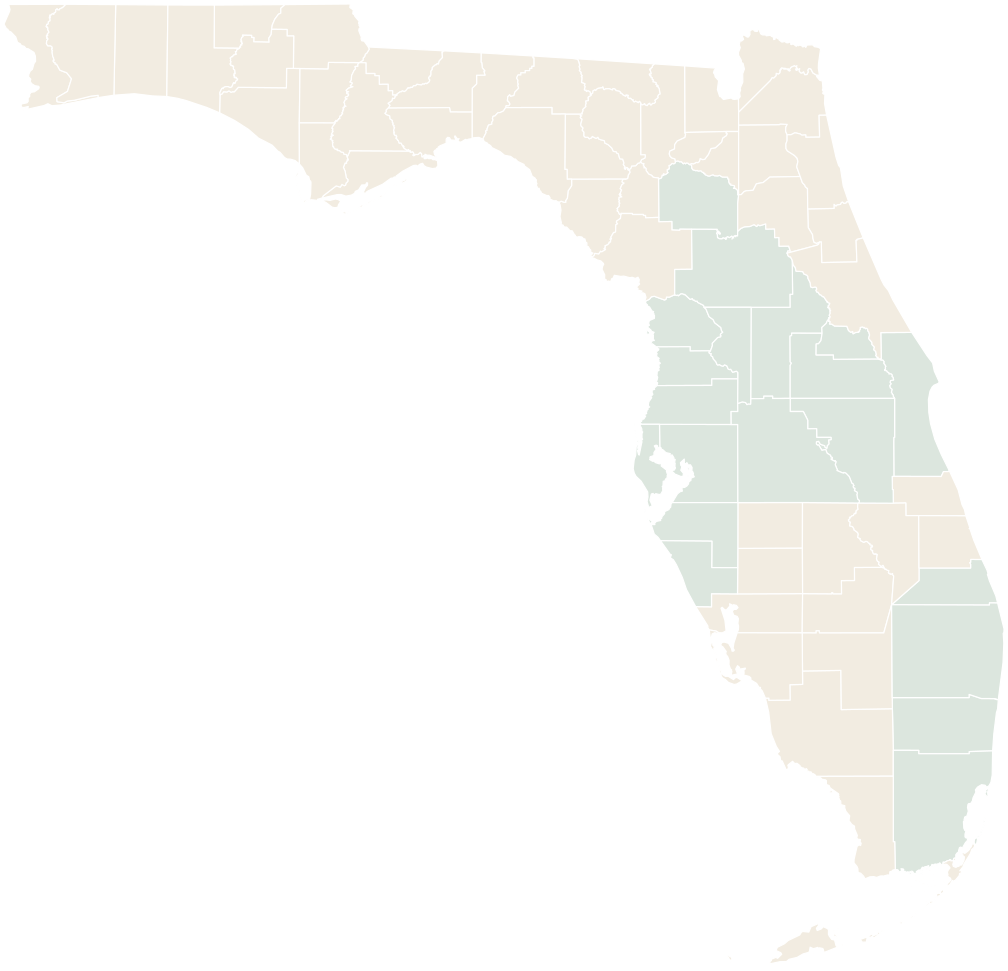
Miami-Dade County
More in Miami-Dade County
Sources for this page(29)
- 1.Share of homes built before 1980: 53.6%. U.S. Census Bureau, American Community Survey 2024 5-year estimates (2020-2024), table B25034, via Census Reporter API. Read Oct 5, 2026.
- 2.Share of homes built 2010 or later: 5.5%. U.S. Census Bureau, American Community Survey 2024 5-year estimates (2020-2024), table B25034, via Census Reporter API. Read Oct 5, 2026.
- 3.U.S. Census Bureau, American Community Survey 2024 5-year estimates (2020-2024), table B25035, via Census Reporter API. Read Oct 5, 2026.
- 4.U.S. Census Bureau, American Community Survey 2024 5-year estimates (2020-2024), table B25035, B25034, B25024, via Census Reporter API. Read Oct 5, 2026.
- 5.U.S. Census Bureau, American Community Survey 2024 5-year estimates (2020-2024), table B25003, via Census Reporter API. Read Oct 5, 2026.
- 6.Residents 65 and older: 17.6%. U.S. Census Bureau, American Community Survey 2024 5-year estimates (2020-2024), table B01001, via Census Reporter API. Read Oct 5, 2026.
- 7.Owner-occupied share of occupied homes: 62.1% (7,462 of 12,012). U.S. Census Bureau, American Community Survey 2024 5-year estimates (2020-2024), table B25003, via Census Reporter API. Read Oct 5, 2026.
- 8.U.S. Census Bureau, American Community Survey 2024 5-year estimates (2020-2024), table B25024, via Census Reporter API. Read Oct 5, 2026.
- 9.Share of homes in buildings with 10+ units: 25.7%. U.S. Census Bureau, American Community Survey 2024 5-year estimates (2020-2024), table B25024, via Census Reporter API. Read Oct 5, 2026.
- 10.Single-family detached share of housing units: 65.2%. U.S. Census Bureau, American Community Survey 2024 5-year estimates (2020-2024), table B25024, via Census Reporter API. Read Oct 5, 2026.
- 11.Mobile homes, share of housing units: 0.6%. U.S. Census Bureau, American Community Survey 2024 5-year estimates (2020-2024), table B25024, via Census Reporter API. Read Oct 5, 2026.
- 12.Permit office: Miami-Dade County Regulatory and Economic Resources (RER) - Building & Permits. Miami-Dade County Regulatory and Economic Resources (RER) - Building & Permits. Read Oct 10, 2026.
- 13.Florida Building Commission, 'Setting New Standards for Safety: The Florida Building Code' (2004 publication; wind-speed figures in it are outdated and not used). Read Oct 5, 2026.
- 14.Median year homes were built: 1978. U.S. Census Bureau, American Community Survey 2024 5-year estimates (2020-2024), table B25035, via Census Reporter API. Read Oct 5, 2026.
- 15.Hurricane Irma (2017). NOAA National Hurricane Center, Tropical Cyclone Report: Hurricane Irma (AL112017). Read Oct 5, 2026.
- 16.NOAA National Hurricane Center, Tropical Cyclone Climatology. Read Oct 5, 2026.
- 17.NOAA NCEI U.S. Climate Normals 1991-2020 (access data service). Read Oct 5, 2026.
- 18.NOAA NCEI U.S. Climate Normals 1991-2020 (access data service). Read Oct 5, 2026.
- 19.People (2020 Census): 36,770. U.S. Census Bureau, 2020 Census counts (POP100, HU100) via TIGERweb tigerWMS_Census2020 layer 28 (Census Designated Places). Read Oct 5, 2026.
- 20.Florida Statutes, section 627.7011 (2026), Florida Legislature. Read Oct 4, 2026.
- 21.2023 Florida Building Code, Building, 8th ed., Chapter 1 (UpCodes viewer, unofficial transcription), UpCodes (Florida Building Code transcription). Read Oct 5, 2026.
- 22.Miami-Dade County Regulatory and Economic Resources (RER) - Building & Permits, Miami. Read Oct 5, 2026.
- 23.miamidade.gov, miamidade.gov. Read Oct 5, 2026.
- 24.FRSA, "New 2023 FBC Eighth Edition is Now in Effect", 2024-02-13, floridaroof.com. Read Oct 5, 2026.
- 25.Miami-Dade County RER notice, Miami. Read Oct 5, 2026.
- 26.2023 Florida Building Code, Building, 8th ed., Chapter 15 (UpCodes viewer, unofficial transcription), UpCodes (Florida Building Code transcription). Read Oct 5, 2026.
- 27.NOAA National Hurricane Center, Tropical Cyclone Report: Hurricane Irma (AL112017), NOAA National Hurricane Center. Read Oct 5, 2026.
- 28.NOAA Atlas 14 Volume 9 version 2, partial-duration intensity estimates at the South Miami Heights 2020 Census internal point (25.5883, -80.3868), NOAA Hydrometeorological Design Studies Center. Read Oct 5, 2026.
- 29.NOAA Atlas 14 Volume 9 version 2, partial-duration 24-hour depth estimates at the South Miami Heights 2020 Census internal point (25.5883, -80.3868), NOAA Hydrometeorological Design Studies Center. Read Oct 5, 2026.
South Fork Roofing
Roofing in South Miami Heights: tell us about yours.
Answer a few questions about your roof, or call.