Miami-Dade County · Village
Roofing in Miami Shores, Florida
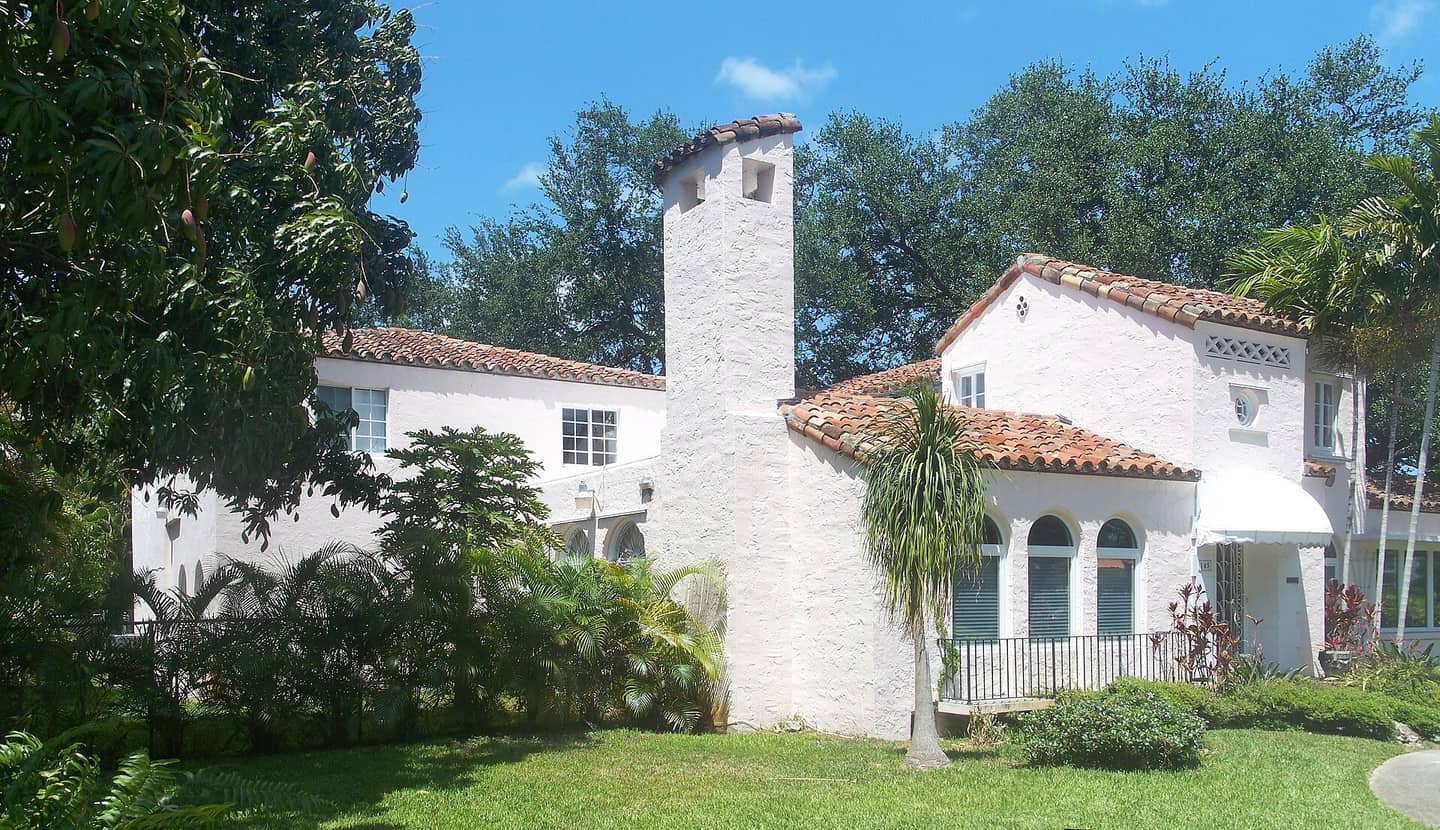
Miami Shores was planned in 1924 as America's Mediterranean, and the Shoreland Company built 118 Mediterranean-style homes. Twenty-five of those houses are now on the National Register. If your roof sits on one of these older homes, the roof decision carries extra steps. The village also has a Historic Preservation Board to check before major exterior work.
Updated October 2026
Home age and roof age
Roofs in Miami Shores are most often somewhere between two and five decades old, judging by the housing stock
The median Miami Shores home was built in 1954, with a margin of error of plus or minus 2 years. Nearly 90 percent of the village's housing units went up before 1980. That suggests many roofs here are past the point where a full replacement is a real question.
Miami-Dade County's median build year is 1980, so Miami Shores housing runs older than the county as a whole. A roof that old is more likely to need a full tear-off than a patch, and an older deck may need repair before new covering goes on.
Florida insurers apply age rules to older roofs. Citizens Property Insurance asks for documentation of at least five years of remaining useful life on a roof older than 25 years if it uses soft covering such as shingle. Before the rule takes effect, roofs made of tile, slate, clay, concrete, or metal can last 50 years or more. Check with your own insurer or agent before you assume how these rules apply to your policy.
Permits and local review
Which permit and review rules apply in Miami Shores?
Roof permits in Miami Shores are issued through the Village of Miami Shores Building office, not the county. Confirm current forms and fees with that office before you apply.
Because the village has a Historic Preservation Board, ask the Building office whether your house or lot falls under any historic review before you pick materials. An exterior change on a historic-era home can need a second approval beyond the roof permit.
The Florida Building Code limits partial reroofing. Unless you replace the whole covering, you can work on no more than a quarter of the roof area within any single year. An exception applies when the existing roof was built or repaired under the 2007 Florida Building Code or later, and only the repaired part must meet current code.
Because Miami-Dade falls inside the High Velocity Hurricane Zone, its rules for wind resistance are especially demanding. Any roofing product sold for hurricane protection must have state or Miami-Dade approval, and you can search the Florida Building Commission product approval list by FL number or manufacturer.
Building permits
Village of Miami Shores - Building
Official building pageOffice names and links only. Fees, forms and timing change; check the official page.
Storms and rainfall
How much rain and wind risk do Miami Shores roofs face?
Miami-Dade County sees most of its rain in the warm months. Most of the year's rainfall at Miami International Airport arrives between May and October, totaling 76.6 percent. The 1991-2020 normal annual total there is 67.41 inches, and June is the wettest month at 10.51 inches.
NOAA Atlas 14 rainfall figures for this area show a 1-hour rain in a 10-year storm at 3.41 inches an hour. A 24-hour rain in a 10-year storm reaches 8.55 inches, and a 100-year storm reaches 14.9 inches. Drainage and flashing matter as much as covering here.
Atlantic storms are counted from June 1 through November 30, and the historical high point lands on September 10. During Hurricane Irma in 2017, surge pushed water 4 to 6 feet above ground along Biscayne Bay. Plan roof work and permit timing around that season.
Local record
On record for Miami Shores
- Planned in 1924 as 'America's Mediterranean'; the Shoreland Company built 118 Mediterranean-style homes, 25 of them now on the National Register.
- The village has a Historic Preservation Board.
- 86.9% of housing units are single-family detached homes.
Services
Roofing services in Miami Shores
- Roof replacementTear-off, deck, code items and the two inspections.Re-roofs in Miami Shores
- Roof repairLeaks, lifted shingles, cracked tile and flashing.Repairs in Miami Shores
- Roof inspectionsRoof age, condition and what an insurer asks about.Inspections in Miami Shores
- Commercial roofingLow-slope systems, drainage and the code for buildings.Commercial roofs in Miami Shores
- New construction roofingDry-in, the sheathing inspection and the code edition.New construction in Miami Shores
- GuttersSizing for Florida rain, downspouts and fascia.Gutters in Miami Shores
Questions
Miami Shores roofing questions
What is the 25% roof rule in Florida?
The Florida Building Code says not more than 25 percent of the total roof area of an existing building can be repaired, replaced or recovered in any 12-month period, unless the entire roof covering is replaced. If the existing roof was built, repaired or replaced under the 2007 Florida Building Code or later, only the repaired part must meet the current code. No city council or county board has the power to alter this exemption through its own ordinance. Ask the Village of Miami Shores Building office how the rule applies to your roof before you start work.
Source: 2023 Florida Building Code, Building, 8th ed., Chapter 15 (UpCodes viewer, unofficial transcription), read Oct 5, 2026
Do I need a permit to reroof in Miami Shores?
You apply for a roof permit in Miami Shores through the Village of Miami Shores Building office. We last looked at the official page on 2026-10-05. Call or visit that office to confirm which permit forms apply to your job. Permit clocks also matter: under the Florida Building Code a permit can become invalid if work does not start within 6 months of issuance, so plan your start date with the office.
Source: Village of Miami Shores - Building, read Oct 5, 2026
Are older Miami Shores homes subject to historic review?
The village has a Historic Preservation Board, and the village was planned in 1924 with 118 Mediterranean-style homes, 25 of which are on the National Register. Ask the Building office whether your property falls under any historic review before you choose roof materials or make exterior changes. Some changes on historic-era homes need a separate approval.
Source: Official website: Miami Shores Village, Historic Preservation Board, read Oct 5, 2026
How old are the roofs in Miami Shores likely to be?
The median home in Miami Shores was built in 1954, with a margin of error of plus or minus 2 years, and 89.8 percent of housing units were built before 1980. That suggests many roofs are older and may be near the end of their service life. A roof inspection can show whether the deck and covering need repair or full replacement.
Source: U.S. Census Bureau, American Community Survey 2024 5-year estimates (2020-2024), table B25034, via Census Reporter API, read Oct 5, 2026
Will my insurer require proof of roof life?
Citizens Property Insurance asks for documentation of at least five years of remaining useful life on roofs older than 25 years if they are soft covering such as shingle, and older than 50 years if they are hard roofing such as tile, slate, clay, concrete or metal. Your own insurer or agent decides what applies to your policy, so ask them directly.
Source: Citizens Property Insurance Corporation, inspections FAQ (updated 2026-03-17), read Oct 4, 2026
How much rain should a Miami Shores roof handle?
NOAA Atlas 14 figures for this area show a 1-hour rain in a 10-year storm at 3.41 inches an hour, and a 24-hour rain in a 10-year storm at 8.55 inches. Miami International Airport averages 67.41 inches a year, with 76.6 percent falling May through October. Ask your roofer to check gutters and drainage along with the covering.
Source: NOAA Atlas 14 Volume 9 version 2, partial-duration intensity estimates at the Miami Shores 2020 Census internal point (25.8670, -80.1783), read Oct 5, 2026
Miami-Dade County
More in Miami-Dade County
Sources for this page(26)
- 1.Median year homes were built: 1954. U.S. Census Bureau, American Community Survey 2024 5-year estimates (2020-2024), table B25035, via Census Reporter API. Read Oct 5, 2026.
- 2.Share of homes built before 1980: 89.8%. U.S. Census Bureau, American Community Survey 2024 5-year estimates (2020-2024), table B25034, via Census Reporter API. Read Oct 5, 2026.
- 3.U.S. Census Bureau, American Community Survey 2024 5-year estimates (2020-2024), table B25035, via Census Reporter API. Read Oct 5, 2026.
- 4.U.S. Census Bureau, American Community Survey 2024 5-year estimates (2020-2024), table B25034, via Census Reporter API. Read Oct 5, 2026.
- 5.U.S. Census Bureau, American Community Survey 2024 5-year estimates (2020-2024), table B25035, B25034, B25024, via Census Reporter API. Read Oct 5, 2026.
- 6.U.S. Census Bureau, American Community Survey 2024 5-year estimates (2020-2024), table B25024, via Census Reporter API. Read Oct 5, 2026.
- 7.Permit office: Village of Miami Shores - Building. Village of Miami Shores - Building. Read Oct 10, 2026.
- 8.Official website: Miami Shores Village, Historic Preservation Board. Read Oct 5, 2026.
- 9.Wikipedia, 'Miami Shores, Florida' (revision 1378573006). Read Oct 5, 2026.
- 10.Florida Building Commission, 'Setting New Standards for Safety: The Florida Building Code' (2004 publication; wind-speed figures in it are outdated and not used). Read Oct 5, 2026.
- 11.NOAA NCEI U.S. Climate Normals 1991-2020 (access data service). Read Oct 5, 2026.
- 12.NOAA NCEI U.S. Climate Normals 1991-2020 (access data service). Read Oct 5, 2026.
- 13.NOAA National Hurricane Center, Tropical Cyclone Climatology. Read Oct 5, 2026.
- 14.Hurricane Irma (2017). NOAA National Hurricane Center, Tropical Cyclone Report: Hurricane Irma (AL112017). Read Oct 5, 2026.
- 15.People (2020 Census): 11,567. U.S. Census Bureau, 2020 Census counts (POP100, HU100) via TIGERweb tigerWMS_Census2020 layer 26 (Incorporated Places). Read Oct 5, 2026.
- 16.Share of homes built 2010 or later: 1.2%. U.S. Census Bureau, American Community Survey 2024 5-year estimates (2020-2024), table B25034, via Census Reporter API. Read Oct 5, 2026.
- 17.Owner-occupied share of occupied homes: 87.5% (3,181 of 3,637). U.S. Census Bureau, American Community Survey 2024 5-year estimates (2020-2024), table B25003, via Census Reporter API. Read Oct 5, 2026.
- 18.Citizens Property Insurance Corporation, inspections FAQ (updated 2026-03-17), Citizens Property Insurance. Read Oct 4, 2026.
- 19.Village of Miami Shores - Building, Village of Miami Shores. Read Oct 5, 2026.
- 20.2023 Florida Building Code, Building, 8th ed., Chapter 15 (UpCodes viewer, unofficial transcription), UpCodes (Florida Building Code transcription). Read Oct 5, 2026.
- 21.Florida Statutes, section 553.842 (2026), Florida Legislature. Read Oct 5, 2026.
- 22.Florida Building Commission, Florida Building Commission. Read Oct 5, 2026.
- 23.NOAA Atlas 14 Volume 9 version 2, partial-duration intensity estimates at the Miami Shores 2020 Census internal point (25.8670, -80.1783), NOAA Hydrometeorological Design Studies Center. Read Oct 5, 2026.
- 24.NOAA Atlas 14 Volume 9 version 2, partial-duration 24-hour depth estimates at the Miami Shores 2020 Census internal point (25.8670, -80.1783), NOAA Hydrometeorological Design Studies Center. Read Oct 5, 2026.
- 25.NOAA National Hurricane Center, Tropical Cyclone Report: Hurricane Irma (AL112017), NOAA National Hurricane Center. Read Oct 5, 2026.
- 26.2023 Florida Building Code, Building, 8th ed., Chapter 1 (UpCodes viewer, unofficial transcription), UpCodes (Florida Building Code transcription). Read Oct 5, 2026.
South Fork Roofing
Roofing in Miami Shores: tell us about yours.
Answer a few questions about your roof, or call.