Seminole County · Census-designated place
Roofing in Wekiwa Springs, Florida
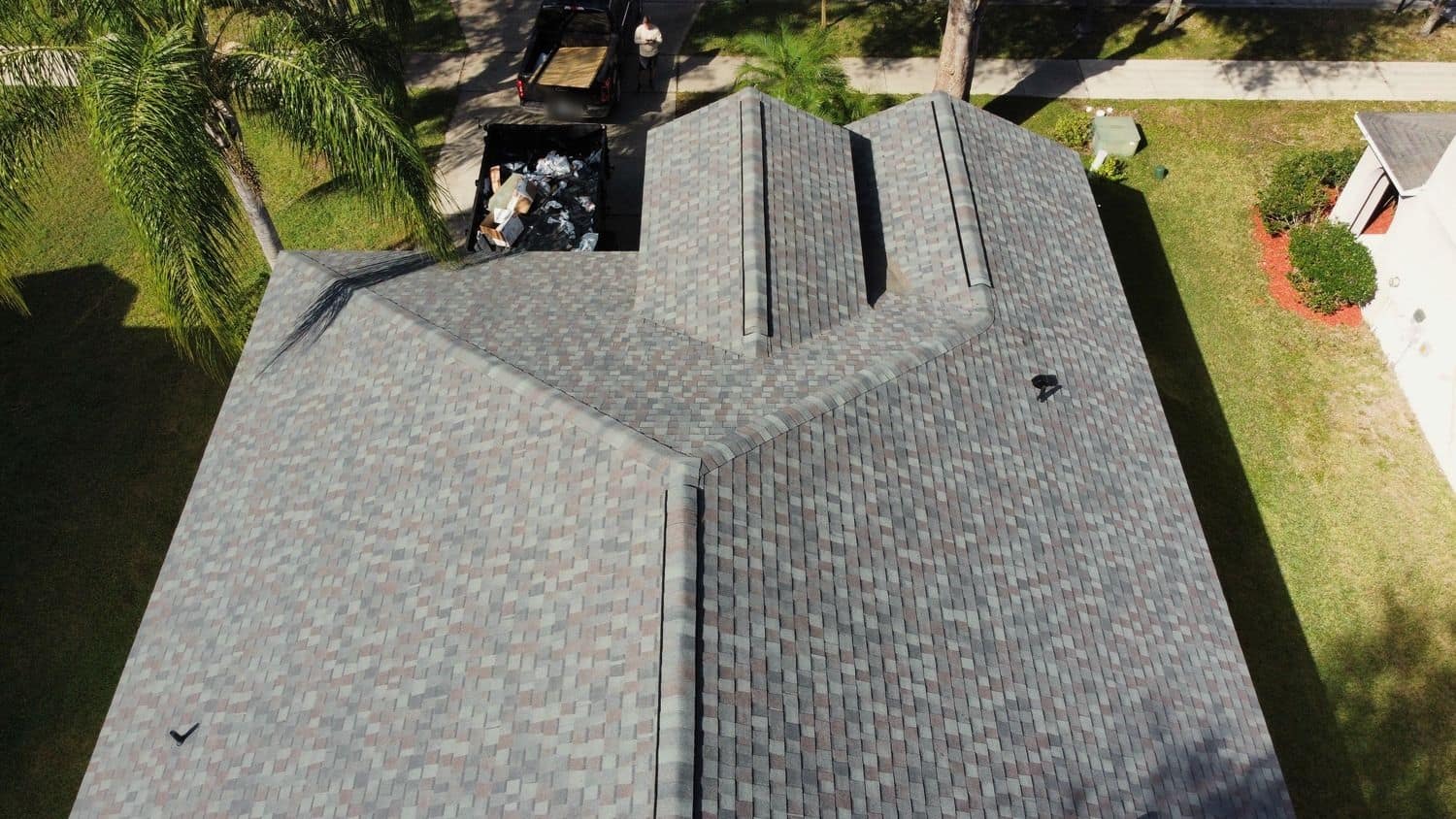
Most homes in Wekiwa Springs were built around 1981, according to the Census Bureau's median build year. That makes age the first thing to check on your roof. Many local roofs are likely past the age where insurers start asking for paperwork, and the county building office handles the permit that comes with a replacement. Start with what the local housing mix means for your roof, then who to call first.
Updated October 2026
Housing age
What the 1981 housing age means for Wekiwa Springs roofs
The median home here was built in 1981, a margin of plus or minus 2 years. Countywide the median is 1988, so this town's housing is older than the county around it. Only 3.9 percent of homes here were built in 2010 or later, against 12.3 percent across the county. About 44.6 percent were built before 1980.
By our arithmetic, a roof put on in 1981 would be well over 40 years old today. That suggests many original roofs here are near or past the age where insurers begin asking for documentation of remaining life. Citizens Property Insurance, for example, asks for proof of at least five years of remaining useful life on roofs older than 25 years if they are shingle, or older than 50 years if they are a hard roof such as tile or metal.
Housing type
Single-family homes and owner-occupied roofs in this town
Single-family detached homes make up 67.5 percent of the 9,931 housing units here, a margin of plus or minus 467 units. Owners live in 77.8 percent of the occupied homes. That means most roof decisions in this town are made by the homeowner, not a landlord, and the owner is the one who signs the contract and pulls the permit.
The census shows no mobile or manufactured homes in this town, at 0 percent of housing units. The county share is 2.1 percent. So the mobile home roof rules that apply in some Florida towns do not come up much here.
Permits and review
Who issues your roof permit in Wekiwa Springs
Wekiwa Springs is an unincorporated census-designated place, so the Seminole County Building Division issues roof permits here. Check the county page for current forms before you apply.
Florida's 25 percent rule caps partial roof work at 25 percent of the roof in any 12-month period. Go past that cap and the whole roof covering must be brought up to current code. The Seminole County office applies this to your permit, so ask them how it reads for your house.
Building permits
Seminole County Building Division
Official building pageOffice names and links only. Fees, forms and timing change; check the official page.
Weather risk
Storms and rain that affect Wekiwa Springs roofs
Seminole County has 10.4 percent of its area under water, and this town is 6.0 percent water. Hurricane Ian in 2022 brought historic flooding to the Little Wekiwa River and near-record St. Johns River levels at Sanford. Hurricane Irma in 2017 affected 4,939 of the 7,125 residential structures assessed across the county.
A 1-hour rain in a 10-year storm here falls at 2.87 inches an hour. In a 100-year storm, a 24-hour total reaches 10.2 inches. Gutters and roof drainage matter in a downpour like that, and an older roof with worn flashing will show leaks sooner.
Central Florida is the lightning capital of the United States, according to the National Weather Service in Melbourne. Lightning strikes are a real risk to roofs and the people beneath them.
Local record
On record for Wekiwa Springs
- Water is 6.0% of the place's total area.
Services
Roofing services in Wekiwa Springs
- Roof replacementTear-off, deck, code items and the two inspections.Re-roofs in Wekiwa Springs
- Roof repairLeaks, lifted shingles, cracked tile and flashing.Repairs in Wekiwa Springs
- Roof inspectionsRoof age, condition and what an insurer asks about.Inspections in Wekiwa Springs
- Commercial roofingLow-slope systems, drainage and the code for buildings.Commercial roofs in Wekiwa Springs
- New construction roofingDry-in, the sheathing inspection and the code edition.New construction in Wekiwa Springs
- GuttersSizing for Florida rain, downspouts and fascia.Gutters in Wekiwa Springs
Questions
Wekiwa Springs roofing questions
What is the 25 percent roof rule in Florida?
The 25 percent rule caps how much of an existing roof can be repaired, replaced or recovered in any 12-month period. Go past 25 percent and the entire roof covering must be replaced. In Wekiwa Springs, the Seminole County Building Division applies this rule to permits. With the median home built in 1981, many roofs here are older, so ask the county whether a partial repair would trigger the rule and how it applies to your house.
Source: 2023 Florida Building Code, Building, 8th ed., Chapter 15 (UpCodes viewer, unofficial transcription), read Oct 5, 2026
What is the 15 year roof rule in Florida?
The 15 year roof rule comes from Florida insurance law, Fla. Stat. 627.7011(5). Your homeowner's policy cannot be turned down or dropped by an insurer just because your roof is less than 15 years old. If your roof is 15 years old or more, you can pay for an authorized inspector to examine it, and the insurer cannot deny or cancel coverage based on age alone when that inspection finds at least 5 years of useful life remaining. In Wekiwa Springs, the Census Bureau puts the median year homes were built at 1981. Separately, the 25 percent rule limits partial roof work in any 12-month period.
Source: 2023 Florida Building Code, Building, 8th ed., Chapter 15 (UpCodes viewer, unofficial transcription), read Oct 5, 2026
What is the new law in Florida about roofs?
The Florida Building Code's 2023 Eighth Edition took effect December 31, 2023. Anyone submitting an application dated December 31, 2026 or later will be subject to the Ninth Edition, the version that begins on that date. In Wekiwa Springs, homes are older, with a median build year of 1981, so a permit filed now falls under the current code. Check with the Seminole County Building Division before you file.
Source: FRSA, "New 2023 FBC Eighth Edition is Now in Effect", 2024-02-13, read Oct 5, 2026
Do roofs in Wekiwa Springs need to handle heavy rain?
Yes. A 1-hour rain in a 10-year storm here falls at 2.87 inches an hour, and a 24-hour rain in a 100-year storm reaches 10.2 inches. The rainfall numbers for this town were drawn from NOAA Atlas 14. Older roofs and worn flashing are more likely to leak in that kind of rain, so have the drainage and flashing checked.
Source: NOAA Atlas 14 Volume 9 version 2, partial-duration intensity estimates at the Wekiwa Springs 2020 Census internal point (28.7004, -81.4276), read Oct 5, 2026
How many homes in Wekiwa Springs are old enough to worry about roof age?
According to the Census Bureau, 44.6 percent of homes here were built before 1980, and the median build year is 1981. That suggests many roofs here are likely past 25 years old. Insurers such as Citizens may ask for proof of remaining useful life on older roofs, so confirm your roof's age with your insurer or agent.
Source: U.S. Census Bureau, American Community Survey 2020-2024 5-year estimates (acs2024_5yr), via Census Reporter API, table B25035, read Oct 5, 2026
Seminole County
More in Seminole County
Sources for this page(29)
- 1.Median year homes were built: 1981. U.S. Census Bureau, American Community Survey 2020-2024 5-year estimates (acs2024_5yr), via Census Reporter API. Read Oct 5, 2026.
- 2.U.S. Census Bureau, American Community Survey 2020-2024 5-year estimates (acs2024_5yr), via Census Reporter API, table B25035. Read Oct 5, 2026.
- 3.Share of homes built before 1980: 44.6%. U.S. Census Bureau, American Community Survey 2020-2024 5-year estimates (acs2024_5yr), via Census Reporter API. Read Oct 5, 2026.
- 4.U.S. Census Bureau, American Community Survey 2020-2024 5-year estimates (acs2024_5yr), via Census Reporter API, table B25034. Read Oct 5, 2026.
- 5.U.S. Census Bureau, American Community Survey 2020-2024 5-year estimates (acs2024_5yr), via Census Reporter API, tables B25034/B25035. Read Oct 5, 2026.
- 6.Share of homes built 2010 or later: 3.9%. U.S. Census Bureau, American Community Survey 2020-2024 5-year estimates (acs2024_5yr), via Census Reporter API. Read Oct 5, 2026.
- 7.Single-family detached share of housing units: 67.5%. U.S. Census Bureau, American Community Survey 2020-2024 5-year estimates (acs2024_5yr), via Census Reporter API. Read Oct 5, 2026.
- 8.Housing units (ACS 5-year): 9,931. U.S. Census Bureau, American Community Survey 2020-2024 5-year estimates (acs2024_5yr), via Census Reporter API. Read Oct 5, 2026.
- 9.Owner-occupied share of occupied homes: 77.8%. U.S. Census Bureau, American Community Survey 2020-2024 5-year estimates (acs2024_5yr), via Census Reporter API. Read Oct 5, 2026.
- 10.Mobile homes, share of housing units: 0%. U.S. Census Bureau, American Community Survey 2020-2024 5-year estimates (acs2024_5yr), via Census Reporter API. Read Oct 5, 2026.
- 11.U.S. Census Bureau, American Community Survey 2020-2024 5-year estimates (acs2024_5yr), via Census Reporter API, table B25024. Read Oct 5, 2026.
- 12.Permit office: Seminole County Building Division. Seminole County Building Division. Read Oct 10, 2026.
- 13.Seminole County Government, Building Division. Read Oct 5, 2026.
- 14.U.S. Census Bureau, 2020 Census (TIGERweb tigerWMS_Census2020 MapServer: POP100, HU100, AREALAND, AREAWATER). Read Oct 5, 2026.
- 15.U.S. Census Bureau, 2020 Census (TIGERweb tigerWMS_Census2020 MapServer: POP100, HU100, AREALAND, AREAWATER). Read Oct 5, 2026.
- 16.Hurricane Ian (2022). NWS Melbourne, Post Tropical Cyclone Report: Hurricane Ian (2022). Read Oct 5, 2026.
- 17.Hurricane Irma (2017). NWS Melbourne, Post Tropical Cyclone Report: Hurricane Irma (2017). Read Oct 5, 2026.
- 18.NWS Melbourne, Lightning Information Center. Read Oct 5, 2026.
- 19.People (2020 Census): 23,428. U.S. Census Bureau, 2020 Census (TIGERweb tigerWMS_Census2020 MapServer: POP100, HU100, AREALAND, AREAWATER) (2020 Census count). Read Oct 5, 2026.
- 20.Citizens Property Insurance Corporation, inspections FAQ (updated 2026-03-17), Citizens Property Insurance. Read Oct 4, 2026.
- 21.Seminole County Building Division, Seminole County Building Division. Read Oct 5, 2026.
- 22.2023 Florida Building Code, Building, 8th ed., Chapter 15 (UpCodes viewer, unofficial transcription), UpCodes (Florida Building Code transcription). Read Oct 5, 2026.
- 23.2023 Florida Building Code, Building, 8th ed., Chapter 1 (UpCodes viewer, unofficial transcription), UpCodes (Florida Building Code transcription). Read Oct 5, 2026.
- 24.NWS Melbourne, Post Tropical Cyclone Report: Hurricane Ian (2022), National Weather Service. Read Oct 5, 2026.
- 25.NWS Melbourne, Post Tropical Cyclone Report: Hurricane Irma (2017), National Weather Service. Read Oct 5, 2026.
- 26.NOAA Atlas 14 Volume 9 version 2, partial-duration intensity estimates at the Wekiwa Springs 2020 Census internal point (28.7004, -81.4276), NOAA Hydrometeorological Design Studies Center. Read Oct 5, 2026.
- 27.NOAA Atlas 14 Volume 9 version 2, partial-duration 24-hour depth estimates at the Wekiwa Springs 2020 Census internal point (28.7004, -81.4276), NOAA Hydrometeorological Design Studies Center. Read Oct 5, 2026.
- 28.FRSA, "New 2023 FBC Eighth Edition is Now in Effect", 2024-02-13, floridaroof.com. Read Oct 5, 2026.
- 29.Miami-Dade County RER notice, Miami. Read Oct 5, 2026.
South Fork Roofing
Roofing in Wekiwa Springs: tell us about yours.
Answer a few questions about your roof, or call.