New construction · St. Cloud
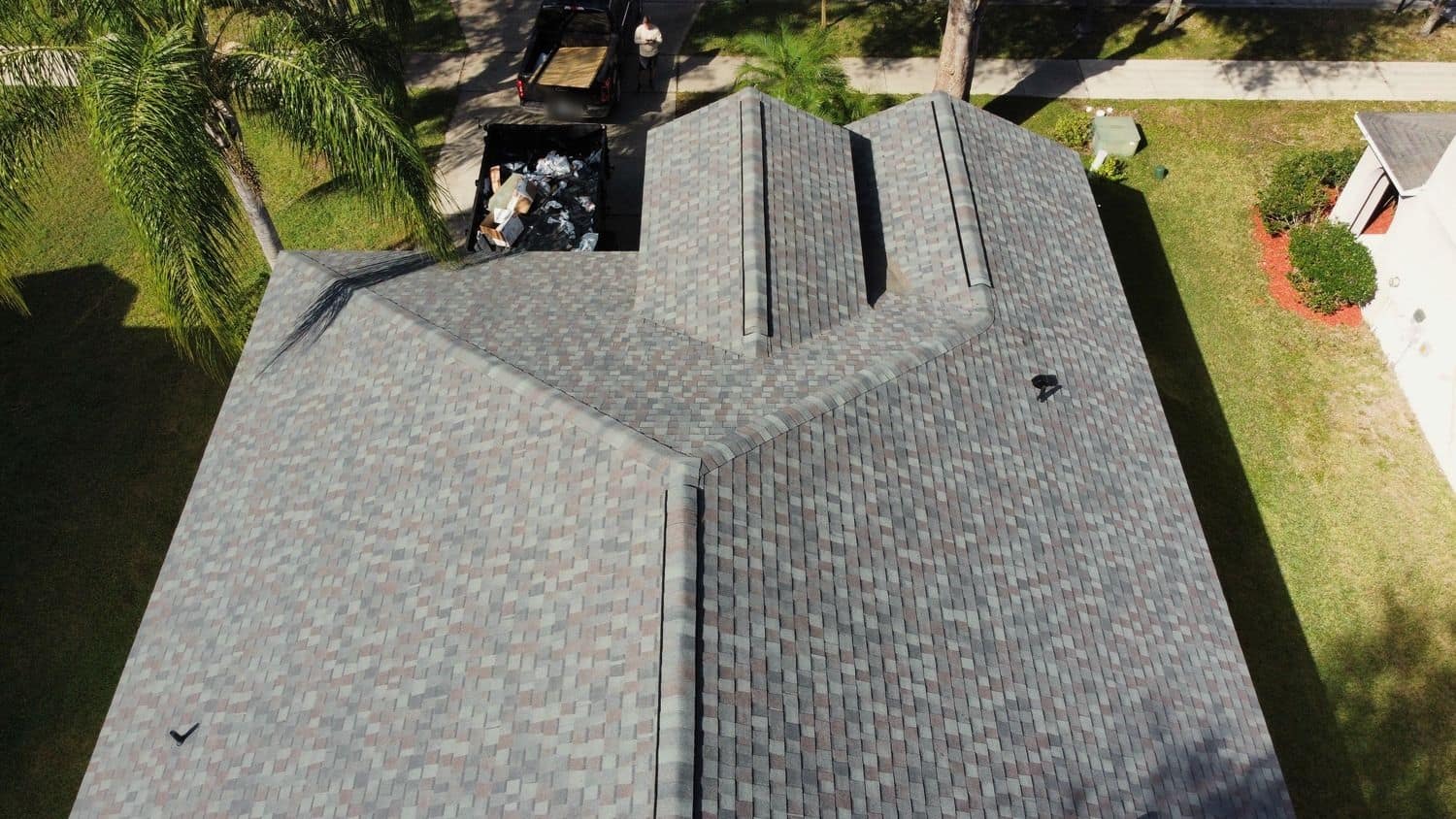
New construction roofing in St. Cloud, FL
About 32.6 percent of St. Cloud homes were built in 2010 or later. That suggests new roofs are a regular part of the local housing market. The city's Building Department states a 140 mph design wind speed. That number shapes the deck, the underlayment and the permit your new roof must meet.
Updated October 2026
 Our work
Code and wind
Figuring out which code edition controls a new roof project in St. Cloud
St. Cloud's Building Department states an ultimate design wind speed of 140 mph for Risk Category II buildings. Under the Florida Building Code, areas at 140 mph or more count as wind-borne debris regions, so your roof system must be built for that.
December 31, 2023 is when the Eighth Edition became effective. Permit applications submitted on or after December 31, 2026 fall under the Ninth Edition. If your builder files near that date, ask which edition the plans were submitted under.
Every roofing product used in Florida must first receive approval at the state level. The products on your permit should appear in the Florida Building Commission's public product approval search. Confirm current permit steps with the City of St. Cloud Building Department.
What goes on
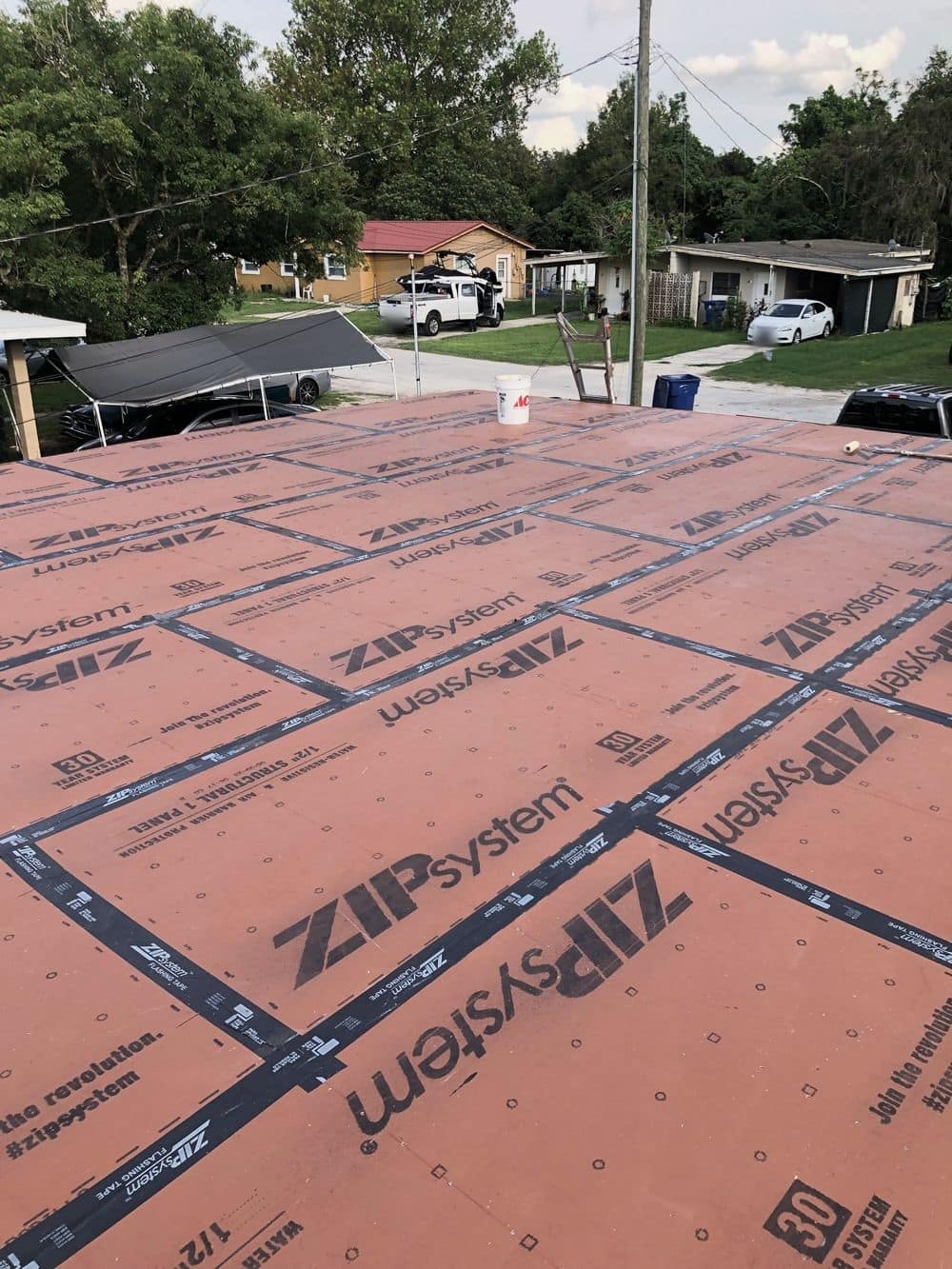
Components of a new home's roof assembly: decking, underlayment, and drip edge
For shingle and metal roofs, the code gives three dry-in options. The first option is a membrane that adheres completely to the deck with no gaps. Another is tape or membrane over every deck joint, then underlayment. The third option uses two felt-type underlayment layers, nailed 12 inches apart across the field.
Roof sheathing is nailed with ring shank nails, not smooth ones. Along the eaves and gables, set the drip edge over the underlayment rather than beneath it. At 110 mph or more the code asks for fasteners no more than 4 inches apart, which applies at St. Cloud's stated 140 mph. Ask your builder to show the nail spec.
A builder may personally apply asphalt shingles to its own new structure. Work on tile, metal, or membrane roofs must be handed to a roofer who holds certification or registration.
Inspections
Scheduling the roof around the inspections
Inspections run in this sequence: foundation, framing, sheathing, exterior wall finishes, roofing, and final. The sheathing check covers deck fasteners and the dry-in. Roofing comes after, so shingles cannot go on until sheathing passes.
Before the first inspection, record a Notice of Commencement and display it at the job site. If work hasn't begun within 6 months after issuance, the permit becomes void. Osceola County's housing is 60.5 percent single-family detached, so most new roofs here follow this path.
Florida Statute 553.837 requires a builder to warrant a new home for 1 year against Building Code defects. Coverage does not apply to ordinary aging or natural catastrophes like a hurricane.
Questions
New construction roofing in St. Cloud: questions
How new are the homes in St. Cloud?
The median year homes were built in St. Cloud is 2003, and 32.6 percent date from 2010 or later. Osceola County's median is 2002, with 27.4 percent built in 2010 or later. Also, 19.5 percent of St. Cloud homes predate 1980. The city's newer-home share is 5.2 percentage points above the county's. Many older roofs here are likely well past replacement age.
Source: U.S. Census Bureau, American Community Survey 2020-2024 5-year estimates (acs2024_5yr), via Census Reporter API, table B25034, read Oct 5, 2026
What wind speed must a new St. Cloud roof meet?
The City of St. Cloud Building Department states an ultimate design wind speed of 140 mph for Risk Category II buildings. Under the Florida Building Code, areas at 140 mph or more fall in the wind-borne debris region. Your roofing products must also carry Florida statewide product approval. Ask your builder to show the approval numbers on the permit, and confirm anything unclear with the building office.
Source: City of St. Cloud, Permit Information (Building Department), read Oct 5, 2026
What is the 25% roof rule in Florida?
The rule says not more than 25 percent of a roof section may be repaired or replaced in any 12-month period unless the whole section is replaced. It is in Florida Building Code §1511.1.1. You may be exempt if your roof was built or replaced under the 2007 code or any later edition. It matters for existing St. Cloud homes, not for a brand-new roof.
Source: U.S. Census Bureau, American Community Survey 2020-2024 5-year estimates (acs2024_5yr), via Census Reporter API, read Oct 5, 2026
Do new homes in Osceola County need roof permits?
Yes. Osceola County's HB 803 (2026) permit exemption applies only to qualifying single-family work. It excludes structural work and any property in a flood hazard area. New construction is structural, and St. Cloud saw notable flooding near Lake Center and Runnymede Lake during Hurricane Ian. Confirm your roof permit with the City of St. Cloud Building Department.
Source: NWS Melbourne, Post Tropical Cyclone Report: Hurricane Ian (2022), read Oct 5, 2026
Sources for this page(32)
- 1.City of St. Cloud, Permit Information (Building Department). Read Oct 5, 2026.
- 2.City of St. Cloud, Historic Preservation. Read Oct 5, 2026.
- 3.Osceola County, Building and Permits. Read Oct 5, 2026.
- 4.City of Kissimmee, Permits & Inspections. Read Oct 5, 2026.
- 5.Permit office: City of St. Cloud Building Department. City of St. Cloud Building Department. Read Oct 10, 2026.
- 6.U.S. Census Bureau, American Community Survey 2020-2024 5-year estimates (acs2024_5yr), via Census Reporter API, table B25024. Read Oct 5, 2026.
- 7.Share of homes built 2010 or later: 32.6%. U.S. Census Bureau, American Community Survey 2020-2024 5-year estimates (acs2024_5yr), via Census Reporter API. Read Oct 5, 2026.
- 8.U.S. Census Bureau, American Community Survey 2020-2024 5-year estimates (acs2024_5yr), via Census Reporter API, table B25034. Read Oct 5, 2026.
- 9.U.S. Census Bureau, American Community Survey 2020-2024 5-year estimates (acs2024_5yr), via Census Reporter API, tables B25034/B25035. Read Oct 5, 2026.
- 10.Median year homes were built: 2003. U.S. Census Bureau, American Community Survey 2020-2024 5-year estimates (acs2024_5yr), via Census Reporter API. Read Oct 5, 2026.
- 11.U.S. Census Bureau, American Community Survey 2020-2024 5-year estimates (acs2024_5yr), via Census Reporter API, table B25035. Read Oct 5, 2026.
- 12.NWS Melbourne, Post Tropical Cyclone Report: Hurricane Ian (2022). Read Oct 5, 2026.
- 13.2023 Florida Building Code, Building, 8th ed., Chapter 2 (UpCodes viewer, unofficial transcription). Read Oct 5, 2026. FBC text read from UpCodes (unofficial transcription): check floridabuilding.org or the ICC viewer before quoting (spec 8.7). Source URL inherited from C-4 (the research cites it "as C-4").
- 14.FRSA, "New 2023 FBC Eighth Edition is Now in Effect", 2024-02-13. Read Oct 5, 2026.
- 15.Miami-Dade County RER notice. Read Oct 5, 2026.
- 16.Florida Statutes, section 553.842 (2026). Read Oct 5, 2026.
- 17.Florida Building Commission. Read Oct 5, 2026.
- 18.2023 Florida Building Code, Residential, 8th ed., Chapter 9 (UpCodes viewer, unofficial transcription). Read Oct 5, 2026. FBC text read from UpCodes (unofficial transcription): check floridabuilding.org or the ICC viewer before quoting (spec 8.7). Source URL inherited from COM-29 (the research cites it "as COM-29").
- 19.2023 Florida Building Code, Residential, 8th ed., Chapter 8 (UpCodes viewer, unofficial transcription). Read Oct 5, 2026. FBC text read from UpCodes (unofficial transcription): check floridabuilding.org or the ICC viewer before quoting (spec 8.7).
- 20.Florida Statutes, section 489.113 (2026). Read Oct 5, 2026.
- 21.2023 Florida Building Code, Building, 8th ed., Chapter 1 (UpCodes viewer, unofficial transcription). Read Oct 5, 2026. FBC text read from UpCodes (unofficial transcription): check floridabuilding.org or the ICC viewer before quoting (spec 8.7). Source URL inherited from C-3 (the research cites it "as C-3").
- 22.Florida Statutes, section 553.837 (2026). Read Oct 5, 2026.
- 23.2023 Florida Building Code, Building, 8th ed., Chapter 15 (UpCodes viewer, unofficial transcription). Read Oct 5, 2026. FBC text read from UpCodes (unofficial transcription): check floridabuilding.org or the ICC viewer before quoting (spec 8.7).
- 24.City of St. Cloud Building Department, City of St. Cloud Building Department. Read Oct 5, 2026.
- 25.Florida Statutes, section 713.135 (2026), Florida Legislature. Read Oct 5, 2026.
- 26.U.S. Census Bureau, American Community Survey 2020-2024 5-year estimates (acs2024_5yr), via Census Reporter API, U.S. Census Bureau (via Census Reporter). Read Oct 5, 2026.
- 27.Citizens Property Insurance Corporation, inspections FAQ (updated 2026-03-17), Citizens Property Insurance. Read Oct 4, 2026.
- 28.NWS Melbourne, Post Tropical Cyclone Report: Hurricane Irma (2017), National Weather Service. Read Oct 5, 2026.
- 29.NWS Melbourne, County Impacts Associated with Milton (2024), National Weather Service. Read Oct 5, 2026.
- 30.NOAA Atlas 14 Volume 9 version 2, partial-duration intensity estimates at the St. Cloud 2020 Census internal point (28.2266, -81.2735), NOAA Hydrometeorological Design Studies Center. Read Oct 5, 2026.
- 31.NOAA Atlas 14 Volume 9 version 2, partial-duration 24-hour depth estimates at the St. Cloud 2020 Census internal point (28.2266, -81.2735), NOAA Hydrometeorological Design Studies Center. Read Oct 5, 2026.
- 32.NOAA NCEI, U.S. Climate Normals 1991-2020 (annual/seasonal), access-data API, NOAA National Centers for Environmental Information. Read Oct 5, 2026.
South Fork Roofing
New construction roofing in St. Cloud
Answer a few questions about the job, or call.