Repairs · Tamiami
Roof repair in Tamiami, FL
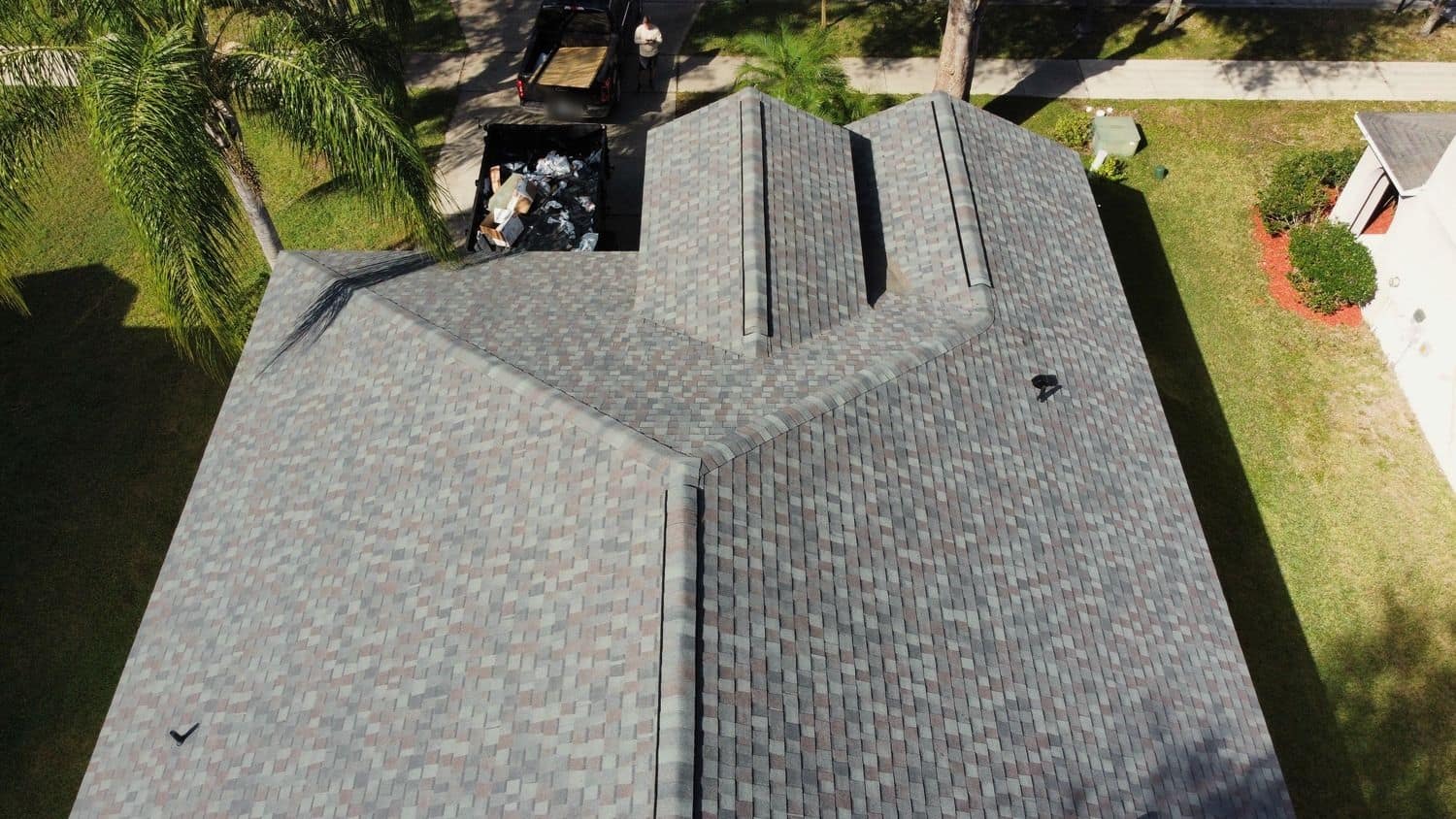
Mobile homes make up 6.1 percent of housing units in Tamiami, and their roofs follow a different standard from the rest. For every other roof here, repair work sits under Miami-Dade's High Velocity Hurricane Zone rules, which set what a patch must use, whether you need a permit, and when repair turns into replacement.
Updated October 2026
 Our work
Storm damage
Where Tamiami roofs fail in a storm
FEMA's field teams name damage to the roof covering from high wind as a primary source of leaks. Water gets in where shingles or tile are torn off, where ridge vents are lost, and at soffits. FEMA describes one house whose ceilings collapsed though the only roof damage was lost ridge shingles and ridge vent.
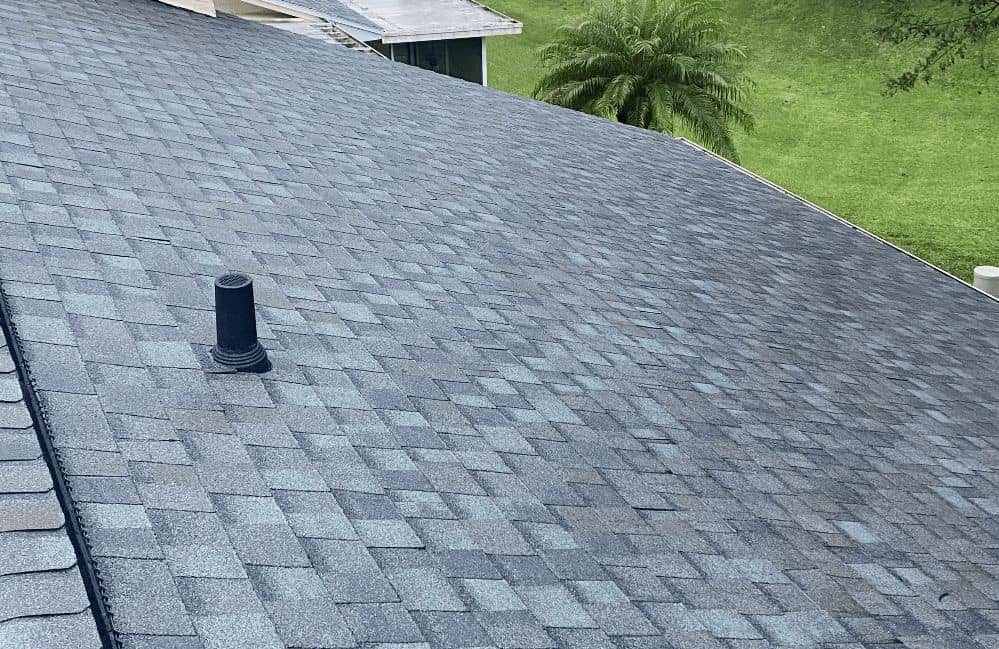
Leaks also follow the flashing. Start by checking where walls meet the roof, where the slope changes, and around any roof openings, since the code calls for it at those spots. Soffits have a poor record in hurricanes, and a failed soffit often lets in a lot of water.
Tropical Storm Eta in 2020 shows the other risk in Miami-Dade: 14.12 inches of rain near Biscayne Park and streets under water for days. Wind did not cause that trouble. A roof with worn flashing or cracked sealant gets tested hard by rain like that.
Repair or replace
Repair or replace: the 25 percent rule
Say a Tamiami roof needs a patch. The code allows no more than 25 percent of the roof or roof section to be repaired, replaced or recovered within 12 months. Beyond that, the whole roof or section must be redone. A roof already built, repaired or replaced to the 2007 Florida Building Code or later falls under the exception, and in that case only the repaired part has to meet current code.
The median home here was built in 1984, so ask whoever last worked on your roof which code it was built under. The home's year does not tell you that. Miami-Dade, as one of the two High Velocity Hurricane Zone counties, also requires repairs to use components with a product approval and bars any repair that creates added ponding water.
Permits
Permits for a repair in Tamiami
Because Tamiami is unincorporated, the permit comes from Miami-Dade County Regulatory and Economic Resources. In the High Velocity Hurricane Zone, a permit is required for any work on a roofing component, including repair or maintenance. The application must be signed by a licensed contractor and carry product approvals and detail drawings.
A roofer who says a repair needs no permit is giving you an opinion. Ask for the permit number before work starts, then confirm it with the county building office.
After the storm
What to do safely after a storm
- Stay off the roof. Look from the ground for missing shingles or tiles, a bent ridge, or loose soffit.
- Take dated photos of ceilings and the roof before any cleanup.
- Cover openings with a tarp only from a ladder you can use safely, or leave it to a roofer.
- Tell your insurer promptly. A new property claim is barred if notice takes longer than 1 year after the date of loss.
Questions
Roof repair in Tamiami: questions
What is the 25% roof rule in Florida?
Unless the whole roof or section is replaced, no more than 25 percent of it may be repaired, replaced or recovered within any 12-month period. Roofs built, repaired or replaced to the 2007 Florida Building Code or later fall under the exception. For that roof, only the repaired portion must meet current code. Miami-Dade follows the same text in its High Velocity Hurricane Zone provisions.
Source: Florida Building Commission, 'Setting New Standards for Safety: The Florida Building Code' (2004 publication; wind-speed figures in it are outdated and not used), read Oct 5, 2026
What is the 15 year roof rule in Florida?
It is an insurance rule, not a building rule. Once your roof is 15 years or older, the insurer has to allow an authorized inspector to check it, and you cover the cost. When the inspection finds 5 or more years of useful life remaining, the insurer cannot refuse coverage or non-renew based only on the roof's age. The median home in the area was built in 1984, so many Tamiami roofs are old enough for this rule to come up. For a Tamiami home, your insurer or agent is the one to ask about your own policy.
Source: U.S. Census Bureau, American Community Survey 2024 5-year estimates (2020-2024), table B25035, via Census Reporter API, read Oct 5, 2026
Can a handyman do roof repairs in Florida?
No, roofing work falls under state contractor law, so a handyman is not the right person for roof repairs in Florida. A roofing contractor's scope covers all kinds of roofing, including repair of roof sheathing and fascia. In Miami-Dade's High Velocity Hurricane Zone, the permit application for roof repair must be completed and signed by a licensed contractor. Many homes in the area date to around 1984, so the roofs on them have often been repaired or replaced more than once, which makes proper permitting matter. Before you sign with any contractor, look up their license with the state.
Source: Miami-Dade County Regulatory and Economic Resources (RER) - Building & Permits, read Oct 5, 2026
Do mobile homes in Tamiami follow the same roof code?
Mobile homes are 6.1 percent of housing units in Tamiami, and they follow the HUD code rather than the Florida Building Code. For the 56.5 percent of homes here that are single-family detached, the Florida Building Code applies. Confirm your home's category and any repair permit needs with Miami-Dade Regulatory and Economic Resources.
Source: U.S. Census Bureau, American Community Survey 2024 5-year estimates (2020-2024), table B25024, via Census Reporter API, read Oct 5, 2026
Sources for this page(31)
- 1.Tropical Storm Eta (2020). NOAA National Hurricane Center, Tropical Cyclone Report: Hurricane Eta (AL292020). Read Oct 5, 2026.
- 2.Hurricane Isaias (2020). NOAA National Hurricane Center, Tropical Cyclone Report: Hurricane Isaias (AL092020). Read Oct 5, 2026.
- 3.Median year homes were built: 1984. U.S. Census Bureau, American Community Survey 2024 5-year estimates (2020-2024), table B25035, via Census Reporter API. Read Oct 5, 2026.
- 4.Florida Building Commission, 'Setting New Standards for Safety: The Florida Building Code' (2004 publication; wind-speed figures in it are outdated and not used). Read Oct 5, 2026.
- 5.U.S. Census Bureau, American Community Survey 2024 5-year estimates (2020-2024), table B25035, via Census Reporter API. Read Oct 5, 2026.
- 6.Permit office: Miami-Dade County Regulatory and Economic Resources (RER) - Building & Permits. Miami-Dade County Regulatory and Economic Resources (RER) - Building & Permits. Read Oct 10, 2026.
- 7.U.S. Census Bureau, American Community Survey 2024 5-year estimates (2020-2024), table B25024, via Census Reporter API. Read Oct 5, 2026.
- 8.Mobile homes, share of housing units: 6.1%. U.S. Census Bureau, American Community Survey 2024 5-year estimates (2020-2024), table B25024, via Census Reporter API. Read Oct 5, 2026.
- 9.FEMA FL-RA2. Read Oct 5, 2026.
- 10.FBCR Ch. 9. Read Oct 4, 2026.
- 11.2023 Florida Building Code, Building, 8th ed., Chapter 15 (UpCodes viewer, unofficial transcription). Read Oct 5, 2026. FBC text read from UpCodes (unofficial transcription): check floridabuilding.org or the ICC viewer before quoting (spec 8.7).
- 12.Florida Statutes, section 553.844 (2026). Read Oct 5, 2026.
- 13.FBC-B 2023 Ch. 1. Read Oct 5, 2026.
- 14.Florida Statutes, section 627.70132 (2026). Read Oct 4, 2026.
- 15.Citizens 4-Point Inspection Form, Sample Form Insp4pt 03 25. Read Oct 4, 2026.
- 16.Florida Statutes, section 627.7011 (2026). Read Oct 4, 2026.
- 17.Fla. Stat. 489.105(3)(e). Read Oct 5, 2026.
- 18.NOAA National Hurricane Center, Tropical Cyclone Report: Hurricane Eta (AL292020), NOAA National Hurricane Center. Read Oct 5, 2026.
- 19.NOAA National Hurricane Center, Tropical Cyclone Report: Hurricane Isaias (AL092020), NOAA National Hurricane Center. Read Oct 5, 2026.
- 20.Miami-Dade County Regulatory and Economic Resources (RER) - Building & Permits, Miami. Read Oct 5, 2026.
- 21.U.S. Census Bureau, American Community Survey 2024 5-year estimates (2020-2024), table B25035, B25034, B25024, via Census Reporter API, U.S. Census Bureau (via Census Reporter). Read Oct 5, 2026.
- 22.miamidade.gov, miamidade.gov. Read Oct 5, 2026.
- 23.2023 Florida Building Code, Building, 8th ed., Chapter 1 (UpCodes viewer, unofficial transcription), UpCodes (Florida Building Code transcription). Read Oct 5, 2026.
- 24.Florida Statutes, section 713.135 (2026), Florida Legislature. Read Oct 5, 2026.
- 25.Florida Statutes, section 489.113 (2026), Florida Legislature. Read Oct 5, 2026.
- 26.NOAA NCEI U.S. Climate Normals 1991-2020 (access data service), NOAA National Centers for Environmental Information. Read Oct 5, 2026.
- 27.NOAA NCEI U.S. Climate Normals 1991-2020 (access data service), NOAA National Centers for Environmental Information. Read Oct 5, 2026.
- 28.NOAA Atlas 14 Volume 9 version 2, partial-duration 24-hour depth estimates at the Tamiami 2020 Census internal point (25.7563, -80.4026), NOAA Hydrometeorological Design Studies Center. Read Oct 5, 2026.
- 29.NOAA National Hurricane Center, Tropical Cyclone Report: Hurricane Irma (AL112017), NOAA National Hurricane Center. Read Oct 5, 2026.
- 30.NOAA National Hurricane Center, Tropical Cyclone Climatology, NOAA National Hurricane Center. Read Oct 5, 2026.
- 31.Wikipedia, 'Tamiami, Florida' (revision 1374943879), Wikipedia. Read Oct 5, 2026.
South Fork Roofing
Roof repair in Tamiami
Answer a few questions about the job, or call.